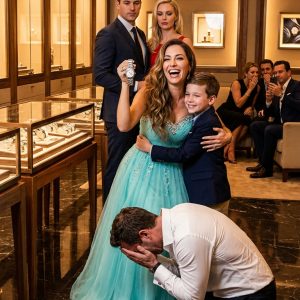
The Autopsy of a Marriage
Chapter 1: The Glass Box
“France. Just a short business trip.”
The words were unremarkable, spoken with the casual rhythm of a man who had said them a dozen times before. Ethan Walker, my husband of eight years, leaned down and kissed my forehead. His lips felt dry, perfunctory. I watched him roll his sleek, black Tumi suitcase toward the heavy oak door of our suburban Chicago home, the wheels clicking rhythmically over the hardwood.
“Call me when you land,” I said, my voice automated, reciting the script of a dutiful wife.
“I will,” he promised, offering a tight, distracted smile over his shoulder. “Love you.”
I watched the door close. I heard the lock click. I didn’t know it then, but those were the last honest words I would ever hear from the man I had built my life around.
That same afternoon, I was at St. Mary’s Hospital, scrubbing out of a grueling six-hour aortic valve replacement. I am a cardiac nurse. My life is defined by rhythms—sinus rhythms, shift changes, the steady, reassuring beep of monitors. I am trained not to panic when the alarms sound. I am trained to keep my hands steady when everything else is falling apart.
My shift had ended, but the adrenaline was still humming in my veins. I decided to cut through the maternity wing to grab a coffee from the better cafeteria on the second floor. The maternity ward always smelled different than the rest of the hospital—less antiseptic, more like powder and hope.
I was walking past the nursery viewing window, head down, checking a text from my sister, when a voice stopped me cold.
It wasn’t a shout. It was a whisper. But the timbre was unmistakable. It was the voice that had vowed to have and to hold in front of two hundred people.
“Easy… she’s perfect.”
I froze. My shoes squeaked on the linoleum, a harsh sound in the quiet hallway. I turned slowly, my brain rejecting what my ears had just processed.
Ethan was standing on the other side of the glass. He wasn’t in France. He wasn’t in a boardroom. He was wearing the blue isolation gown required for visitors, leaning over a clear plastic bassinet.
He was cradling a newborn.
The tenderness in his posture was devastating. He held the baby with a reverence I hadn’t seen since our wedding day. Beside him, sitting in a wheelchair, was a woman I didn’t recognize. She was younger than me, pale, exhausted, and glowing with that specific, ethereal relief of new motherhood. She reached out a hand, touching his arm possessively.
Ethan leaned down. He kissed the top of her head. Then he kissed the baby’s forehead.
My heart didn’t break. That implies a messy, sudden shattering. Instead, it froze. It turned into a block of ice in my chest, heavy and silent.
I stepped back, hiding behind the high wall of the nurses’ station. I felt like a spy in my own life. I watched them like they were specimens in a glass box—a perfect, happy family that existed in a parallel universe where I didn’t exist.
A nurse in pink scrubs walked by them, smiling. “Congratulations, Mr. Walker. Your daughter is beautiful.”
Daughter.
The word echoed in my skull. We had talked about children. We had tried. We had stopped trying when the negative tests became too painful. And here was my husband, holding the dream we had mourned, given to him by a stranger.
I didn’t storm in. I didn’t bang on the glass. I didn’t scream.
I turned around and walked away. My footsteps were silent. I took the stairs down four flights because I didn’t trust myself to stand still in an elevator.
I made it to the staff locker room before my legs gave out. I sat on the wooden bench, staring at my reflection in the metal locker door. I looked calm. Pale. Precise. There was no hysteria in my eyes, only a terrifying, cold clarity.
I unlocked my phone. My hands weren’t shaking.
I opened the Chase banking app.
Years of joint accounts. High-yield savings. Investment portfolios. The rental property in Naperville. Everything we had built under the assumption of a shared future.
I remembered the conversations from early in our marriage.
“I’ll handle the finances, babe. You work such long hours at the hospital, you shouldn’t have to worry about bills.”
“Just sign here, it’s for the refinancing.”
I remembered signing documents without reading the fine print, trusting him implicitly.
Now, sitting in the locker room that smelled of bleach and sweat, I read every line.
I saw the withdrawals. Small at first, then larger. “Consulting fees.” “Travel expenses.” A recurring payment to a medical center I didn’t recognize.
I started the transfers.
I moved slowly, methodically. I transferred funds from our joint savings into an old account under my maiden name that I had kept dormant for emergencies. I liquidated the stocks that were liquidatable immediately. I called my lawyer, Sarah, who I hadn’t spoken to since she drafted our wills.
“Sarah,” I said, my voice steady. “I need you to open a file. It’s an emergency.”
Between transactions, I took screenshots. I downloaded statements. I documented timestamps.
When I was done, I deleted nothing. I left the digital trail burning bright, a breadcrumb path leading straight to his ruin.
That evening, sitting alone in our living room with the lights off, my phone buzzed.
Ethan: Landed safely. exhausted. Meeting ran late. Miss you.
I looked at the text. The audacity of it was almost impressive.
I typed a reply. ❤️
I hit send.
Then I waited.
At midnight, my phone rang. The ringtone shattered the silence of the house.
I picked up on the second ring.
“Why can’t I access our checking account?” Ethan demanded. Panic leaked through his voice, cracking his usual composure. “My card was declined at the hotel. What is going on?”
I smiled for the first time that day. It wasn’t a nice smile. It was the smile of a surgeon who knows exactly where to cut.
“Oh,” I said softly into the dark. “You’re not in France, Ethan.”
Silence. Absolute, terrified silence.
“And you’re not at a hotel,” I continued. “You’re in the maternity ward at St. Mary’s. Room 304, if the directory is correct.”
I could hear his breathing hitch.
“And I hung up.”
Chapter 2: The Audit
Ethan came home two days later. He didn’t roll his suitcase in with his usual confidence. He slammed the front door open, disheveled, his eyes wild. He looked like a man who had been running for forty-eight hours straight.
I was waiting for him.
I sat in the wingback chair in the living room, a cup of tea in my hand. On the coffee table in front of me sat a neat stack of documents.
“You robbed me!” he shouted, throwing his keys onto the console table. “You emptied the accounts! What the hell did you do?”
I took a sip of tea. Earl Grey. Calm.
“I protected myself,” I replied.
He laughed bitterly, pacing the room. “Protected yourself? You stole marital assets! You think a judge is going to let you keep that money? You think the courts will side with a thief?”
I set the tea down. I slid the papers across the polished wood of the table.
“I think,” I said, “they’ll side with facts.”
He stopped pacing. He looked at the stack. He walked over and picked up the top sheet.
It was a printout of the hospital birth record I had obtained through a friend in administration—redacted legally, of course, but clear enough. Father: Ethan Walker.
Underneath that was a printout of his credit card statement showing the payments for a prenatal clinic, a crib delivered to an apartment in the city, and a diamond necklace bought three months ago.
Underneath that were the transcripts of his “business calls” that were actually calls to her.
His face tightened as he skimmed the pages. The color drained from his skin, leaving him looking grey and old.
“You followed me?” he accused, looking up with betrayal in his eyes.
“No,” I said. “I didn’t have to. You underestimated me. You thought because I was quiet, I was blind. You thought because I trusted you, I was stupid.”
He dropped the papers. He sank onto the sofa, burying his face in his hands. The bravado evaporated, leaving behind a pathetic, small man.
“It wasn’t supposed to happen like this,” he whispered.
“How was it supposed to happen, Ethan? Were you going to keep two families? Were you going to split your holidays? France for Christmas, Chicago for Thanksgiving?”
“I love her,” he said.
The words hung in the air.
“And what about me?” I asked. “Did you love me when you lied to my face on Tuesday? Did you love me when you used our retirement savings to buy her a stroller?”
“The baby wasn’t planned,” he said, as if that absolved him. “But when she happened… I couldn’t leave them. I thought… I thought I could handle both. I didn’t want to hurt you.”
“You didn’t want to lose your comfort,” I corrected. “You didn’t want to lose the house, the status, the nurse wife who pays the mortgage while you play house with your girlfriend.”
He looked up, tears in his eyes. “We can fix this, Clara. We can go to counseling. I can… I can explain things to her.”
I stood up.
“I filed for divorce yesterday morning,” I said. “You’ll be served at your office tomorrow. Oh, wait. You’re on administrative leave, aren’t you?”
His head snapped up. “What?”
“I forwarded the itinerary of your ‘business trip’ to your HR director,” I said. “Since the company paid for your flight to ‘France’ but you never left the state… well, they take expense fraud very seriously.”
He stared at me with pure horror. “You destroyed my career?”
“I didn’t destroy anything,” I said, walking toward the stairs. “I just stopped protecting you from your own choices.”
I walked up the stairs, leaving him in the wreckage of his own making. I went into the guest room, locked the door, and for the first time in three days, I allowed myself to cry.
But even as the tears came, I knew the war wasn’t over. Ethan was a cornered animal now. And cornered animals bite.
The next morning, I woke up to a notification on my phone. A DM on Instagram from a private account.
I didn’t know about you. I’m sorry.
It was her.
Chapter 3: The Aftermath
I didn’t respond to the message. I blocked the account. I didn’t need her apology, and I certainly didn’t need her narrative. She was a participant in the destruction of my life, whether she was a willing accomplice or another victim. It didn’t matter.
The divorce proceedings were ugly.
Ethan fought dirty. He claimed I was emotionally abusive. He claimed I had hidden assets illegal. He tried to claim the house, the pension, the dog.
But I had the documentation. I had the timestamps. I had the “France” text.
During mediation, sitting across a long mahogany table, Ethan tried one last time. He looked thinner, tired. The baby, I assumed, was keeping him up.
“You don’t have to do this,” he said quietly, ignoring his lawyer’s gesture to stay silent. “You don’t have to destroy me to win.”
I met his eyes. They were the same hazel eyes I had fallen in love with ten years ago, but now they looked like dull glass.
“I’m not destroying you, Ethan,” I said. “I’m just watching you fall.”
The settlement was signed an hour later. It was clean. He walked away with what the law required—half of the debt, half of the remaining liquid assets, and his freedom.
I walked away with the house, my pension, and my dignity intact.
But betrayal leaves scars, even when you win the legal battle.
Late at night, in the quiet of the house that felt too big for one person, I replayed the moment in the hospital hallway. Not with rage, but with a haunting clarity.
I realized that love shouldn’t require silence to survive. I realized that my “steadiness,” my ability to “handle everything,” had been weaponized against me. I had made it too easy for him to live a double life because I asked so few questions.
Six months later, I sold the suburban house. It held too many ghosts.
I moved to a smaller cottage near Lake Michigan, where the mornings smelled like salt water and possibility. I cut back my shifts at the hospital. I started taking long walks on the dunes.
I slept better. I learned how peace sounds when it isn’t interrupted by lies.
Ethan tried to rebuild. I heard through the grapevine—mutual friends I hadn’t cut off—that he was living in a small apartment downtown. He was working a mid-level job, trying to support a new baby and a girlfriend who was slowly realizing that the man she “won” was a man who cheats.
It wasn’t my concern anymore.
One evening, sitting on my porch with a glass of wine, watching the sun dip into the lake, I thought about the woman who walked past that hospital room without collapsing. I didn’t know her then. She felt like a stranger.
But I respected her now.
Strength doesn’t always roar. It doesn’t always throw clothes on the lawn or scream in a restaurant. Sometimes strength is quiet. Sometimes it transfers funds, gathers evidence, secures a lawyer, and walks away without making a scene.
If you are reading this, and you are wondering if your silence makes you weak—let me tell you this: Silence is only powerful when it is chosen, not forced.
I chose mine carefully. I used it as a shield and a sword.
And when the time came, I chose myself louder.
What would you have done if you had seen what I saw that day? Would you have stormed in? Would you have screamed? Or would you have done what I did—quietly, methodically taken back control of your life?
Like and share this post if you find it interesting.