Chapter 1: The Sanctuary of Ghosts
I used to believe that grief was a quiet, creeping phantom. I thought it lived in the dust motes dancing in empty bedrooms, or in the hollow silence of a house that had suddenly grown too large for a single occupant. I was profoundly wrong. Real grief is loud. It is a deafening, physical weight that settles into the very marrow of your bones and refuses to leave, vibrating with every heartbeat until you forget what silence ever felt like.
My name is Julian Vance. For the past decade, I have served as the General Manager of The Sterling Grocer, an immaculate, high-end culinary market nestled in the wealthiest suburban enclave just north of Chicago. The air inside my domain constantly smells of imported Piedmont truffles, dark-roasted espresso beans, and the sharp, clean bite of organic Sicilian citrus. It is a curated sanctuary of opulence, frequented by individuals who view minor inconveniences as personal insults to their lineage. To navigate this world, I wear a tailored charcoal suit, a silver-plated name tag, and a polite, impenetrable smile. To them, I am merely the invisible architect of their perfect Sunday mornings.
Beneath the starched collar and the practiced diplomacy, however, I am a hollowed-out shell, running on muscle memory and caffeine.
Seven years ago, on a rainy Sunday morning identical to this one, my four-year-old daughter, Maya, vanished from this very building.
One second, her small, warm hand was wrapped around my fingers near the artisan bread display as she laughed at some silly joke I can no longer recall. The next second, I turned my head to answer a brief question from a local olive oil vendor, and when I looked back, only empty air greeted me. She was gone. Swallowed by the earth. Erased from existence in the span of a single heartbeat. The local police searched the surrounding woods and alleys for months. The affluent community held candlelight vigils on the village green. But eventually, the news vans packed up their equipment, the lead detectives stopped returning my calls, and the world brutally, indifferently, moved on.
I did not move on. I anchored myself to the scene of the crime. I remained at the supermarket, working seventy-hour weeks. Every single day, I intentionally walked across the exact polished marble tile where I had last felt her hand in mine, punishing myself, waiting for a ghost to walk back through the automatic glass doors. And every single Sunday, I performed a quiet, agonizing ritual. I would walk down to Aisle 4—the bakery section—and purchase a freshly baked loaf of honey-oat sourdough. I never ate a single slice. I would take the loaf home, set it on the empty kitchen counter, and watch it turn hard and stale over the course of the week. It had been Maya’s absolute favorite treat.
Today was supposed to be just another Sunday spent in my personal purgatory. The store was packed to capacity with the post-church brunch crowd. Women draped in pastel cashmere sweaters and men donning tailored quarter-zips navigated the wide aisles with aggressive entitlement, their shopping carts overflowing with imported cheeses and biodynamic wines.
I was standing near the floral department, reviewing inventory sheets on my clipboard, when a scream shattered the gentle hum of classical music playing over the overhead speakers.
It was not a scream of sudden terror or physical pain; it was a shriek of aristocratic outrage. The sound was sharp, vicious, and entirely out of place in my carefully curated environment. It echoed directly from Aisle 4.
The bakery.
My pulse spiked instantly. A cold dread coiled deep in my gut as I abandoned my clipboard on a display of lilies and broke into a heavy sprint, the leather soles of my dress shoes slipping slightly against the polished marble floor. I pushed past a crowd of paralyzed shoppers who had already formed a wide, theatrical circle around the fresh pastry cases, murmuring to one another in hushed, scandalized tones.
The bakery aisle had descended into a silence so absolute that the mechanical, droning hum of the commercial refrigerators felt miles away.
I breached the front rank of the crowd and froze.
Standing in the center of the aisle was Beatrice Carlisle, one of our most demanding, high-net-worth patrons and the wife of a prominent local appellate judge. She was wearing a pristine white wool coat, her face twisted into a grotesque mask of pure, unadulterated disgust. She was frantically wiping her leather-gloved hand against the fabric of her designer handbag, acting as though she had just come into contact with infectious hazardous waste.
But it was the sight at her feet that caused my lungs to forget how to pull air.
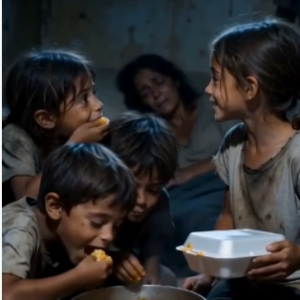
A child was collapsed on the cold marble tile. A little girl, perhaps ten or eleven years old, shivering so violently her teeth were clicking together. She was drowning inside a ragged, oversized brown corduroy coat that smelled faintly of damp alleyways, stale earth, and exhaust fumes. She was on her knees, crying silently, her small, dirt-streaked hand stretched out toward a crushed loaf of honey-oat sourdough lying on the floor between them.
Beatrice had apparently slapped the bread out of the girl’s grasp, treating the child as if she did not possess the basic human right to touch the food.
I stepped forward, the professional manager inside me instantly dying, replaced by a fierce, blinding wrath. But before I could utter a single word of rebuke, my eyes locked onto the frayed collar of the little girl’s oversized coat. Beneath the grime, and beneath the coarse, tearing threads of the neckline, a specific pattern of faded yellow embroidery caught the harsh fluorescent light above.
My heart slammed against my ribs with bone-crushing force. The polished world of the supermarket tilted around me, sliding dangerously out of focus.
It was a hand-stitched yellow sunflower with a single missing petal—the exact, imperfect patch my late wife had sewn onto Maya’s favorite winter sweater the night before she disappeared.
The little girl slowly raised her head, her tear-filled, hazel eyes locking onto mine with a sudden, desperate familiarity.
“He said you would recognize the flower, Mr. Vance,” she whispered, her voice trembling like dry leaves in the wind. “He said you only have until noon before they move her again.”
Chapter 2: The Girl in the Corduroy Coat
The collective gasp from the surrounding shoppers felt like a vacuum sucking the remaining oxygen out of the aisle. Beatrice Carlisle took a half-step backward, her eyes darting between my paralyzed posture and the filthy child kneeling on the floor.
“Julian,” Beatrice snapped, her voice dripping with venomous authority. “I demand you call store security this instant. And sanitization! This… this vagrant wandered in off the street and attempted to snatch my groceries right out of my cart. She brushed against my coat! I want her removed and charged with assault.”
I did not look at Beatrice. I could not tear my gaze away from the yellow sunflower patch. The missing bottom petal had been an accident—my wife had run out of gold thread at two in the morning and had simply tied it off, laughing that it made the flower look like it was dancing. I had held that piece of fabric in my hands a thousand times in my memories.
“Shut up, Beatrice,” I said.
The words left my mouth in a low, gravelly rasp, devoid of any professional warmth. The silence in the aisle deepened into something heavy and dangerous. Beatrice’s jaw dropped in genuine shock; in her world, service workers did not issue commands.
“What did you just say to me?” she hissed, her face flushing crimson. “I dine with the regional directors of this corporate chain, Vance! You will be emptying your desk by noon!”
“Then I suggest you finish your shopping quickly, Mrs. Carlisle,” I said, my voice eerily calm as I stripped off my tailored charcoal suit jacket. I ignored her completely, dropping to one knee on the cold marble tile beside the trembling girl. I wrapped the warm wool of my jacket around her small, shivering shoulders, shielding the embroidered sunflower from the prying eyes of the crowd.
“What is your name, sweetheart?” I asked, keeping my tone as soft and level as humanly possible, though my hands were shaking violently as I pulled the jacket tight around her.
“Clara,” she breathed, her lips blue with chill. Her gaze kept flicking nervously toward the end of the aisle, where the double swinging doors leading to the rear storage warehouses were located. “I’m Clara.”
“Okay, Clara. I’m Julian. You’re safe right now,” I promised, though a sickening realization was already taking root in my mind. She wasn’t Maya. The face structure was different, her eyes were hazel instead of deep brown, and she was slightly too small to be my daughter at eleven years old. Yet she was wearing Maya’s clothes. Clothes that had not been seen in seven years. “Who sent you here, Clara? Who told you about the flower?”
Before Clara could answer, heavy footsteps pounded against the floorboards at the far end of the aisle. Thomas Griggs, the head of store security, shoved his way through the circle of onlookers. Griggs was a broad-shouldered former private military contractor who had been hired by the store’s board five years ago to minimize shrinkage and keep the suburban rabble off the property. He rested his hand heavily on the utility belt at his waist, his eyes scanning the scene with cold, clinical efficiency.
“Is there a problem here, Mr. Vance?” Griggs asked, though his eyes lingered on Clara with an intensity that sent a primal warning through my nervous system. “Mrs. Carlisle’s driver alerted me that there was a disturbance.”
“No problem, Thomas,” I lied smoothly, rising to my feet while keeping Clara tucked safely behind my legs. “Just a lost child who wandered away from her parents. I am taking her up to my executive office to get her some warm food and locate her family. Disperse the crowd, please.”
Beatrice scoffed loudly, folding her arms over her chest. “Her family? Look at her, Thomas! She belongs in a juvenile detention center, not sitting in an executive suite eating gourmet bread!”
“I said I will handle it, Thomas,” I repeated, ignoring the woman entirely, my eyes locking with the security chief’s.
Griggs hesitated for a fraction of a second too long. A muscle twitched in his jaw. Instead of turning to address the crowd as I had instructed, he took a step closer to Clara, his massive hand reaching out toward her arm. “Let me take her down to the holding office by the loading docks, Julian. It’s corporate protocol for trespassers. The police have already been dispatched.”
Clara let out a muffled whimper, her tiny fingers digging into the back of my dress shirt with painful force. She pressed her face against the small of my back, trembling violently.
Why is she afraid of him? The thought struck me like a physical blow. Why would a child who supposedly just wandered in off the street be terrified of a specific grocery store security guard?
“No,” I said, my voice dropping an octave. I stepped squarely into Griggs’ path, using my height to block his view of the girl entirely. “Protocol dictates that the General Manager assumes custody of any separated minors on the premises until law enforcement arrives. That is my final decision, Thomas. Step back.”
For a long, agonizing moment, the two of us stood chest-to-chest under the flickering fluorescent lights of Aisle 4. I saw something dark and calculating flash behind Griggs’ gray eyes—a momentary calculation of risk and reward. Finally, he gave a curt, stiff nod and stepped aside.
“As you wish, Mr. Vance,” Griggs said coldly. “I’ll let the officers know where to find you when they arrive.”
I didn’t wait for Beatrice to utter another complaint. I took Clara’s small, dirt-caked hand in mine—feeling the sickeningly sharp outlines of her knuckles—and guided her swiftly away from the crowd, up the polished steel staircase that led to the mezzanine level overlooking the sales floor.
Once inside my office, I slammed the heavy oak door shut and turned the deadbolt lock. I drew the blinds over the interior windows that looked down upon the store, plunging the room into a muted, amber twilight.
I walked over to the small executive kitchenette, poured a cup of hot beef broth from my thermic flask, and unwrapped a fresh, untouched loaf of honey-oat sourdough I had bought from the bakery racks just twenty minutes prior. I set the food on the mahogany desk in front of her.
Clara did not wait for an invitation. She attacked the bread with a desperate, animalistic ferocity that made my throat tighten with tears. She crammed chunks of the sourdough into her mouth, washing it down with gulps of the warm broth, her eyes darting around the room as if expecting someone to leap out from the filing cabinets and snatch the food away.
“Slow down, sweetie,” I murmured softly, sitting on the edge of the desk so I wouldn’t tower over her. “Nobody is going to take it from you. You can have as much as you want.”
Once the first rush of hunger subsided, she clutched the remaining half of the loaf to her chest like a shield. She looked up at me, her chest heaving.
“He said you would feed me,” Clara whispered, her voice gaining a shred of strength. “He said if I showed you the yellow flower, you would know he wasn’t lying.”
“Who is ‘he’, Clara?” I asked, my heart hammering a chaotic rhythm against my ribs. I reached out, my fingers trembling as I gently touched the frayed edge of the corduroy coat. “And where did you get this coat? Who gave this to you?”
“The gardener,” she said, her voice dropping to a conspiratorial whisper. “Old man Joseph. He works at Rosewood Manor. He found Maya wearing this coat when they brought her to the greenhouses three years ago. He kept it hidden in the potting shed after they forced her into the servant uniforms.”
The name landed in the quiet office like an artillery shell. Rosewood Manor. It wasn’t some anonymous, shadowy warehouse in a distant city. It was the sprawling, thirty-acre gated country estate situated just five miles west of the supermarket—the ancestral home of Judge Arthur Carlisle and his wife, Beatrice.
“Maya is at Rosewood?” I choked out, the room spinning around me. “She’s alive? You’ve seen her?”
Clara nodded vigorously, a stray tear cutting a clean track through the grime on her cheek. “She’s in the basement of the north wing with the other girls. They make us work the laundry and the private greenhouses for the Carlisle parties. But Joseph said they’re moving Maya today. Because she’s sixteen now, and she’s getting too loud. He told me to run through the irrigation culvert at dawn. He said I had to get to the grocery store before the church crowd left and find the man with the silver name tag.”
I stared at the child, my mind reeling as seven years of agony, unanswered questions, and dead ends suddenly snapped into a terrifying, coherent picture. My daughter hadn’t been stolen by a passing transient or a random predator. She had been taken by someone who knew the store, someone who knew my routine, and someone who had the wealth and power to make local police investigations quietly evaporate into thin air.
Before I could ask another question, the brass handle of my office door rattled violently.
Someone was trying the deadbolt from the outside.
“Julian!” Thomas Griggs’ voice barked through the thick oak paneling, no longer sounding like a subordinate employee. “Unlock this door immediately. Judge Carlisle has just arrived on the premises. He wants to speak with you regarding the theft of property from his estate.”
I looked down at Clara. All the color had drained from her face, leaving her as pale as milk. She shrank back against the leather armchair, shaking her head in silent, abject terror.
“They didn’t call the police, Mr. Vance,” Clara whispered, her voice crackling with panic. “Joseph told me… the men in the black uniforms who guard the manor? The ones who bring the new girls in the middle of the night?”
She pointed a trembling finger toward the locked door where Griggs was currently throwing his shoulder against the wood.
“He’s one of them,” she sobbed. “That man was the one who drove the van the day Maya came to the house.”
Chapter 3: The Logistics of Betrayal
The heavy oak door shuddered under another violent impact. The deadbolt groaned, the metal strike plate splintering the surrounding doorframe.
“Vance! Open this door now, or I’ll breach it!” Griggs shouted, his voice echoing down the empty mezzanine hallway.
Cold clarity washed over me, drowning out the paralyzing shock of the last ten minutes. For seven years, I had blamed myself. I had agonized over the single second I had turned my back to speak to a vendor. But it hadn’t been my fault. It had been an ambush. Griggs had been working security at The Sterling Grocer for five years, but before his official hiring, he had been a private contractor frequently retained by the Carlisle estate. He had hunted my daughter on my own floor, scooping her up the moment my back was turned, slipping her out through the rear loading docks while I was frantically screaming her name in the front aisles.
And now, they were going to do the exact same thing to Clara. And then they would silence me.
“Stay behind me, Clara,” I whispered, rising from the desk. I didn’t reach for the phone; I knew the local precinct’s response times, and more importantly, I knew Judge Carlisle’s influence over the village chief of police. Calling 911 would only bring more of their payroll to my doorstep.
Instead, I turned my attention to the architecture of the room. As the General Manager, I didn’t just know the sales figures; I knew every square inch of the building’s physical infrastructure. When the store had been remodeled three years ago to install commercial climate-controlled wine vaults, I had overseen the blueprint revisions.
I moved swiftly to the corner of the office, behind a tall, glass-fronted bookcase housing vintage culinary encyclopedias. I grabbed the edge of the mahogany unit and pulled with all my weight. Because I had designed the room’s layout, the bookcase was mounted on heavy-duty concealed casters. It swung outward silently, revealing a two-foot-wide square metal maintenance panel set directly into the drywall—the access point for the HVAC ventilation shafts and the secondary electrical chases that dropped directly down into the subterranean dry-storage warehouses beneath the store.
“Can you climb down a ladder, sweetie?” I asked, popping the metal latches of the panel. A rush of cool, metallic-smelling air blew into the office.
Clara took one look at the dark, narrow shaft and nodded instantly, her survival instincts far overriding any childhood fear of the dark. “Yes, sir.”
“Go. Step onto the iron rungs. Don’t look down, just keep moving until your feet hit the concrete floor,” I instructed, lifting her small frame into the opening. She scrambled onto the ladder with practiced agility, clutching the remaining hunk of sourdough between her teeth so her hands were free.
A massive crash echoed behind me. The upper hinge of the office door sheared off its screws, the wood buckling inward.
I threw my clipboard and my laptop onto the floor to create the illusion of a struggle, grabbed my keychain from the desk, and squeezed myself into the maintenance shaft just as Griggs’ heavy combat boot kicked the deadbolt completely free of the frame. Through the narrow slit of the access panel, I caught a split-second glimpse of Griggs bursting into the office, accompanied by two men in civilian suits wearing earpieces—Carlisle’s private security detail.
I pulled the metal panel shut from the inside, plunging the shaft into absolute darkness, and slid the internal maintenance latch into place just as I heard Griggs roar in frustration above us.
“Move, Clara! Fast as you can!” I hissed, my hands gripping the frigid iron rungs as we began our rapid descent into the bowels of the building.
We climbed down three stories in pitch blackness, the sound of our breathing echoing off the galvanized steel ductwork. Above us, the muffled thud of heavy footsteps pounded across the mezzanine ceiling as Griggs and his men tore the office apart looking for us. They would figure out the bookcase access panel within minutes; I had bought us time, not safety.
My dress shoes finally hit the damp concrete floor of the subterranean warehouse. The basement level of The Sterling Grocer was a labyrinth of towering cardboard pallets, industrial freezers, and forklift lanes that spanned the entire footprint of the shopping center above. It was lit only by the eerie, pulsing red glow of emergency exit signage.
I grabbed Clara’s hand and pulled her into the maze of wooden pallets, navigating the familiar corridors by memory alone. We needed to reach the subterranean loading bay where my personal vehicle—a nondescript delivery van I used for transporting catering orders—was parked.
As we ran past the dry-goods storage racks, my mind raced through the logistics of the Carlisle operation. How had they kept a dozen stolen children hidden at Rosewood Manor for years without raising suspicion from the local utility companies or delivery drivers?
The answer hit me as we passed the shipping manifests pinned to a bulletin board near the freight elevator.
The grocer.
For five years, Griggs had been authorizing weekly “spoilage and write-off” shipments from our loading docks. Thousands of pounds of bulk rice, oats, canned goods, medical dressings, and basic hygiene products that were supposedly expired or damaged were removed from our inventory systems. But they weren’t going to the municipal landfill. Griggs was using our delivery trucks to run a covert supply chain directly to the Carlisle estate, feeding and clothing a hidden labor force on the grocery store’s dime, completely off the books.
I was the General Manager, yet I had been blindly subsidizing the imprisonment of my own daughter. A wave of nausea so violent it nearly brought me to my knees washed over me, followed instantly by a rage so absolute it burned away any remaining trace of fear.
We reached the subterranean loading bay. My white delivery van sat parked in Bay 3, keys hidden inside the magnetic lockbox inside the rear bumper. I knelt down, my fingers scrambling in the grease until the plastic box popped open. I grabbed the brass key and jammed it into the driver’s side door, unlocking the passenger side for Clara.
“Get in the floorboard and cover yourself with those catering blankets,” I commanded, shoving her gently into the cab. “Do not make a sound, no matter what you hear.”
I vaulted into the driver’s seat, slamming the door shut, and turned the ignition key. The van’s V8 engine roared to life, the headlights slicing through the gloom of the underground cavern.
I threw the gearshift into reverse, backing out of the bay—and slammed the brakes just in time.
At the far end of the underground tunnel, the heavy roll-up security gate was descending rapidly, controlled from the upstairs security desk. And blocking the narrow exit ramp leading up to the street were two black Cadillac Escalades, their high-beam headlights blindingly bright as they accelerated straight toward us down the ramp.
Through the windshield of the lead vehicle, I could see Thomas Griggs sitting in the passenger seat, a heavy tactical shotgun resting across his knees.
They had sealed the exits. We were trapped underground with a team of armed mercenaries, and according to the legal infrastructure of this town, we were the criminals.
“Stay down, Clara!” I yelled over the roar of the engine.
I didn’t hit the brakes. Instead, I jammed the gearshift into drive and spun the steering wheel hard to the left, aiming the front bumper of the van away from the blocked exit ramp and straight toward the closed, reinforced steel freight elevator doors that led directly back up to the center of the main retail shopping floor.
Chapter 4: The Sunday Brunch Coup
The tires screeched against the polished concrete as I floored the accelerator. The van surged forward like a guided missile, the heavy reinforced steel bumper aligning perfectly with the center seam of the freight elevator doors.
“Hold on to something!” I screamed.
The impact was deafening. The steel doors buckled inward with a violent, metallic scream, shearing off their track guides and crashing into the elevator cabin itself. Because it was a heavy industrial lift designed to transport fully loaded forklifts, the cabin was sitting locked at the basement level. The front of my van smashed into the rear wall of the elevator, showering the windshield in sparks and shattered safety glass.
I threw the van into reverse, tearing the crumpled remains of the elevator doors out of the frame, and slammed the emergency stop button on the lift console through the broken driver’s window.
We couldn’t drive out of the building, but I had just created a six-foot-wide breach leading directly into the heart of the enemy’s public theater.
“Out! Move, move, move!” I shouted, grabbing Clara by the collar of her oversized coat and dragging her through the shattered window frame.
We scrambled over the crumpled steel doors and into the interior stairwell that ran parallel to the freight shaft. Above us, I could hear the muffled, chaotic sounds of the Sunday brunch crowd—screams of panic from shoppers who had felt the massive structural tremor from the basement impact beneath their feet.
I didn’t lead Clara toward the rear emergency exits, where Griggs’ men would undoubtedly be waiting to intercept us quietly in the alleyways. I led her straight up the central staircase, kicking open the double fire doors that opened directly into Aisle 1—the high-end imported wine and artisanal cheese department.
We stumbled out into the blinding fluorescent light of the retail floor, entirely covered in grey basement soot, motor oil, and shattered glass.
The scene on the shopping floor was utter pandemonium. The collision below had knocked out several sections of the decorative track lighting, and hundreds of affluent shoppers were milling around in confusion, abandoning their shopping carts in the center of the aisles.
Standing near the central customer service desk, surrounded by four private security guards and two uniformed village police officers, were Beatrice Carlisle and her husband, Judge Arthur Carlisle. The Judge was a tall, silver-haired man wearing a bespoke tweed overcoat, his face radiating the cold, absolute arrogance of a man who had never faced a consequence in his entire life. He was gesturing angrily toward the front entrance, barking orders at the village police officers to seal the glass sliding doors.
The moment Beatrice saw me emerge from the wine aisle dragging the ragged, soot-covered girl by the hand, her eyes widened in horror.
“There he is!” Beatrice shrieked, pointing a manicured finger across the produce display. “He’s got the girl! Shoot him! Arthur, tell the officers to shoot him, he’s unstable!”
The two uniformed police officers immediately drew their service weapons, leveling the barrels across the displays of organic avocados and blood oranges. “Freeze! Drop to your knees and put your hands on your head, Vance! Now!”
The surrounding shoppers screamed, scattering like frightened birds, diving behind display tables and knocking over pyramids of glass olive oil bottles that shattered across the floor in slick, greenish pools.
I did not drop to my knees. Instead, I grabbed Clara and vaulted up onto the raised, central marble tasting island—a four-foot-high platform visible from every single corner of the twelve-thousand-square-foot store.
I reached up and ripped the wireless promotional microphone off its stand—the unit normally used by our sommeliers to announce weekend wine pairings. I flicked the toggle switch to maximum override, connecting my voice directly to the massive Bose PA speakers suspended from the vaulted ceiling.
“My name is Julian Vance!” my voice thundered through the overhead speakers, so loud and distorted that the soundwaves vibrated in the chests of everyone in the building. The sheer volume caused the advancing police officers to flinch and lower their weapons for a fraction of a second. “For ten years, you have trusted me to curate your lives! You know my face! You know my name! Today, I demand that you look at what you have been buying!”
I pulled Clara up beside me onto the marble table, turning her around so the frayed back of her corduroy coat was facing the crowd of hundreds of trapped shoppers who were now peering out from behind the aisles, their smartphones already raised and filming the spectacle.
“Seven years ago, my four-year-old daughter, Maya, was stolen from Aisle 4 of this very store!” I shouted into the microphone, my voice cracking with a fierce, desperate rage that echoed off the glass storefront. “The police told us it was a stranger! They told us she was dead! They lied!”
I pointed a trembling, accusatory finger directly at Judge Arthur Carlisle, whose silver-haired composure was rapidly disintegrating as he realized he was being broadcast live to the social media feeds of half the voting population of his district.
“She was taken by Thomas Griggs, the head of store security, acting on the direct payroll of Judge Arthur Carlisle and his wife, Beatrice!” I roared over the speakers. “For seven years, they have held my daughter—and a dozen other stolen children—in the locked basements and greenhouses of Rosewood Manor! They use them as forced domestic labor! And they have been funding and feeding this illegal slave ring using stolen inventory from this very grocery store!”
“He’s insane! Turn that microphone off!” Judge Carlisle bellowed, his face turning purple as he shoved one of his private security guards toward the electrical breaker panel near the registers. “Arrest him! Silence him right now!”
“Look at the coat!” I screamed into the mic, tearing the back of Clara’s collar down to expose the hand-stitched yellow sunflower to the hundreds of cell phone cameras trained on us. “This is my daughter’s coat! My wife embroidered this flower with a missing petal the night before Maya disappeared! This child escaped from their estate this morning to tell me that my daughter is alive, and that they are going to move her or dispose of her by noon today!”
The silence that fell over the supermarket this time was not the silence of shock; it was the heavy, suffocating silence of a collective societal reckoning. The affluent shoppers, people who had dined at the Carlisles’ home, people who had voted for the Judge, turned their heads to stare at Beatrice and Arthur. The cameras didn’t lower; they zoomed in on the Judge’s sweating, panicked face.
Griggs suddenly burst through the double doors of the bakery aisle, holding his tactical shotgun, accompanied by three of his private contractors. He took one look at the scene—at the hundreds of cameras streaming his face to the internet, at the crowd of patrons blocking the aisles—and realized that the quiet, clean cover-up was completely dead.
“Take him down! Do it now!” Beatrice screamed, completely losing her aristocratic veneer, sounding like a cornered animal.
Griggs raised the barrel of the shotgun toward the tasting platform.
Before he could pull the trigger, a massive, deafening explosion of shattering glass echoed from the front of the store.
The entire front facade of The Sterling Grocer—twelve panels of reinforced floor-to-ceiling plate glass—exploded inward in a shower of glittering shrapnel as three armored black tactical vehicles bearing the gold letters FBI rammed straight through the checkout lanes, crushing the registers under their heavy off-road tires.
Chapter 5: The Bread of Vindication
Dozens of federal agents in heavy body armor swarmed into the supermarket through the shattered storefront, their assault rifles raised, laser sights painting glowing red dots across the chests of Thomas Griggs, the local village police officers, and Judge Arthur Carlisle.
“Federal Bureau of Investigation! Drop your weapons! Drop them now!” a booming voice commanded over a tactical bullhorn.
The local village police officers didn’t hesitate for a microsecond. Recognizing that their corrupt localized protection racket had just been superseded by federal authority, they threw their service pistols onto the slick, oil-stained marble floor and raised their hands high above their heads.
Griggs stood frozen for a beat, his knuckles white against the stock of his shotgun. But as three laser sights drifted up to rest directly between his eyes, the self-preservation instincts of the mercenary took over. He slowly lowered the weapon, dropping it onto a display of imported cheeses, and dropped to his knees, interlacing his fingers behind his head.
I stood on the marble tasting table, still clutching the wireless microphone, my breath coming in ragged, painful gasps as the chaos unfolded below me.
An older federal agent wearing a trench coat over his tactical vest stepped through the line of advancing SWAT officers. It was Special Agent Vance Miller—a man from the Chicago Field Office whom I had pestered with phone calls, letters, and FOIA requests every single week for the past five years, long after the local police had written me off as a grieving lunatic.
When Clara had been down in my office during the initial confrontation with Beatrice, I hadn’t just poured her broth. I had secretly hit the silent, hardwired duress button beneath my mahogany desk—a panic alarm that didn’t route to the local village police station, but triggered a priority distress beacon directly to the federal monitoring firm in Chicago that handled our interstate corporate banking security. I had linked that beacon to a pre-recorded data dump of every fraudulent delivery manifest and security log I had been secretly compiling on Griggs over the last six months.
Agent Miller looked up at me standing on the tasting table, his grim, weathered face softening with a profound, undeniable look of vindication.
“You can put the microphone down now, Julian,” Miller said, his voice carrying clearly without the aid of a speaker. “We took the north wing of Rosewood Manor twenty minutes ago. The perimeter is secure.”
The microphone slipped from my numb fingers, bouncing off the marble island with a loud, feedback-heavy thud.
“Maya?” I choked out, my knees finally giving way beneath me. I dropped onto the marble beside Clara, wrapping both of my arms around her trembling frame as the world spun. “Is she… did you find her?”
Miller smiled—a small, tight, beautiful smile that broke through seven years of suffocating darkness. He pulled a heavy satellite radio from his belt, flicked a switch, and held it out toward me.
“We have sixteen survivors being evaluated by paramedics in the manor’s courtyard right now, Mr. Vance,” Miller said softly. “One of them refused to get into the ambulance until she heard your voice. She said she wanted to know if you still bought the bread on Sundays.”
A sound escaped my throat—a jagged, ugly sob that sounded like glass breaking inside my chest. I reached down, my shaking hand grabbing the radio transmitter from the agent’s grip.
“Maya?” I whispered into the receiver, the word feeling foreign, sacred, and impossibly heavy on my tongue.
For three seconds, there was only the hiss of static. And then, through the small speaker, came a voice. It was not the high, sweet piping voice of the four-year-old toddler who had vanished near the artisan bread racks. It was the rich, resonant voice of a young woman who had survived a nightmare, but it carried the exact same cadence, the exact same warmth that had lived in my memories for two thousand, five hundred and fifty-five days.
“I’m here, Daddy,” Maya cried over the static, her voice breaking into a symphony of relieved tears. “I’m safe. I’m coming home.”
Below me on the retail floor, the heavy steel handcuffs clicked shut around the thin, delicate wrists of Beatrice Carlisle. She was screaming indignantly, her white wool coat smeared with smashed avocado and floor grime as two female federal agents dragged her without ceremony past the shattered wine displays and out into the flashing red and blue lights of the street. Her husband, the Judge, was already pinned hood-down against the fender of an FBI armored transport, his bespoke tweed coat ruined, his legacy shredded in front of the very society he had ruled over for decades.
I looked down at Clara, who was still clutching the sleeve of my shirt, staring at the handcuffed monsters being marched out of the store. I reached out and gently traced the outline of the yellow sunflower embroidered on her collar.
“You did it, Clara,” I whispered, pressing a kiss to the crown of her unwashed, chaotic hair. “You saved her. You saved all of us.”
Epilogue: The Sunflower Crumb
Eighteen months later, on a crisp, bright Sunday morning in October, I stood in the center of a room filled with the scent of yeast, warm flour, and golden honey.
I was no longer wearing a tailored charcoal suit. I had burned the silver name tag the day I resigned from The Sterling Grocer. Today, I wore a simple, flour-dusted linen apron over a faded flannel shirt, my sleeves rolled up to the elbows as I worked a massive mound of dough against a thick butcher-block table.
This was The Sunflower Crumb, an artisan bakery and community kitchen I had opened in the vibrant, bustling heart of downtown Chicago, funded entirely by the civil restitution settlement from the Carlisle estate. We didn’t cater to aristocratic snobs who viewed service workers as property; our doors were open to everyone, and every single day at closing time, whatever bread remained on the racks was packaged and delivered personally by our staff to local shelters and foster homes across the city.
The bell above the front entrance jingled merrily.
I looked up from the kneading table. Walking through the door, carrying a crate of fresh autumn apples from the local farmers market, was Maya.
She was seventeen years old now. Her dark brown hair was pulled back into a messy bun, and her deep, expressive brown eyes were clear, bright, and entirely alive. The road back from the darkness of Rosewood Manor had not been an easy one; there had been months of intense trauma therapy, night terrors that shook the walls of our new apartment, and long, quiet afternoons where we simply sat together in silence, relearning the rhythms of being a father and a daughter. But with every passing day, the shadows retreated a little further into the past.
Right behind her, laughing at something Maya had just said, was Clara.
We had finalized Clara’s formal adoption papers eight months ago, after federal investigators confirmed that her biological parents had passed away long before Griggs had swept her into the Carlisle trafficking network. She was twelve now, her cheeks full and healthy, her frame finally shooting up to match her age. She was wearing a brand-new, perfectly fitting denim jacket, but sewn securely onto the left breast pocket was a familiar piece of yellow fabric: a hand-stitched sunflower with a single missing petal, carefully cut from her old corduroy coat and preserved as a badge of honor.
“You’re making a mess of that station, old man,” Maya teased, setting the crate of apples down on the counter and hip-checking me gently away from the butcher block. “Move over. You’re over-working the sourdough again. It’s going to turn out like bricks if you keep strangling it.”
“I have been baking bread since before you were born, kiddo,” I shot back, though I willingly took a step back, wiping my flour-covered hands on my apron with a grin that hurt my cheeks.
“Yeah, but you used to just buy it and let it rot on the counter,” Clara chimed in from the register, offering a cheeky wink as she began organizing the display cases for the morning rush. “Maya actually knows how to get the crust right.”
I stood between my two daughters, listening to the gentle, rhythmic thud of Maya’s hands kneading the dough and the cheerful clinking of ceramic mugs as Clara prepped the espresso machine. The deafening, crushing weight of grief that had lived inside my bones for seven long years was entirely gone. In its place was something loud, vibrant, and fiercely beautiful—the unmistakable, chaotic music of a family that had fought through hell to find its way back to the light.
Maya pulled a fresh, piping-hot loaf of honey-oat sourdough from the stone deck oven, the golden crust crackling softly as it met the cool morning air of the bakery. She set it on the cutting board, took a serrated knife, and sliced three thick, steaming pieces.
She didn’t set them aside to grow stale. She spread a thick layer of sweet cream butter across the crumb and handed the first warm slice to me.
I took a bite, closing my eyes as the sweetness of the honey and the sharp, familiar tang of the sourdough hit my tongue. It didn’t taste like ghosts anymore. It tasted like tomorrow.
If you want more stories like this, or if you’d like to share your thoughts about what you would have done in my situation, I’d love to hear from you. Your perspective helps these stories reach more people, so don’t be shy about commenting or sharing.