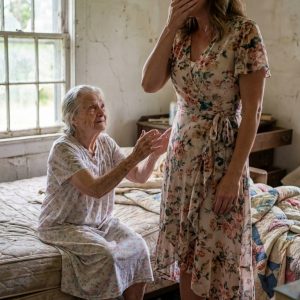
Chapter 1: The Severed Orchid
The steel jaws of the pruning shears snapped shut with a definitive, metallic percussion that echoed through the humid glass walls of the greenhouse.
I held the severed stem of an imported Cattleya orchid, a ghost-white bloom that felt like velvet between my calloused fingers. My sister, Isabella, had sent it a week ago—a peace offering, she claimed, though her peace always came with a hidden surcharge. The flower was exquisitely expensive, breathtakingly rare, and fundamentally doomed. It was dying before it had even fully opened because it lacked a root system. It had been forced into a decorative vase, stripped of its source of life for the sake of a temporary aesthetic.
Much like my position in the Ramirez family.
“It’s simply a matter of emotional equilibrium right now, Penelope,” my father’s voice drifted from the speakerphone on my potting bench, sounding tinny and strangely hollow amidst the fragrance of damp moss and peat. “Isabella is navigating a particularly treacherous rough patch with Preston. She’s fragile. Seeing you so radiant, achieving every milestone you’ve ever chased… it’s like pressing a hot iron to an open wound. I can’t in good conscience walk you down that aisle and leave her languishing in a pew, feeling like a secondary character in her own life.”
It was seventy-two hours before I was supposed to stand at the altar. Hector Ramirez wasn’t withdrawing his support due to a medical crisis or a logistical catastrophe. He was stepping down because my joy was an intolerable inconvenience to his favorite daughter’s ego.
“Your father is articulating the truth, sweetie,” my mother’s voice joined the fray, muffled as she likely arranged her own silk flower displays in the climate-controlled silence of their living room. “Just walk the aisle solo. It’s a very vanguard, modern statement to make. It’s truly not the existential crisis you’re making it out to be.”
Most people harbor the delusion that shared blood is an unbreakable contract of loyalty. They believe that when the winds of life turn glacial, family will form a phalanx around you. They are wrong. Sometimes, the people who share your genetic code are merely spectators, perched in the front row, waiting for the precise moment you stumble so they can critique your fall.
I placed the dead orchid on the dirt-rimmed cedar table. I didn’t scream. I didn’t demand to know how they could justify incinerating my wedding day to protect the brittle vanity of a thirty-four-year-old woman. The tears I might have shed a decade ago had long since evaporated, replaced by a cold, clinical clarity that felt like obsidian. My mind flickered to a memory of being twelve, standing stiffly next to a first-place science fair project about soil nitrogen levels. Next to me had been two empty chairs. My parents had forfeited the finals because Isabella had a cheerleading callback that “required their parental energy.” The architecture of their abandonment wasn’t new; only the magnitude of the betrayal had evolved.
“I understand,” I said. My voice was a flat line, a calm sea before a tsunami.
“Oh, thank the heavens,” my father exhaled, the sound of a man who had successfully dodged a bullet. “You were always the pragmatist, Penny. The sturdy one. We’ll sit in the far back, make a discreet exit after the ceremony. We’re committed to helping Isabella coordinate her anniversary gala later that evening, so we have to conserve our strength.”
“I’ll see you Sunday,” I replied, and ended the call before the silence could become an apology they didn’t mean.
I picked up my phone and navigated to an encrypted cloud drive I had maintained with the meticulousness of an accountant for six months. It was a digital vault titled Receipts. I uploaded the recording of the call—Montana is a one-party consent state, a fact my father frequently forgot—and watched the green progress bar crawl toward completion.
Outside the greenhouse, the Bozeman wind rattled the reinforced glass, carrying the scent of pine and impending snow. At twenty-nine, I was the founder and CEO of Borealis Botanicals, a company specializing in high-altitude medicinal flora. My family dismissed it as a “weed-picking hobby” until they needed a loan. I was accustomed to the cold. I had learned to thrive in the frost while Isabella demanded the greenhouse be heated just for her.
I sent a short, sharp text to my fiancé, Elias: “Dad just withdrew. He won’t walk me. Isabella feels ‘overshadowed’ by my happiness. The gala is the priority.”
Thirty seconds later, the screen lit up: “Do not let it graze your heart. I know exactly who to call. The Thorne family doesn’t leave its own to walk alone.”
I stared at the phone, a cold smile touching my lips. My family had spent years treating Elias like a lowly mountain guide, a “rustic distraction” for their practical daughter. They had no idea that the man they looked down upon was the silent architect of a world they couldn’t even afford to visit.
I looked at the “Receipts” folder one last time. There were documents in there that could end a career. There were photos that could dissolve a marriage. I hadn’t wanted to use them. I had wanted a father to walk me down an aisle. But as I looked at the severed orchid, I realized that some things have to be cut away so the rest of the garden can live.
Chapter 2: The Currency of Preston
To grasp why my father felt comfortable discarding my wedding like a wilted leaf, you have to understand the currency that kept the Ramirez household afloat. Its name was Preston Hayes.
My brother-in-law was a real estate developer who operated on a diet of aggressive pinstripe suits and the desperate need to be the most expensive person in any room. He made sure every waiter, valet, and distant relative knew the exact lease price of his vehicles and the square footage of his seasonal retreats. More importantly, he funded the elaborate illusion of my parents’ prosperity. Preston covered their country club dues; Preston leased my mother’s obsidian-black SUV; Preston bought the room, and therefore, Preston dictated the morality of the house.
The seeds of this week’s disaster were sown fourteen days ago at Bozeman Prime, a steakhouse where the lighting is low and the egos are loud. Elias and I sat at the far end of the velvet booth, sipping sparkling water, while Preston swirled a vintage Cabernet that probably cost as much as my greenhouse’s irrigation system.
“So, Elias,” Preston boomed, projecting his voice so the surrounding tables couldn’t miss his condescension. “Are you still dragging trust-fund tourists up the ridges? When are you going to surrender the outdoorsy charade and secure a real vocation? A man your age should be obsessed with equity and portfolio diversification, not trail maps.”
My father let out a quiet, subservient chuckle, a sound that made my skin crawl. I felt the muscles in my jaw lock, but Elias merely placed a large, calloused hand over my knee. His touch was grounding, a mountain of calm. He didn’t look offended; he looked at Preston with the detached interest of a biologist observing a particularly loud species of beetle.
“I find the trails provide an excellent perspective,” Elias said mildly, his voice deep and steady. “They usually lead exactly where I intend to go.”
Preston scoffed, a spray of red wine hitting the white tablecloth. “Ambition isn’t a universal language, I suppose. My new project on the West Side—the Vantage Point Condos—is going to be a tectonic shift for this city. The only thorn in my side is the easement. There’s a stubborn dinosaur of a landowner who refuses to take a meeting. I’ve instructed my legal team to find a loophole, a crack in the foundation, and squeeze the old man until he breaks.”
“Some men value the quiet of the dirt more than the noise of the concrete,” Elias offered, his eyes glinting with a secret I didn’t yet share.
Sensing the spotlight was beginning to drift away from her husband’s “conquests,” Isabella tapped her manicured obsidian nails against her glass. “Speaking of tectonic shifts, Preston and I have decided to host a spontaneous anniversary gala. It’s a celebration of our resilience. We’ve set the date for June 14th.”
The table fell into a cavernous silence. June 14th was my wedding day. I had sent out the save-the-dates eight months ago. My parents didn’t gasp. They didn’t even look at me. My mother simply pulled out her phone and began running a mental seat-map. “We’ll have to manage the logistics of both, won’t we, Hector? It’s going to be a marathon of a Saturday.”
“Of course,” my father agreed, his eyes fixed on Preston.
Isabella’s smile was a jagged shard of glass. She hadn’t chosen June 14th because of a romantic milestone. She had chosen it to force a public hierarchy, a deliberate test to prove she could summon our parents away from my life’s most significant event for the sake of a fabricated party.
As we walked to the parking lot after dinner, Preston’s Porsche sat gleaming under the streetlights, parked diagonally across two spaces. It was parked next to Elias’s dusty, ten-year-old Ford Bronco.
“Hope the old relic turns over in this mountain air, Elias,” Preston called out, clicking his key fob.
Elias walked past the Porsche, his eyes scanning the chassis with an expert’s gaze. He stopped for a second, running a finger along the rear fender. “It’s a beautiful machine, Preston. It’s the Tier 4 commercial leasing package out of the Seattle Enterprise hub, right? I recognize the fleet registration sticker in the corner of the windshield. They do exceptional maintenance on their corporate fleet vehicles.”
Preston’s hand froze mid-air. The smug, polished mask he wore began to fissure. “It’s a strategic business expense!” he snapped, his voice rising an octave.
We climbed into the Bronco. It roared to life with a primal, reliable growl. As we pulled away, I looked in the side mirror. Preston was standing motionless under the orange glow of the parking lot light, looking suddenly small and profoundly unsettled that a “poor mountain guide” had identified the exact commercial paper holding his entire lifestyle together.
“Elias?” I asked as we hit the main road. “How did you know that?”
“I know a lot of things about Seattle debt, Penny,” Elias said, his eyes on the road. “And I know that Preston Hayes is currently dancing on a very thin layer of ice.”
I went to sleep that night feeling the first tremors of a landslide.
Chapter 3: The Buyout and the Barrier
Forty-eight hours before the ceremony, the war moved from psychological to financial.
I was in the greenhouse, painstakingly labeling a batch of obsidian-root extract for a boutique pharmacy, when my phone buzzed. It was Sarah, the director of the Alpine Ridge Botanical Gardens, the venue where I was supposed to marry Elias in two days.
“Penny, I need you to listen very carefully,” Sarah said, her voice strained and vibrating with an anger she was trying to suppress. “Preston Hayes is currently in my office. He just placed a manila envelope thick with cash on my desk and asked for the ‘buyout price’ to secure the entire property for a private anniversary gala this Saturday night. He’s claiming it’s a family emergency and that you’ve agreed to move your ‘little garden party’ to a local park.”
The air in the greenhouse suddenly felt thin, as if the oxygen had been siphoned out. He wasn’t just trying to overshadow me; he was trying to buy the very ground from under my feet. He wanted to evict me from my own wedding.
“I told him to remove his money and himself before I called the Bozeman PD,” Sarah continued. “But he’s currently in the lobby, making loud calls to the board of directors. He’s trying to leverage his ‘investor status’ to force my hand. Penny, you need to handle this. Now.”
I grabbed my keys, my heart hammering a frantic rhythm against my ribs. But as I reached the end of my gravel driveway, a sleek, obsidian-black Lincoln Navigator pulled in, blocking my exit.
The door opened, and a woman stepped out who looked like she was carved from cold marble and expensive silk. It was Maya Thorne, Elias’s older sister. She was a senior corporate attorney from Chicago who was rumored to dismantle hedge fund managers for breakfast and spend her afternoons litigating the soul out of predatory lenders. She had arrived for the wedding early.
“Get in the car, Penelope,” Maya commanded. There was no room for negotiation in her tone. “Elias called. He handles the physical mountains; I handle the legal liabilities. Your brother-in-law has officially become a liability.”
We didn’t go to the gardens. We went to a quiet, high-end bistro where Maya ordered two espressos and opened a slim, matte-black laptop.
“Your family views your boundaries as a personal challenge,” Maya said, her eyes fixed on the screen. “Preston Hayes is a classic case of over-leveraged ego. He hates that he can’t control you with his perceived wealth, so he’s trying to destroy the venue of your happiness. It’s a primitive tactic.”
The door to the bistro chimed. As if summoned by the sheer darkness of the thought, Isabella and my mother walked in. They were draped in boutique shopping bags, looking flushed with the high of a spending spree. Isabella spotted us and sauntered over, her obsidian nails clicking against her designer clutch.
“Penny! What a coincidence,” Isabella cooed, though her eyes were cold. “We were just finalizing the centerpiece arrangements for the gala. Such a heartbreaking shame that your little garden gathering lacks the budget for imported Peruvian lilies. It’s going to look so… rustic.”
Maya didn’t look up from her laptop. She simply raised a hand, a gesture so sharp it silenced the entire table.
“You must be Isabella,” Maya said, finally lifting her gaze. Her eyes were like two shards of blue ice. “Elias mentioned your husband is a developer. I spent the morning analyzing distressed debt portfolios in the Pacific Northwest. We see men like Preston a lot. They utilize mezzanine financing to cover the gaps in their liquidity, praying for a market surge that never comes. One missed payment, one minor breach of a liquidity covenant, and the entire house of cards folds. The leased cars go back. The country club memberships bounce. The ‘investor’ status becomes a joke told in bankruptcy court.”
Isabella went a ghastly shade of pale, her hand trembling as she gripped her shopping bag. “I have no idea what you’re talking about. Preston is a pillar of the community. He’s successful.”
“I’m just a lawyer, Isabella,” Maya smiled, a expression that held no warmth. “I look at liability filings, not party invitations. I’d suggest you enjoy those centerpieces while you still have a table to put them on.”
Isabella dragged my mother out of the restaurant without another word.
“That,” Maya said, closing her laptop with a soft click, “is how you handle a bully. You show them the edge of the cliff they’re currently dancing on. We protect our own, Penny. If your father fails to stand as your guardian, the Thorne family will stand as your shield.”
But as we left the bistro, I saw a text from my father. My breath hitched.
“Penny, Preston’s primary investors need premium seating. I’ve reviewed your guest list. You need to uninvite Elias’s ‘mountain friends’ and relatives to make room for the Vantage Point board. If you don’t cooperate, I’m withdrawing my $500 florist contribution immediately. Don’t be selfish.”
The cliffhanger wasn’t the money. It was the realization that my father was willing to sell my guests’ seats for the price of a cheap bouquet.
Chapter 4: The Land Baron’s Gratitude
I returned to my greenhouse, the scent of lavender and soil failing to soothe the cold rage vibrating in my chest. I sat at my desk and pulled out my checkbook. I wrote a check for $500, marked the memo line “Floral Refund: Services Terminated,” and placed it in a stamped envelope.
I was about to walk to the mailbox when a vintage, meticulously restored Chevy pickup pulled into the lot. The engine died with a satisfied purr, and a man stepped out who looked like he had been forged from the very mountains that surrounded us.
This was Harrison Caldwell. To my parents and Preston, he was a “rural nobody,” a “stubborn dinosaur” who lived on a sprawling, messy ranch on the West Side. To the state of Montana, he was a billionaire land baron who owned more acreage than most European principalities.
Two years ago, Harrison’s prized stallion had been dying of a rare, localized fungal infection that baffled every vet in three states. I had spent forty-eight hours in my greenhouse, synthesizing an obsidian-root wash from a wild variety of mountain flora. I saved the horse. Harrison had tried to hand me a check for fifty thousand dollars. I told him to buy me a new greenhouse heater instead. We had been friends ever since.
I told Harrison everything. I told him about the wedding, the gala, and the attempt to buy out the botanical gardens. When I mentioned Preston’s “Vantage Point” project and the easement he was trying to force through a “stubborn dinosaur’s” land, Harrison’s eyes flared with a cold, dangerous recognition.
“Preston Hayes,” Harrison repeated the name, his voice a low growl. “The boy in the pinstripe suit who tried to tell me my dirt was worth less than his concrete. He needs an easement through my north ridge to access the main sewage line for his condos, does he?”
Harrison smiled, and for the first time, I felt a twinge of pity for Preston. It was like watching a kitten try to pick a fight with a grizzly.
“A father’s job is to clear the path for his daughter,” Harrison said, tipping his hat. “If Hector Ramirez is too busy polishing Preston’s shoes to do his duty, I suppose an old dinosaur like me can step in. Saturday is going to be a very interesting day, Penelope.”
He left just as the sun began to dip behind the peaks, painting the sky in bruises of purple and gold.
The next morning, the “quiet” before the storm was shattered by a text from my mother: “Izzy has a sudden nail emergency and a crisis with the gala caterer. I can’t make your final dress fitting this afternoon. Send pictures! I’m sure it looks fine!”
I stood in the bridal boutique an hour later, surrounded by mirrors and white lace, feeling like a ghost. The seamstress was pinning the hem of my silk-and-obsidian-beaded gown, and for the first time in this entire ordeal, I felt a crack in my foundation. I wasn’t mourning the wedding; I was mourning the parents I deserved but would never have. I was mourning the empty chairs that had followed me from the science fair to my own altar.
Then, the door chimed. Maya Thorne walked in, carrying two lattes and a garment bag. She didn’t say a word about my parents. She simply sat on the velvet sofa, critiqued the veil length with the eye of a high-court judge, and stayed for two hours while we debated the merits of a French bustle.
When the bill for the final alterations and the custom veil came out, it was nearly three thousand dollars. Before I could reach for my purse, Maya handed the consultant a high-limit corporate card.
“Consider it a Thorne family welcome gift,” Maya said, her voice softening just a fraction. “In this family, we don’t just show up. We protect our own.”
The rehearsal dinner that evening was the final confirmation of the hierarchy. My side of the long wooden table was an expanse of empty place settings. My parents and Isabella were at a steakhouse across town with Preston’s “investors.” Isabella had even posted a photo of the three of them clinking glasses with the caption: “Family is whoever supports your dreams, no matter how big they are! #GalaGlow #RealSuccess.”
I took a screenshot and showed it to Elias.
We were sitting in the shadows of the garden, the air smelling of cooling earth. Elias took my phone, his face going glacial as he scrolled through the post. He stood up, stepped into the hallway, and made a single, brief call.
“Pull the Hayes portfolio,” I heard him say, his voice devoid of his usual mountain-guide warmth. “The grace period for the Seattle mezzanine loan ends at midnight. Call the note. Execute the breach of contract clause based on the undisclosed secondary liens. Let’s see how many ‘investors’ stay in the room when the foundation starts to crumble.”
He walked back into the garden and kissed my temple, his breath warm against my skin. “We’re done extending him grace, Penny. Tomorrow, the garden belongs to you.”
The cliffhanger hung in the air: Elias wasn’t just a mountain guide. He was the “CEO” Maya had mentioned. And the Thorne family was about to dismantle the Ramirez’s golden boy.
Chapter 5: The Throne of Salt
Wedding morning arrived with a sky so clear it looked like obsidian glass. I sat in the bridal suite of the botanical gardens, the scent of blooming jasmine and lavender thick in the air. My phone buzzed on the vanity. It was a text from my mother:
“Breakfast with the Gala board ran late. We’re going to be a bit behind. We’ll just grab seats in the very back row so we can slip out early for Izzy’s gala. You understand! Have a great walk!”
I didn’t reply. Instead, I opened my banking app. I found the $500 floral refund check I had mailed to my father. I clicked “Stop Payment.”
Reason for stop: Services no longer required. Breach of contract.
I looked out the window. I saw my family’s sedan pull into the gravel lot. My father stepped out, adjusting his tie, his chest puffed out with a self-importance that was entirely unearned. He looked at the line of obsidian-black SUVs and luxury sedans parked near the entrance—guests of Elias’s family—and I could see him bragging to my mother. He likely thought they were Preston’s investors who had gotten the address wrong. He had no idea that the “hiking guy” he had mocked was the reason the Governor’s car was currently idling in the driveway.
The music began—a haunting, beautiful arrangement of cello and violin. I stood behind the massive oak doors of the garden conservatory. I was alone. No father stood beside me to offer an arm. No mother whispered a final blessing. There was only the silence of my own breathing and the weight of the obsidian beads on my dress. I braced myself to walk the aisle in total, humiliating isolation.
Then, a tall, broad shadow fell across the floor beside me.
I turned. Harrison Caldwell stood there, looking like a titan in a midnight-blue Tom Ford suit that probably cost more than Preston’s entire leased car collection. He held out his arm, his eyes crinkling with a fierce, paternal pride.
“A father’s primary duty is to clear the path and ensure the roots are protected,” Harrison whispered, his voice like rolling thunder. “Are you ready to show them what deep roots actually look like, Penelope?”
The doors swung open.
The gasp that rippled through the six hundred guests was audible over the music. My father, sitting in the very last row as promised, went a sickly, ashen gray. He clutched the back of the folding chair as he realized the “rural dinosaur” he had insulted was walking his daughter down the aisle.
Preston’s jaw literally dropped. He was looking at the man who owned the only access road to his West Side project, the man who held the power to grant or deny the easement that was the linchpin of his entire career.
We reached the altar. Harrison didn’t just hand me over; he leaned in and shook Elias’s hand with the grip of an ally. “Take care of her,” Harrison said. “She’s the rarest bloom in this state.”
“Always,” Elias replied, his eyes locked on mine with a heat that made the rest of the world vanish.
The ceremony was a blur of obsidian and light. But as we were pronounced husband and wife, I didn’t look at the back row. I didn’t look at the people who had planned their exit before the first vow was spoken. They were no longer participants in my life; they were merely spectators in a story they no longer had the right to edit.
At the reception, the hierarchy was finally, brutally established. Table 19—my family—was tucked into the darkest corner of the pavilion, right next to the kitchen service doors and the compost bins.
Preston tried to approach Harrison Caldwell at the bar, his face a mask of desperate, sweaty sycophancy. “Mr. Caldwell! I had no idea you were a friend of the family! About that easement on the North Ridge—”
Maya Thorne stepped in before Harrison could even turn around. She held a glass of champagne in one hand and a legal folder in the other.
“The foreclosure proceedings on the Vantage Point project begin Monday morning, Preston,” Maya said, her voice echoing in the quiet of the bar area. “Thorne Enterprises acquired your primary notes from the Seattle hub yesterday. And since my brother is the CEO of Thorne Enterprises, I’d suggest you enjoy the open bar while it lasts. It’s likely the last top-shelf drink you’ll be having on someone else’s dime for a long, long time.”
Preston looked like he was going to hyperventilate as Harrison stood up to give the primary toast.
“Most people in this room see a beautiful bride,” Harrison boomed, his voice silencing the music. “But I see the sharpest scientific mind in the state of Montana. Penelope Ramirez—now Thorne—just signed a five-million-dollar exclusive contract with my global spa collective to provide Borealis obsidian-root extracts. She is a self-made titan of her industry.”
The room erupted. My father sat paralyzed in the back, his hands shaking. He had traded a diamond for a piece of broken glass. He had abandoned a titan to serve a fraud.
Isabella grabbed Preston’s arm and fled into the night before the cake was even cut.
The cliffhanger? Monday morning was coming, and the Ramirez’s house of cards was about to be burned to the ground.
Chapter 6: The Harvest of Hubris
On Monday morning, while the sun was just beginning to touch the peaks of the Gallatin Range, Elias and I were boarding a plane for Costa Rica. I powered off my phone, the screen flickering with fifty-two missed calls from my father and sixteen increasingly frantic texts from Isabella.
I didn’t read them. I didn’t need to. I knew exactly what the “Receipts” folder looked like when it was empty.
When we returned ten days later, tanned and grounded by the salt air, my family was waiting in the parking lot of my new, fifty-acre cultivation facility. They looked like they had aged a decade in a week.
“Penny!” Hector shouted, stumbling toward me as I stepped out of the truck. His suit was wrinkled, his eyes bloodshot. “Preston took out a second mortgage on our house to float the Vantage Point interest payments! The bank is taking everything! They’re seizing the cars! You have to tell Elias to show mercy! We’re family, Penny! We share the same blood!”
I didn’t yell. I didn’t even raise my voice. I reached into my bag and handed my father a printed transcript of the phone call where he told me my happiness was “rubbing salt in Isabella’s wound.” I showed my mother the receipt for the manila envelope of cash Preston had tried to use to bribe the botanical gardens.
“Respect is a currency, Hector,” I said, looking him in the eye. “You spent every cent of yours on a fraud. You traded your daughter’s wedding for a leased Porsche and a gala that never even happened because the caterers walked out when the check bounced.”
“What are we supposed to do?” my mother begged, clutching her boutique bag which now looked pathetic and empty. “We have nowhere to go.”
“Figure it out yourselves,” I said. “You’ve always praised Isabella’s ‘vision’ and Preston’s ‘ambition.’ I’m sure they can innovate a solution for you in that duplex they just moved into.”
Security escorted them off the property.
The aftermath was a clinical harvest. Preston Hayes ended up as a site safety inspector on one of Elias’s new sustainable housing projects. He wears an orange vest and mud-caked boots, working ten-hour shifts for the very man he mocked as a “hiking guide.”
My parents lost the country club house. They live in a small duplex on the edge of town. Hector tried to cash that $500 floral refund check three weeks later, desperate for grocery money, only to find the “Stop Payment” notice waiting for him.
I stood in my new lavender field, the scent of the purple blooms clean and grounding in the mountain air. Harrison Caldwell rode up on his horse, looking out over the yield.
“The crop looks exceptional this year, Penelope,” Harrison said, tipping his hat.
“It’s good soil, Harry,” I said, leaning against the fence. “You just have to know what to pull out by the roots before it chokes the rest of the garden.”
Elias walked out from the facility, two coffees in hand. He pulled me close, his presence a mountain that didn’t need to shout to be heard. I wasn’t the twelve-year-old girl waiting for empty chairs to fill anymore. I wasn’t the daughter waiting for a father who would never choose her.
I was a Thorne. I was a scientist. I was a titan standing on my own land.
I had learned the most important lesson of all: A boundary isn’t a wall designed to keep you in. It’s a gate. And when you finally realize you’re the only one with the key, the silence of the garden is the most beautiful sound in the world.
I sat at my desk that evening and looked at a final, desperate letter from my father. I didn’t write a long, emotional reply. I just took a piece of stationary and wrote one single sentence:
I hope you find the peace you refused to give me.
I sealed the envelope, walked into the sunset, and let the obsidian darkness of the mountain night finally feel like home.