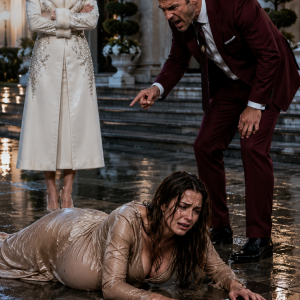
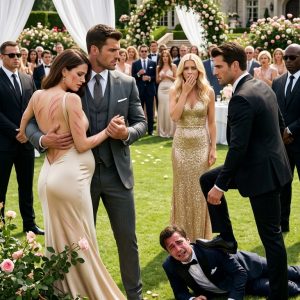
Have you ever wondered what ninety-six million dollars of family betrayal tastes like? To me, it tasted like rosemary-crusted lamb and expensive champagne that had turned to vinegar in my mouth.
I am Noel Quincy. And tonight, at the inheritance dinner everyone in our social circle had been whispering about for months, my father finally said the words out loud.
He stood at the head of the mahogany table, resplendent in a midnight-blue suit my mother had picked out for him, and raised his crystal flute. He smiled at my little brother, who had been home exactly four weeks.
“To the future,” Dad announced, his voice booming with the confidence of a man who believes he is the architect of his own fortune. “Everything—the company, the real estate holdings, the investment accounts. Ninety-six million in total assets. It now belongs to Ben.”
My mother, looking frail but fiercely proud in her pearls, nodded. “He deserves it, Richard. He deserves it more than you ever did, Noel.”
The room erupted in polite, wealthy applause. Uncles, cousins, and board members clapped their soft hands together. I sat frozen for a heartbeat, listening to the sound of my own erasure. Then, I stood up.
I didn’t scream. I didn’t flip the table. I walked slowly to the head of the table, my heels silent on the Persian rug, and placed four specific items directly in front of my father.
First, the yellowed, crease-worn document of the Medical and Financial Power of Attorney, signed years ago when neither of my parents could hold a pen without shaking.
Second, the heavy brass ring of house keys.
Third, the single, iron key to the gun safe.
Fourth, a thick manila envelope, sealed with red notary wax that gleamed under the chandelier like fresh blood.
I looked straight at Ben, who was wearing a smug grin he’d been practicing in the mirror.
“Congratulations,” I whispered.
Then, I turned and headed for the heavy oak doors.
Dad laughed under his breath, a dismissive sound. He likely thought it was some dramatic resignation letter, a final plea for affection. He slid a butter knife under the wax seal and ripped the envelope open right there, in front of twenty relatives and his oldest friends.
His eyes scanned the first line. Then the second.
The champagne flute slipped from his fingers. It hit the hardwood floor with a shatter that silenced the room instantly.
“You’ve got to be kidding me,” he roared, slamming his fist onto the table so hard the fine china jumped.
“This is insane!” Mom screamed, her voice cracking.
Ben froze, his grin dissolving into confusion. Every head turned to look at me. I was still walking away, my hand on the brass doorknob.
If you have ever been told you are worth nothing after giving everything, drop a comment below and tell me where you are watching from. Because what happens next is exactly why you never underestimate the quiet one.
[Cliffhanger: As I opened the door to leave, my father began to read the legal text aloud, his voice trembling with a horror that was just beginning to dawn on him.]
Five years ago, I wasn’t the villain of the family dinner. I was living the dream in Seattle.
I was a senior software engineer at a health-tech unicorn, pulling in just under three hundred thousand a year, leading a twelve-person AI team that was weeks away from closing our Series C funding. My calendar was a mosaic of investor dinners and keynote invitations. I had a life that was mine, built on my own merit, far away from the stifling expectations of Edina, Minnesota.
Then, one Tuesday morning, my phone rang at 5:47 AM Pacific time.
It was the charge nurse at the Mayo Clinic in Rochester. Dad had collapsed at the office. A massive ischemic stroke. They were wheeling him into emergency surgery as we spoke.
By the time I landed at MSP four hours later, he was already in a medically induced coma, machines breathing for him, a terrifying array of tubes snaking from his body.
Two days after that, Mom went in for a cough she thought was bronchitis. The diagnosis came back like a sledgehammer: Stage III Lung Adenocarcinoma. Chemo started the following Monday.
She lost thirty-two pounds in six weeks. She became so frail she could barely lift a coffee cup without spilling it.
I didn’t think twice. I took indefinite unpaid leave that same week. I packed two suitcases, sublet my beloved Capitol Hill apartment, and moved back into my childhood bedroom in Edina. The company in Seattle was gracious. “Take all the time you need, Noel,” they said.
They replaced me in nine days.
The first year blurred into a loop of fluorescent hospital lights and the smell of antiseptic—a scent that sticks to your skin and ruins the taste of food. I slept on the vinyl recliner in Dad’s ICU room for more than three hundred nights. I learned how to suction his tracheotomy tube when the night nurse was overwhelmed with other patients. I learned how to mix Mom’s chemo drugs at home because the home health agency was perpetually short-staffed.
By month eight, I could start an IV line in the dark.
Dad finally woke up after six weeks in the coma, but the stroke had stolen his speech for eight solid months. He could only nod. Squeeze my hand twice for yes, once for no. Mom’s hands shook so badly from the neurological side effects of the treatment that she couldn’t sign her own name on a check.
The hospital social worker sat me down with their estate attorney in a small, windowless room.
“Minnesota law is clear, Ms. Quincy,” the attorney said gently. “If both parents are incapacitated, someone has to hold medical and financial Power of Attorney, or the state steps in as a guardian.”
They both signed the documents on the same gray afternoon. Shaky X’s witnessed by two nurses and a notary who came up to the neuro floor.
That signature made me the acting CEO of Quincy Medical Supply. Overnight. Zero paycheck attached.
I was thirty years old, suddenly running a ninety-person company that manufactured ventilators and portable X-ray machines, all while pushing Mom’s wheelchair to radiation therapy every morning. I taught myself corporate finance from YouTube tutorials and SEC filings at 2:00 AM, the only quiet time I had. I signed vendor contracts, approved payroll, and wrestled with insurance giants, all while Dad watched me from his hospital bed with eyes that looked wet and apologetic.
Meanwhile, my little brother Ben had vanished off the face of the earth.
The last anyone had heard, he was in Phoenix, deep into a spiral of opioids following a back injury from a construction job. He had been arrested for possession with intent to distribute eighteen months before Dad’s stroke. The Arizona court gave him a binary choice: twelve months of mandatory residential rehab, or prison.
He picked rehab. The program had a strict no-contact policy for the first six months. But then, the six months passed, and he just… never called.
Mom kept his bedroom exactly the same, a shrine to a boy who wasn’t there. It was as if he were away at college, rather than ghosting us during the darkest chapter of our lives.
I didn’t have the emotional bandwidth to chase him. Every dollar the company earned kept the factory lights on and paid for Mom’s experimental immunotherapy—a treatment insurance had denied twice. I fought those denials myself. I wrote the appeals. I flew to Chicago to meet medical directors and refused to leave their offices until they signed the approvals.
Dad started speech therapy and could finally whisper “Thank you” around month fourteen. Mom’s scans showed tumor shrinkage for the first time.
I let myself believe we were turning the corner. I was wrong. That corner was still three and a half years away.
[Cliffhanger: I thought the battle was against death and bankruptcy. I didn’t realize the real enemy was about to ring the doorbell at 7:00 AM.]
The morning the doorbell rang, I was elbow-deep in payroll reports, eyes burning, fueled by cold coffee and adrenaline. I hadn’t slept in thirty-one hours.
I opened the door and found Ben standing on the porch. He held nothing but a faded army duffel bag.
He looked different. Thinner. Clean-shaven. His eyes were clear for the first time since he was seventeen.
“I finished the program,” he said, his voice raspy. “Fourteen months clean. Court-ordered rehab in Arizona. They let me out three weeks ago.”
Mom came running from the kitchen in her silk robe, took one look at him, and collapsed into his arms, sobbing as if he had returned from a foreign war rather than a drug den. Within an hour, she had called every relative within a hundred miles. By noon, the house smelled like cinnamon rolls and second chances.
That same afternoon, the rewriting of history began.
Mom sat Dad down in his recliner and told him—loud enough for me to hear from the hallway—that Ben had simply been “finding himself” out West. That he had been networking with medical suppliers in Phoenix. That he had enrolled in online business courses.
Every ugly truth got sanded off and replaced with a shiny new narrative. By dinner, the official family line was set: Ben had never been an addict. He had been an entrepreneur in training.
The next day, Ben walked into the company like he had never left. Mom marched him straight to the executive floor, bypassing my cubicle, and introduced him to the leadership team as “The Future of Quincy Medical Supply.”
The COO, a man named Mark who owed his continued employment to me keeping the company afloat for half a decade, shook Ben’s hand like he was royalty. “Do you want the corner office repainted, son?” he asked.
Three days later, my login stopped working.
I called IT. They told me the COO had ordered a full password reset “for security reasons.”
Translation: My access was gone.
Board meeting invites stopped showing up in my inbox. When I asked Dad about it, helping him button his shirt because his fingers were still stiff, he just shrugged. “Mom thought it was time Ben took the reins, Noel. You look tired. You should rest.”
I kept showing up anyway.
I slipped in through the factory entrance before dawn. I worked from an empty cubicle on the third floor that nobody used anymore. I approved purchase orders that somehow never got countersigned. I fixed pricing errors that would have cost us six figures. I sent emails that went unanswered.
At night, I drove home, ate microwaved lasagna alone while they laughed in the dining room, and then I coded on my laptop until the sun came up again. I was building something nobody in that house knew existed yet.
Ben started holding daily “stand-ups” in the conference room I used to run. He wore crisp shirts Mom ironed for him and repeated buzzwords he’d picked up from a podcast. Synergy. Vertical integration. Disruptive growth.
Employees who once brought me coffee now brought him reports. The ones who still nodded at me in the hallway did it fast, eyes downcast, as if acknowledging me might get them fired.
Mom redecorated his old bedroom the first weekend. New mattress. New desk. Framed photos from when he was the high school quarterback. She hung a sign on the door that read: Ben, Future CEO.
When I walked past it, I felt the walls of the house closing in, suffocating me.
Dad started asking Ben’s opinion on everything. Inventory levels. New product lines. Whether we should bid on the massive Coleman Regional contract. Every time I tried to speak up, to offer data or strategy, Mom cut me off with a smile that didn’t reach her cold eyes.
“Let your brother handle it, honey,” she’d coo. “You’ve done enough.”
I stopped arguing. I just nodded, went back to my shadow workstation, and kept the company breathing while they planned a victory parade for a ghost who had been gone the entire war.
[Cliffhanger: They thought silence was submission. They didn’t know that while they were planning a party, I was finalizing a kill switch.]
The night the chandelier lit up the dining room like a showroom, twenty-two place settings waited under crisp white linen. Silver clinked against crystal while the caterers poured the second round of expensive champagne.
Everyone who mattered in our little Minnesota empire was there. Uncles who still sat on the board. Cousins who owned car dealerships. Dad’s oldest golf buddies. Even the family minister was there, eyeing the roast lamb.
Dad stood at the head of the table. His voice had gotten stronger in the last year. He didn’t need the microphone someone had set up just in case.
“Tonight isn’t just a dinner,” he began, lifting his glass higher. “Tonight, we pass the torch to the next generation. To the person who has proven he belongs at the helm.”
He turned and placed a heavy hand on Ben’s shoulder. My brother wore that same proud grin.
“Last week, I signed the final documents,” Dad continued. “Ninety-six million dollars in company equity, the real estate holdings, the investment accounts. Everything now belongs to Benjamin.”
A ripple of applause rolled around the table. Someone whistled. Aunt Linda dabbed her eyes with a monogrammed napkin. Mom reached over and squeezed Ben’s hand so hard her knuckles went white. She looked straight at me across the centerpiece and smiled the sweetest, cruelest smile I had ever seen.
“He deserves it far more than you ever did, Noel,” she said.
The words landed clean and sharp, like a scalpel. A few cousins shifted in their seats, unsure where to look. Uncle Ray tried to start another round of clapping, but it died fast.
That was when I stood up. That was when I dropped the envelope.
We are back at the moment the glass shattered.
Dad held the pages up as if they were contagious, reading aloud in a voice that cracked between fury and disbelief.
“Eighteen months ago, while I was legally incapacitated and my wife was undergoing intensive chemotherapy, Noel Quincy, acting under valid Minnesota Medical and Durable Financial Power of Attorney, transferred ninety-eight percent of all Class A voting shares of Quincy Medical Supply into the Quincy Health Foundation Irrevocable Trust…”
He stopped, swallowed hard, and kept reading.
“With Lauren Brooks, Licensed Minnesota Estate Planning Attorney, appointed Sole Trustee. The Trust is irrevocable under Minnesota Statutes Section 501c. This instrument was dated and notarized at Mayo Clinic, Rochester.”
He looked up, his eyes wild.
“Effective tonight, upon formal notification to all financial institutions, the Freeze Clause activates. No transfer, sale, pledge, or distribution involving prior shareholders may occur without Trustee consent. Any attempt to revoke or amend is void.”
The words hung in the air like smoke after a gunshot. Uncle Ray’s mouth actually fell open. Aunt Linda’s champagne flute slipped and shattered on the hardwood. Nobody moved to clean it.
Dad’s hand shook so badly the papers rattled. “This… This can’t be legal,” he rasped.
Gregory Hayes, Dad’s college roommate, a board member for thirty-five years, and the man who still controlled the company’s main banking relationship, felt his phone buzz against his chest. He pulled it out, glanced at the screen, and went the color of printer paper.
“Richard,” he said quietly, holding the phone so everyone could see the US Bank alert. “All operating accounts, line of credit, merchant services… everything is frozen as of midnight tonight. They’re citing the Trust notification that just hit their legal department.”
Mom made a sound like a wounded animal and slid sideways out of her chair. Two cousins caught her before she hit the floor.
Ben shot to his feet, face twisted toward me where I still stood near the archway. “What the hell did you do?” he screamed, veins standing out in his neck.
I didn’t answer. I didn’t need to. The documents were doing it for me.
Dad kept flipping pages, voice rising with every paragraph. “Contingent Beneficiary upon Trustee discretion: Quincy Health Systems LLC, a Minnesota entity formed three years ago for the purpose of…”
He looked up, eyes wild. “You built another company? With whose money?”
He didn’t wait for an answer. He already knew whose sleepless nights had paid for it.
Gregory tried again, softer this time. “Rich, I just got off with our relationship manager. The freeze is ironclad. They won’t even let us make tomorrow’s payroll without Trustee approval. We’re locked out.”
Someone’s wife started crying quietly into her napkin. The minister stared at his plate like he’d never seen salmon before.
Ben lunged across the table, knocking over water glasses, grabbing for the papers. Dad yanked them away, clutching them to his chest as if letting go would make them disappear.
“You think you can steal my company?” Dad shouted at me. “After everything we gave you?”
I finally spoke. My voice was calm, flat, dead.
“You signed the Power of Attorney yourself. Mom signed it the same day. Both of you were lucid enough to know exactly what it said. Minnesota doesn’t let you take it back just because you changed your mind later.”
Mom, still half on the floor, whimpered. “We thought you were helping us, not robbing us!”
I looked at her for a long second. “I was helping you survive. You just forgot to notice who kept you alive.”
[Cliffhanger: But the worst blow hadn’t landed yet. My phone buzzed in my pocket with the email I had been waiting for all night.]
By the time the last guest pulled away, tail lights reversing frantically out of the driveway, the official email from Coleman Regional Health Network hit the executive distribution list.
Subject: SELECTION OF VENDOR FOR ENTERPRISE-WIDE OPERATING SYSTEM
I had already seen it an hour earlier. Coleman—eighteen hospitals across Minnesota and Western Wisconsin, a sixty-two million dollar contract everyone thought was in the bag for Quincy Medical Supply—had chosen Quincy Health Systems.
My company. The one I registered in a tiny WeWork in downtown Minneapolis three years ago. The one I coded for after midnight while the factory floor downstairs still stamped out ventilators under the old name.
The email was short and brutally polite.
“After exhaustive evaluation, Coleman Regional Health Network is proud to announce our partnership with Quincy Health Systems LLC for full AI-driven patient flow, supply chain, and revenue cycle management. Implementation begins Q1.”
Dad read it aloud in the now-empty dining room, his voice hollow. Ben snatched the phone, scrolled, then hurled it against the stone fireplace. Glass and lithium batteries scattered across the hearth.
At 8:17 the next morning, the entire staff of Quincy Medical Supply received the same mass text from HR: “Due to unforeseen banking restrictions, payroll processing for the current period has been suspended. Further updates to follow.”
By 9:00 AM, the factory WhatsApp groups were on fire. Forklift drivers posted photos of the gates chained shut by the bank’s repo team. The head of accounting livestreamed herself crying in the parking lot because her direct deposit alert bounced.
The family’s longtime attorney, Tom Erickson, finally returned Dad’s nineteenth call. I could hear every word through the study door.
“Richard, I’m sorry. Conflict of interest. Lauren Brooks is on retainer with the Trust now. I can’t represent you against it. You need new counsel.” Click.
Ben disappeared upstairs. Ten minutes later, the sound of splintering wood and shattering glass rained down from the second floor. Mom ran up screaming his name. Something heavy hit the hallway runner. Later, we found it was the mahogany dresser she’d bought him for graduation.
Dad sat on the bottom step, head in his hands, staring at the scattered trust pages like they were written in another language. He kept muttering numbers. “Ninety-six million… Sixty-two million…” The mortgage balance. Mom’s medical bills that were still coming due.
I stood in the kitchen, drinking coffee I couldn’t taste, and watched the Empire finish bleeding out in real time.
By noon, the Star Tribune had the story on their website. Someone at Coleman leaked the vendor announcement. Someone at the bank leaked the freeze. The headline was merciless: MINNEAPOLIS MEDICAL SUPPLY GIANT LOCKED OUT OVERNIGHT. NEW AI STARTUP TAKES CROWNING CONTRACT.
My phone buzzed with a different kind of notification. A Series B term sheet from a Silicon Valley fund I’d been talking to quietly for six months. They’d just increased their valuation after seeing the Coleman win.
I accepted the congratulations with a thumbs-up emoji and turned the screen off.
Upstairs, Ben had punched through the drywall and was now sobbing on the landing. Mom tried to hold him the way she did when he was nine and broke his arm at hockey practice. He shoved her away hard enough that she stumbled backward into the banister.
Dad didn’t move to help. He just kept staring at the same paragraph in the trust document—the one that said in plain English that not a single share could ever come back. Minnesota law. Ironclad. Final.
I set my empty mug in the sink. I picked up the small overnight bag I’d packed two days earlier. I walked out the front door without a word.
The cold November air tasted like freedom.
[Cliffhanger: I walked away, but the destruction of the Quincy family was far from over. Gravity comes for everyone eventually.]
Nine months later, the “For Sale” sign in front of the Edina house was sun-bleached and leaning.
Quincy Medical Supply ceased to exist. Chapter 11 bankruptcy lasted exactly eleven weeks before the creditors smelled blood and the judge converted it to Chapter 7 liquidation. By June, the factory machines were sold off in lots to a distributor out of Chicago. The office furniture went to a startup incubator for pennies on the dollar.
The house followed five months after the first missed mortgage payment. The Trust never touched real estate, but without the company income, the mortgage was suffocating. US Bank filed for foreclosure in Hennepin County District Court and won by default.
A young couple from Eden Prairie bought it for sixty-two cents on the dollar. They posted closing photos on Instagram—new quartz counters, fresh paint. No trace of the family that had lived there for twenty-seven years.
Ben lasted seventy-three days on the outside.
He tested positive for fentanyl the first time he tried to visit Mom after the eviction notice. Two weeks later, Minneapolis PD picked him up asleep in a stolen Civic with a backpack full of pills. The public defender negotiated a plea: eighteen months at MCF-Lino Lakes with mandatory chemical dependency treatment.
Mom cried when they took him away in cuffs. Dad didn’t go to the courthouse.
They moved into a one-bedroom unit above a laundromat in St. Louis Park. Second floor, south-facing. $1,180 a month, heat included. Dad’s social security and early retirement pension came to $4,416 combined. Mom’s Medicare Advantage covered most of her maintenance chemo, but the co-pays still ate half of every check. They bought groceries with SNAP benefits and kept the thermostat at sixty-two degrees.
They filed three lawsuits against me. One for “undue influence,” one for breach of fiduciary duty, and one emergency motion to unwind the Trust.
Every judge cited the same thing: The Medical and Financial Powers of Attorney were executed when both grantors had legal capacity, witnessed by Mayo Clinic staff, notarized, and recorded. Minnesota does not recognize regret as grounds for revocation.
Case dismissed with prejudice. Attorney fees on the plaintiff.
Mom tried to reach me once. She created a new Gmail address and sent a single message from the public library.
We’re sorry. Please come see us. We have nothing left.
I never replied. The email went to an inbox I closed the same week.
Today, I stand on the forty-second floor of the Capella Tower in downtown Minneapolis. I watch the light bounce off Lake Calhoun—the same lake I rode my bike around every summer as a kid.
The glass wall in front of me carries the new logo: Quincy Health Systems. NASDAQ ticker: QHS.
We rang the bell four months ago. The opening price put the company at $1.9 billion. The stock has more than doubled since.
My office takes up half the floor. Floor-to-ceiling windows. White oak. A single orchid on the credenza. No photos on the walls. No family pictures. Nothing that reminds me of Edina, of hospital recliners, of the smell of antiseptic and betrayal.
I changed every number the week I walked out. New phone. New email. New accounts. I blocked every cousin, every high school friend who still had Mom’s landline memorized. My assistant screens everything. Not one message has made it through.
Some nights, I pull up the old house on Zillow out of habit. The listing photos cycle every few months. New furniture. New paint. New people smiling in rooms that used to be mine. The algorithm thinks I’m interested in real estate. It doesn’t know I’m just checking that the past is still gone.
I never went back. Not for Christmas. Not for Dad’s birthday. Not when Ben overdosed the second time and the social worker called from Hennepin County Medical Center looking for next of kin. I let it ring until voicemail gave up.
People ask if I feel guilty. Reporters, mostly. They want tears, or at least a dramatic pause. They want the prodigal daughter who built an empire on revenge and now wrestles with regret.
I don’t.
I don’t feel triumph, either. Revenge tastes like ash after the first bite.
What I feel is quiet. The kind of quiet you only get when the noise finally stops screaming in your head.
I kept the company alive when no one else would. I turned five years of sleepless nights into software that now predicts patient readmissions with 94% accuracy across eighteen hospital systems. I created 380 good jobs in a city that watched the old factory gates rust shut. I funded two free clinics in North Minneapolis that carry my mother’s maiden name—because I could, not because I wanted her gratitude.
That’s the part strangers never understand. This wasn’t about taking something away. It was about refusing to let everything I sacrificed become someone else’s unearned trophy.
I still sign documents Noel Quincy because the SEC requires it, but the name feels like a borrowed coat. I haven’t said it out loud to another human being in over a year. When people ask what the “Q” stands for in the company logo, I tell them it stands for Quiet.
Some lessons are expensive, but they’re still lessons.
Never give more than you can afford to lose. Never mistake tolerance for forgiveness. Never assume the people who need you today will remember you tomorrow.
And if the day ever comes when they try to hand your life’s work to someone who wasn’t there when it was bleeding, remember that the law can be a weapon, too—if you’re willing to wield it while everyone else is busy clapping.
I don’t forgive. I don’t look back. And I no longer carry their name in my future.