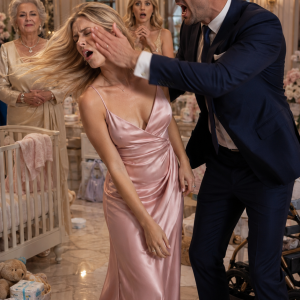
The Sound of Consequences: How My Parents Sold My Daughter’s Future
The second my father laughed at the missing cello, I knew the family I had spent thirty-four years trying to please was gone. In their place stood strangers who looked like them, wore their clothes, and shared my DNA, but who possessed hearts made of rot.
My parents sold my eleven-year-old daughter’s antique cello—the one she received from my grandmother, a Guarneri model appraised at $87,000—and spent the money on an in-ground pool for my sister’s children.
When my grandmother found out, she didn’t cry. She didn’t scream. She smiled the way a general smiles when the enemy walks directly into a minefield, and said, “The cello was never theirs to sell.”
But I’m getting ahead of myself. To understand the crash, you have to see the car wreck in slow motion.
It started on a Tuesday, the kind of humid afternoon that sticks your shirt to your back. I knew something was wrong before we even reached the music room. You can smell a renovation the way you can smell a lie. Fresh paint, sawdust, and that sharp, chemical tang of epoxy that says someone has spent a significant amount of money they didn’t tell you about.
Lucy, my daughter, climbed out of the car with her backpack and her rosin tin clutched in her hand. She was light on her feet because the heavy part—the important part—was already inside. The cello lived at my parents’ house in my grandma’s old music room. Lived being the operative word I didn’t understand was past tense yet.
“Do you think Great Grandma will be there today?” Lucy asked, pulling her ponytail tighter as if she could control the universe with elastic.
“She’s at her new place, honey,” I said, locking the car. “We’ll call her later.”
Lucy nodded, but her eyes stayed hopeful. She had this naive belief that my grandmother might have changed her mind about moving to the assisted living facility and come back to the house simply because she missed the smell of my dad’s aftershave and my mom’s passive-aggressive sighs.
We walked up to the front door. I had a key. Not because I was especially trusted, but because I was useful. There is a difference. One gets you love; the other gets you alarm codes and errand lists.
The second I opened the door, I heard it. A muffled whine of power tools somewhere in the background. And the smell—definitely construction. Definitely cash.
Lucy’s face lit up. “Are they fixing the music room?”
I didn’t answer right away because my brain was buffering, trying to reconcile the modest budget my parents claimed to have with the smell of high-end contractors. We stepped inside. A tarp covered the hallway runner like the house was prepped for surgery. Cardboard boxes lined the wall. Someone had taped off the entryway with blue painter’s tape—a polite way of saying, Don’t touch anything, peasant.
“Mom?” I called out.
No answer.
Lucy headed toward the back window that overlooked the garden. “Whoa!”
I followed her gaze and felt my stomach drop through the floorboards. The backyard looked excavated, as if the earth had been peeled open by a giant spoon. A massive rectangle had been carved out where the grass used to be. Piles of dirt sat like small mountains. There were forms along the edges, rebar grids, and stacks of travertine pavers.
It wasn’t a garden shed. It was a pool. A full-on, luxury in-ground pool.
“Is that for us?” Lucy asked. There was so much innocent hope in her voice that I actually hated everyone I was related to in that moment.
“I don’t know,” I said carefully, steering her away from the window. “Let’s get your cello.”
We walked down the hall toward the music room. This had always been my grandma’s territory. She’d turned it into a sanctuary: temperature-controlled, humidifier humming quietly, shelves lined with sheet music dating back to the 1940s. Lucy loved it in there. She said it smelled like polish and peppermint tea. I always thought it smelled like the only place in the house that respected boundaries.
I pushed open the door.
The humidifier was still running. The music stand was still there. But the corner where the velvet-lined hard case always rested—where Lucy’s cello rested like a sleeping child—was empty.
Not moved. Not shifted. Empty.
Lucy didn’t scream. She didn’t even inhale. She just froze. Then she walked to the corner slowly, like she was approaching a wild animal that might bite. She looked down at the spot in the carpet where the case had left indentations. She looked up at the shelf. She looked behind the armchair.
Then she turned to me.
“Did Great Grandma change her mind?” she asked, her voice small and fragile, like spun glass. “Did she take it back?”
My throat tightened so hard I could barely speak. “No.”
Lucy swallowed. “Then where is it?”
She didn’t sound angry. That would have been easier to handle. She sounded terrified, like the question itself might get her in trouble. Her fingers drifted to the edge of the music stand, expecting to feel the wood. When there was nothing, she pulled her hand back as if she’d been burned.
I left Lucy in the music room because I needed her not to see my face when I found the answer.
I marched toward the kitchen. My mom was there, of course. She was standing at the island, a mug in one hand and her phone in the other, looking like the picture of suburban serenity. My dad sat at the table, scrolling through his tablet, calm as a man who believes the world owes him a living. My sister, Rachel, was perched on a stool, sipping something green and expensive-looking.
“Where is Lucy’s cello?” I asked.
My mom blinked slowly, as if I were speaking a foreign language. “Good morning to you too, Emily.”
“I’m not doing this,” I said, my voice vibrating. “Where is it?”
My dad sighed, not looking up from his screen. “What’s the drama now?”
“Lucy’s cello,” I repeated. “The case is gone.”
Rachel snorted without looking up. “Oh, please.”
My mom took a sip of her coffee. “Your father handled it.”
Handled it. That phrase is a red flag printed in cursive.
“Handled it how?” I asked, my hands gripping the cold granite of the counter.
My dad finally looked up. “We sold it.”
The room went strangely quiet, like the house itself was holding its breath to see if I would explode.
I blinked. “You… sold it?”
“Yes,” my dad said, his tone flat, like he was explaining why he threw out old newspapers. “It was valuable. It was just sitting there. Your grandmother wasn’t even using it anymore.”
“It wasn’t hers to use,” I said, my voice rising. “It was Lucy’s.”
Rachel laughed. “She’s eleven, Emily. She doesn’t need a museum piece.”
My mom set her mug down with a soft, deliberative clink. “Emily, don’t start.”
“Don’t start?” I choked out a laugh that sounded like a sob. “You sold my daughter’s instrument. Who did you sell it to?”
“A private collector,” Dad said, shrugging. “Paid by wire. Quick sale. We got a good price.”
“A good price?” I stared at them. “That instrument was appraised at eighty-seven thousand dollars.”
My dad’s eyes flickered. “We didn’t get that much. It needed work.”
“And before you get any ideas,” my mom cut in, her eyes sharpening into slits, “you are not telling your grandmother.”
I stared at her. “Excuse me?”
“She doesn’t need the stress,” my mom said, her voice clipped and professional. “She is settling into her facility. The doctors said she needs peace. Let her have peace.”
“You mean let you have peace,” I shot back. “You mean you don’t want her to know you raided her legacy to dig a hole in the backyard.”
My dad stood up then. “Don’t make this about you. It’s a family asset.”
“No,” I said. “It was set aside for Lucy. Grandma was clear.”
Rachel finally looked up, eyes bright with annoyance. “And my kids are what? Chopped liver? Ben and Olivia need space to play. They deserve a childhood.”
“So Ben and Olivia deserve a heated pool, and Lucy deserves to have her heart broken?”
“Lucy will be fine with a student cello,” Dad said, waving his hand dismissively. “You can rent one for twenty bucks a month. Plenty of kids do.”
Lucy will be fine. That was my family’s favorite prayer. It translated to: We did what we wanted, and we refuse to deal with the wreckage.
I turned back toward the hall. Lucy was still in the music room, standing in the empty corner. I walked back to her, knelt, and took her cold hands in mine.
“We’re going home,” I said.
Lucy didn’t argue. She didn’t cry. She just folded, like she had been trained for this moment her whole life. As we left, my mom called after me.
“Emily! Do not call your grandmother. Do you hear me? Don’t ruin this for the family!”
I didn’t answer. I just walked out. And that’s when I knew I was going to tell my grandma everything.
That night, Lucy practiced on the battered student cello her teacher kept for emergencies. It sounded like a cardboard box strung with fishing line. Lucy didn’t complain. She adjusted her posture, focused, and tried again. Every time the sound came out thin and hollow, she blinked hard.
“I can still practice,” she said, her voice trembling. “It’s just… harder.”
“I know,” I said from the doorway.
“Maybe Great Grandma…” Lucy paused, staring at her hands. “Maybe she didn’t mean for it to be mine yet. Maybe I wasn’t good enough.”
I felt something inside me fracture.
My grandmother had spent hours in that music room with Lucy. She had corrected her grip with gentle touches, praised her specific phrasings. In a house where Lucy was usually told to be quieter, to take up less space, to not disturb her cousins, Grandma had given her a voice.
I waited until Lucy was asleep. Then I sat at my kitchen table and stared at my phone. My mom’s text was still sitting there: Let it go. Don’t cause trouble.
I realized then that I had spent my entire life trying not to be “difficult.” I thought being easy was the same as being loved. It isn’t. Being easy just makes you a convenient victim.
The next morning, I drove to the assisted living center.
My grandma lived in a bright, tidy apartment that smelled of lemon cleaner and expensive soap. She was sitting in an armchair, a book in her lap, her reading glasses perched on the end of her nose. She looked up the second I walked in.
“Sit,” she said. “Your face is doing that thing.”
I sat. “They did it.”
My grandma didn’t flinch. She just waited.
So I told her. I kept it simple. The missing cello. The pool excavation. The “family asset” comment. The warning not to tell her.
When I finished, she closed her book slowly.
“And Lucy?” she asked.
“She thinks it’s her fault,” I said. “She thinks she wasn’t good enough to keep it.”
My grandma’s expression hardened. Not into rage, but into something colder—clarity.
“She thinks it’s her fault,” my grandma repeated softly. She exhaled a sharp breath through her nose. “Emily, when did you last see the file?”
“What file?”
“The cello documentation. Appraisal, photographs, serial identifiers.”
“You showed me months ago,” I said. “Before you moved.”
“Good.” She leaned forward. “Do you have any proof of the pool? Photos? Texts?”
“I can screenshot Rachel’s Facebook,” I said. “She posted a ‘Work in Progress’ album this morning.”
My grandma nodded. “Do that.”
“Grandma, are you okay?”
She looked at me over her glasses. “I am not the one who should be worried.” She reached for her phone. “I’m going to make a call.”
“Who?”
“My lawyer,” she said. “Andrew.”
“What are you going to do?”
She gave me a small, terrifying smile. “I’m going to handle it. Not with yelling—that’s for amateurs. I’m going to handle it with paperwork.”
She stood up. “Go home. Be with your child. Let her practice on the rental. Let her feel the loss, just for a little while longer. It will make the return sweeter.”
“What about Mom and Dad?”
“Let them enjoy their pool,” she said. “Let them dig the hole deep.”
Six weeks passed.
Lucy practiced on a rental we scraped together. It wasn’t awful, but it wasn’t hers. The sound didn’t bloom.
Meanwhile, my parents posted pictures of the construction like they had personally invented luxury. Rachel posted Olivia holding a tiny inflatable flamingo and Ben wearing goggles. The caption read: Making memories! Worth every penny!
No apology. No mention of the cello. Just smiling faces and a giant hole in the ground filled with water.
Then, the invite landed in the family group chat.
BBQ. Saturday 2 PM. Pool Reveal! Bring a side dish.
I stared at the screen. My thumb hovered over the “Leave Group” button.
My phone rang. It was Grandma.
“We’re going,” she said.
“Grandma, I can’t. I can’t watch them celebrate.”
“Emily,” she said, her voice steel. “It’s in motion. I need you there. I need Lucy there.”
“Why?”
“Because,” she said, “I don’t want you to hear about this second-hand.”
Saturday was oppressive. The heat was a physical weight. We pulled up to the house, and cars lined the street. Aunts, uncles, cousins—the whole audience my parents loved to perform for.
The backyard looked like a resort brochure. The water shimmered blue. The stone deck was spotless. The pergola was draped in string lights. Ben was cannonballing into the deep end. Olivia was lounging on a float. Rachel was holding a cocktail, laughing loudly at a joke I’m sure wasn’t that funny.
My mom stood near the grill, radiating the smug satisfaction of a matriarch who thinks she got away with it.
“Emily!” she chirped when she saw us. “You made it!”
“Hi, Mom.”
Rachel looked Lucy up and down. “Hey. Did you bring a swimsuit?”
Lucy shook her head, clutching her towel like a shield. “No.”
“Suit yourself,” Rachel said, turning back to her friends.
I watched Lucy’s eyes drift over the pool. Over the expensive pavers. Over the physical manifestation of her stolen future.
My dad clapped his hands. “Alright, everyone! Food’s almost ready. But first, a toast!”
He raised a beer. “To the new backyard! It’s been a long time coming, but we finally have a place for the grandkids to really enjoy.”
“To family!” Rachel shouted.
Applause rippled through the yard. Lucy shrank against my side.
Then, the side gate clicked.
The chatter didn’t stop instantly. It died in waves as people turned.
My grandma walked in. She wasn’t in a wheelchair. She wasn’t frail. She was wearing a crisp linen suit and oversized sunglasses. Beside her was Andrew, her attorney, carrying a slim leather folder.
My mom’s face went the color of curdled milk. My dad’s smile froze into a rictus of terror.
“Mom?” my mother stammered. “I… we didn’t think you were up for a party.”
“I know,” Grandma said, stepping onto the new patio. “That’s why I came.”
She looked at the pool. She looked at the kids splashing. She looked at my parents.
“Well,” she said, her voice cutting through the humid air. “You spent it all, didn’t you?”
“Mom, this isn’t the time,” Dad hissed, stepping forward.
“Actually, Thomas, this is exactly the time.” Grandma took off her sunglasses. “I heard you sold the cello.”
The backyard went silent.
“We… we didn’t want to upset you,” Mom whispered.
“You didn’t want consequences,” Grandma corrected.
“It was a family asset,” Dad tried again, though his voice lacked its usual bluster.
“The cello,” Grandma said, pitching her voice so every guest could hear, “was held in a Trust.”
My mom blinked. “What?”
“I am the Trustee,” Grandma said. “Lucy is the Beneficiary. That instrument was not yours to sell. It was stolen property.”
Rachel laughed nervously. “Grandma, you’re confused. It was in the house.”
“Possession is not ownership, Rachel,” Andrew the lawyer said. He spoke softly, but everyone heard him. He opened the folder. “I have the appraisal, the insurance riders, and the trust documents right here.”
My dad turned to Andrew. “Now wait a minute. We can work this out.”
“We already have,” Grandma said. “Andrew filed the police report this morning.”
“Police report?” Mom shrieked.
“Grand Larceny,” Andrew clarified. “Given the value is over eighty thousand dollars.”
“You… you called the cops on us?” Rachel screamed.
“I reported a theft,” Grandma said calmly. “Who committed it was up to the investigation.”
“But here is the good news,” Grandma continued, turning to Lucy. “The police contacted the buyer. He was… very eager to avoid being in possession of stolen goods. He returned it an hour ago.”
Lucy let out a sob. A real, loud sob that she didn’t try to hide.
“But the money…” Dad said, his face grey. “We spent the money.”
“I can see that,” Grandma said, looking at the pool. “And that brings me to the second matter.”
Andrew pulled a second document from the folder. He handed it to my father.
“What is this?” Dad asked, his hands shaking.
“Notice to vacate,” Grandma said.
My mom dropped her drink. The glass shattered on the expensive new pavers. “Vacate? This is my house!”
“Is it?” Grandma tilted her head. “Because according to the deed, which has been in my name since 1982, and the Living Trust I updated last week… this is my house.”
“You let us live here!” Mom screamed. “For twenty years!”
“Rent-free,” Grandma said. “Under the condition that you maintained the property and respected the family. You have done neither.”
“You’re kicking us out?” Rachel yelled, clutching her daughter. “Because of a cello?”
“No,” Grandma said. “Because you stole from a child to build a swimming pool. Because you looked at your granddaughter’s future and saw a renovation budget.”
“Sixty days,” Andrew said. “That is the statutory notice period.”
“You can’t do this,” Dad whispered. “We have nowhere to go. We have debt.”
“You have a pool,” Grandma said coldly. “I suggest you enjoy it while you can.”
The party emptied out in record time. It turns out people lose their appetite for potato salad when the hosts are being served eviction notices.
The aftermath was exactly as ugly as you’d expect.
The buyer of the cello wanted his money back—immediately. My parents, having liquidated the cash into concrete, had to take out emergency high-interest loans just to stay out of jail. They avoided criminal charges only because Grandma agreed to drop them if they vacated the house without a fight.
They moved out on day fifty-nine.
They tried to guilt me. They tried to guilt Lucy. How can you do this to family?
I simply blocked their numbers.
Grandma didn’t sell the house. She moved back in. But she didn’t live there alone.
The day my parents’ moving truck pulled away, Lucy and I packed up our cramped apartment. We moved into the house. Lucy got the big bedroom that used to be Rachel’s.
And the cello?
It sits in the music room.
A few weeks after we moved in, I walked past the room. The humidifier was humming. The smell of peppermint tea was back. Lucy was sitting there, the cello resting against her shoulder, her eyes closed, playing a Bach suite.
Grandma was sitting in the armchair, listening, her eyes closed, a small smile on her face.
I stood in the doorway and listened. The sound was rich, deep, and resonant. It sounded like wood and history and love.
But mostly, it sounded like justice.
So, what do you think? Did my grandma go too far by kicking them out, or did they get exactly what they deserved? Let me know in the comments below, and don’t forget to like and share this post if you believe in karma.