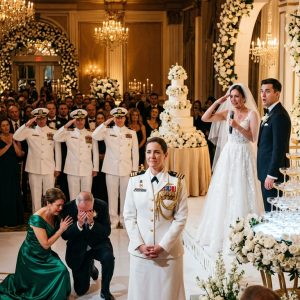
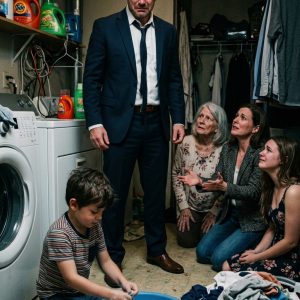
The Foundation of Fire
“You’re not married—you don’t deserve a house.”
Those words, screamed through a crackling phone line, were the overture to a nightmare I never saw coming. My name is Maya, and for twenty-nine years, I existed in the shadow of a woman who believed love was a finite resource she could withhold at will.
I had spent the last decade working double shifts at the hospital, skipping vacations, and eating instant ramen more often than I care to admit. My social life was a graveyard of “I can’t, I’m working” texts. But it was all worth it when I sat in the title office, my hand cramping, and signed the final paper for a small, two-bedroom bungalow just outside of Austin.
It wasn’t a mansion. The siding needed paint, and the garden was a tangle of weeds. But when the agent handed me the keys, heavy and cool in my palm, I felt lighter than air. It was mine. No landlord. No roommates. And most importantly, no mother.
I called my parents that evening, naïve enough to expect at least a polite “Congratulations.” I wanted to share the victory.
“You bought a house?” my mother, Brenda, shrieked. The pitch of her voice made me pull the phone away from my ear. “Are you insane? You’re not even married!”
I paused, staring at the empty living room where I planned to put a sofa I hadn’t bought yet. “Mom… I’m twenty-nine. I’ve worked for this for ten years. It’s not about being married. It’s about stability.”
“You selfish girl!” she screamed again, her voice vibrating with a rage I knew too well. “You should’ve used that money to help your sister! Do you think Alyssa’s wedding is free?! She needs a venue deposit by Friday!”
Her words struck me like ice water. “Why is my life savings suddenly her wedding fund?”
There was a silence on the line—a heavy, suffocating pause that I had learned to dread since childhood. Then, she hissed, her voice dropping to a venomous whisper:
“You think you’re better than this family, don’t you? Just because you have a career? You’re nothing without a husband. You’re just a bank account.”
I ended the call, my hand shaking. I sat on the floor of my new, empty house, feeling the joy drain out of me like water from a cracked cup. But I wouldn’t let her take this.
The next day, I made a mistake. I stopped by my parents’ house to pick up the last few boxes of my childhood belongings. I thought I could slip in, grab my things, and leave before the storm broke.
I was wrong.
Chapter 1: The Spark
My father, David, was at work. The house was quiet, smelling of lemon polish and simmering resentment. I walked into the kitchen and found my mother standing by the sink, peeling potatoes with violent, jerky movements.
“I’m just here for my winter clothes,” I said, trying to keep my voice neutral. “I’ll be out of your hair in ten minutes.”
She didn’t look up. “You had no right,” she said, the knife clinking against the porcelain bowl. “You embarrass me. What kind of woman buys a house alone? The neighbors will think you’re unwanted. They’ll think there’s something wrong with you.”
“Let them think what they want,” I said, turning toward the hallway. “I’m proud of myself, Mom. Even if you aren’t.”
I heard her footsteps behind me—fast, heavy.
“Don’t you turn your back on me!”
I spun around, but not fast enough. She reached out and grabbed my ponytail, yanking my head back with a force that made my neck pop. I gasped, stumbling.
“You need to learn your place, Maya,” she sneered, her face inches from mine. Her eyes were wild, dilated with a manic fury.
Before I could react, before I could push her away, I heard a sound that didn’t belong in a hallway. The distinct flick-hiss of a lighter.
Then, the smell. Sharp. Acrid. Unmistakable.
She had pulled a cigarette lighter from her apron pocket and held the flame to the ends of my hair.
“No!” I screamed, the sound tearing from my throat.
I dropped to the floor, batting frantically at the back of my head. The heat was instantaneous. I could hear the sizzling of my own hair. I rolled onto the carpet, smothering the flames, my heart hammering against my ribs like a trapped bird.
The smell of burnt hair filled the house, thick and nauseating.
I looked up. She was standing over me, the lighter still in her hand, watching me with a cold, satisfied expression. She didn’t look horrified. She looked… justified.
“Now maybe you’ll think twice before shaming your family,” she said calmly, pocketing the lighter. “Go fix yourself. You look like a witch.”
I didn’t argue. I didn’t fight back. The shock had severed my ability to speak. I scrambled to my feet, grabbed my purse, and ran. I ran out the front door, into my car, and drove until my hands stopped shaking enough to grip the wheel.
I didn’t go to the hospital. The burns were minor—singed ends, a blister on my neck—but the psychological scar was a canyon. I drove to a friend’s apartment and sat in her shower for an hour, scrubbing my skin until it was raw, trying to wash away the smell of the fire.
I didn’t press charges. Not then. I was too conditioned to protect the family secret.
Three days later, I officially moved into my house. It was quiet. It was clean. It was peaceful. But every time I smelled smoke—a neighbor’s grill, a passing car—I flinched.
I thought I had escaped. I thought the worst was over.
But the fire was still spreading.
Chapter 2: The Dress Shop Incident
A week later, I was unpacking books in my new living room when my phone rang. It was my father.
I hesitated. I almost let it go to voicemail. But a nagging instinct told me to answer.
“Dad?”
His voice was low, tired. It sounded like he had aged twenty years in seven days. “Maya. You need to know. Your mother’s in jail.”
I froze, a book hovering in mid-air. “What?”
“She was arrested an hour ago,” he said, his voice cracking. “She… she went after Alyssa.”
“Alyssa?” I whispered. “But Alyssa is the golden child. Alyssa is the bride.”
“Not anymore,” he said. “They were at the bridal salon. Alyssa picked a dress your mother didn’t like. She said it was ‘too plain.’ When Alyssa insisted, your mother lost it.”
He took a jagged breath.
“She slapped your sister, Maya. Open hand, full force, right across the face. In front of the consultant, the bridesmaids, everyone. And when Alyssa tried to walk away, your mother threw a display shoe at her. Hit one of the bridesmaids in the head.”
I stood there, the silence of my new house pressing in on me. It wasn’t just me. The target had shifted.
“The police were called,” Dad continued. “They’re charging her with assault. Alyssa… Alyssa is pressing charges. She said it was the last straw.”
I sank onto the floor, surrounded by cardboard boxes. I knew my mother was controlling. I knew she was cruel. But jail? Public assault? The mask had finally slipped off completely.
“I need to call Alyssa,” I said.
“She needs you,” Dad whispered. “She’s at her apartment.”
I dialed my sister immediately.
“Hey…” I said cautiously when she picked up.
Her voice came through the line shaky, wet with tears. “I’m sorry I didn’t tell you sooner, Maya. About… everything.”
“You don’t need to apologize,” I said, feeling a sudden surge of protectiveness. “I’m just… shocked.”
“She looked at me with so much hate,” Alyssa sobbed. “Just because I wanted the lace sleeves. She screamed that I was ungrateful. That I was wasting her money.”
“Did she hurt you?”
“My cheek is bruised,” she said. “But my dignity is worse. The police had to drag her out, Maya. She was screaming that we were both failures.”
“Jesus.”
“I told the officers everything,” Alyssa said, her voice trembling but gaining strength. “I told them about the verbal abuse. And… I told them what she did to your hair.”
My hand flew to the back of my neck, where the hair was now chopped short to hide the damage. “You knew?”
“Dad told me,” she whispered. “That’s why I snapped today. When she raised her hand… I saw the lighter in my head. I realized she wasn’t going to stop.”
For the first time in our lives, the invisible wall our mother had built between us—the wall of competition, of “golden child” vs. “black sheep”—crumbled. We had both been raised under the same storm; we had just learned to weather it differently. I internalized it and ran. She conformed to it and stayed.
But now… now she was standing up, too.
Chapter 3: The Flying Monkeys
In the weeks that followed, the family splintered.
My aunts and uncles—my mother’s siblings—began to call. We call them the “flying monkeys” in therapy now. The enablers.
“It’s a misunderstanding,” Aunt Carol pleaded, her voice dripping with artificial sweetness. “She’s your mother, Maya. You only get one. Think of the shame. Think of the wedding.”
“She lit my hair on fire, Carol,” I said coldly. “She slapped Alyssa in public. That’s not a misunderstanding. That’s assault.”
“She didn’t mean it!” Carol insisted. “She’s just stressed! Drop the charges, and she’ll apologize. We can fix this internally.”
But they hadn’t smelled their own hair burning. They hadn’t stood still while she screamed inches from their faces, spitting venom.
Alyssa stood her ground. I stood beside her, a unified front for the first time in history.
The court date arrived two months later. Mom was sentenced to 90 days in county jail, with court-ordered anger management and a mandatory psychological evaluation. It was a slap on the wrist legally, but socially? It was a nuclear bomb.
My father, ever the passive observer, didn’t show up at the hearing. He told me later he couldn’t bear to watch his wife be led away in handcuffs. He stayed home, hiding in the house that felt more like a museum of unresolved trauma than a home.
I sat in the courtroom with Alyssa. When the gavel fell, I couldn’t help but feel conflicted. I wasn’t celebrating. I wasn’t even angry anymore. I just felt empty—like a balloon that had finally, after years of tension, lost all its air.
But something changed after that.
Alyssa delayed the wedding indefinitely. “I can’t get married while she’s sitting in a cell,” she said. “Not because I miss her, but because I need to figure out who I am when I’m not afraid of her.”
She started calling me more often. She visited my new house on weekends. She brought groceries. We planted marigolds in my tiny front yard, digging our hands into the dirt, sweating under the Texas sun.
One night, over a bottle of cheap wine on my porch, she turned to me. The porch light cast long shadows over her face.
“I used to think you were selfish,” she whispered, staring into her glass. “When you worked all those shifts. When you didn’t come to Sunday dinners. I thought you didn’t care about us.”
“I was trying to survive,” I said softly.
“I know,” she said, looking up. Her eyes were clear. “I realize now… you were brave. You saw the exit and you took it. I was just… waiting for permission.”
I smiled, tears pricking my eyes. “So were you, Lyss. You just took a little longer. But you pressed the charges. That took more guts than I had.”
She laughed, a wet, choked sound. “You always did everything first. Even leaving.”
We were healing. Slowly. Together.
Chapter 4: The Box of Ghosts
I used to think “home” was where your family was. Where traditions lived, where holidays were loud and messy and familiar. But after the fire, I started to redefine home.
My new house was quiet. Peaceful. It smelled like fresh paint and lavender candles instead of old resentment and fear. There were no heavy footsteps in the hallway followed by slammed doors. No shouted accusations about dust on the mantle. No walking on eggshells.
Just me. And silence. And peace.
I decorated it slowly—thrifted furniture, mismatched mugs, secondhand books stacked on the floor. Every piece I chose myself. No one else’s opinions. No one telling me it was “tacky” or “cheap.”
Then, one rainy Tuesday afternoon, my doorbell rang.
I froze. My mother was still inside, but her release date was approaching. Paranoia was a hard habit to break.
I checked the peephole.
It was my father.
He stood on the porch, unprotected from the drizzle, holding a small, water-stained cardboard box. He looked older. Thinner. As if the years he had spent hiding in his study had finally caught up with him.
I opened the door, but I didn’t step back to let him in. I stood in the threshold, a gatekeeper of my own sanctuary.
“I figured you might want these,” he said quietly, his voice rusty from disuse.
He held out the box. Inside, I saw the edges of old photo albums. A stack of my childhood drawings, crinkled with age. A cracked snow globe from Niagara Falls that I had loved when I was six.
“Mom’s getting out next week,” he added, looking past me into the warm, lit hallway. “She wants to see you. She says she’s changed. She says jail gave her perspective.”
I didn’t answer right away. I looked at the rain dripping off the eaves. “She never even apologized, Dad. Not in the courtroom. Not in the letters.”
He nodded, looking down at his shoes. “I know.”
“She lit my hair on fire, Dad,” I said. The words hung in the damp air between us. “She physically assaulted me because I bought a house.”
His eyes snapped up to mine, filled with a sudden, devastating shame. He opened his mouth, but no sound came out.
“And you were in the other room,” I said, my voice shaking slightly. “You knew what she was like. For years.”
“I…” He choked on the word. “I was scared of her too, Maya.”
“I know,” I said. “But you were the adult. And I was the child.”
“And I let her,” he finished, his voice a whisper.
I didn’t invite him in. I took the box from his hands. It was heavy with memories I wasn’t sure I wanted to keep.
“I’m sorry,” he said softly. “I just… wanted you to have your things. And to say… I’m proud of you. For getting out. For buying this place.”
That caught me off guard. My father, the silent observer, was proud of my escape.
I nodded slowly. “Thanks, Dad.”
He turned to leave, his shoulders slumped under the weight of a lifetime of cowardice.
I watched him walk to his car. I stood on the porch, box in hand, heart heavy. I realized then that my father was a victim too, but he was a victim who had volunteered to be a guard.
Chapter 5: The Wedding and the Wall
I didn’t see my mother when she got out.
She sent a letter three weeks later. The envelope was thick, creamy paper, her handwriting looping and elegant.
I sat at my kitchen table with a letter opener.
It was four pages long. It was rambling. It was defensive. It blamed the stress of the wedding planning. It blamed her “passion.” It blamed me for “poisoning” Alyssa against her.
I have suffered so much, she wrote. I was humiliated. And for what? Because I wanted my daughters to be perfect?
Not once did the word “sorry” appear.
I felt a strange sensation wash over me. It wasn’t anger. It wasn’t sadness.
It was indifference.
I stood up, walked to the trash can, and dropped the letter in. I didn’t shred it. I didn’t burn it. I just threw it away, right on top of the coffee grounds.
Trash belongs with trash.
I kept going.
I finished furnishing the house. I got promoted at the hospital. I started seeing someone new—a quiet, kind man named Sam who asked questions and listened when I spoke.
Six months later, Alyssa finally held her rescheduled wedding.
It wasn’t the grand, sprawling affair my mother had demanded. It was a simple garden ceremony. There were fifty guests, not three hundred.
I was the maid of honor.
Our mother wasn’t invited. No one even asked why. The absence of her toxicity was the best wedding gift Alyssa could have received.
My father came alone. He sat in the back row, looking lost without his general to command him. But he smiled when Alyssa walked down the aisle.
At the reception, under strings of twinkling fairy lights, Alyssa stood up to give a speech. She looked radiant, not because of the dress—which was simple, elegant, and decidedly not what Mom would have chosen—but because she was free.
She raised her glass, her eyes locking with mine across the room.
“To my sister,” she said, her voice clear and strong. “Who taught me that you don’t have to set yourself on fire to keep others warm. To Maya, who taught me that freedom is worth fighting for. Even when it hurts.”
I cried. Not the scared tears of a child, but the cleansing tears of a survivor.
Because she was right.
We had burned down the old house. We had razed it to the ground.
Some houses are built with love. Some are built with pain. Mine—and Alyssa’s—was built with both. The foundation was cracked, yes. The history was scarred.
But as I looked around the garden, at my sister laughing, at Sam squeezing my hand under the table… I realized that for the first time in my life, the structure was sound.
It stood.
And I stood with it.
If you have ever had to walk away from family to find your peace, share this story. You are not alone, and the home you build for yourself is the only one that truly matters.