The Erasure of Rowan Greaves: How I Clawed My Way Back from the Dead
“You don’t belong here anymore.”
That was the first thing my father said to me after five years of silence. Not “hello.” Not “thank God you’re safe.” Just that. Seven syllables delivered with the casual dismissal one might use for a stray dog found wandering on the lawn.
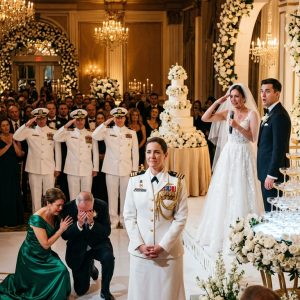
I stood in the doorway of the boardroom, the air conditioning humming a low, sterile note against the silence. My name is Rowan Greaves. I am thirty-four years old. I have served overseas in regions that don’t make the evening news, buried friends whose names are etched into stone, and came back with scars that map the geography of my survival.
And yet, standing there in Braden Tech’s headquarters—a glass-and-steel monolith my grandfather built from a garage workshop—I felt smaller than I ever had in a combat zone.
My sister, Ara, sat to my father’s right. She crossed her legs, adjusting her posture with the grace of a viper coiling to strike. She smirked—a tiny, practiced twitch of the lips that said, I won.
My father, Leonard, sat at the head of the table, leaning back in the leather chair he had always considered his throne. He didn’t ask if I still had all my limbs. He didn’t ask about the ringing in my ears. He just stared at me like I was a trespassing ghost.
“Sit down, Rowan,” he said, checking his watch. “Let’s get this over with. I have a tee time at three.”
I walked to the single empty chair at the far end of the table. My boots, heavy and polished, made a rhythmic thud-thud-thud on the mahogany floor. It was the only sound in the room.
Miss Halford, the family attorney, looked pale. She cleared her throat, her hands trembling slightly as she opened the leather-bound folio.
“We are here to read the last will and testament of Arthur Braden,” she began, her voice thin.
My father leaned forward, eyes gleaming with predatory anticipation. Ara checked her phone.
The distribution began. Leonard got the rare book collection and the vintage cars. Ara received the lake house in Tahoe and a significant cash disbursement. They nodded, bored. This was expected.
“And finally,” Miss Halford said, her voice dropping a decibel. “To Rowan Greaves, my granddaughter, my moral compass, and my only confidant…”
The room went deadly still. I stopped breathing.
“…I leave the sum of thirty-eight million dollars, to be paid via certified cashier’s check immediately upon my passing.”
The number hit the table like a grenade. Thirty-eight million.
But before I could process it, Leonard lunged.
It happened so fast, it was almost blurry. My father stood up, snatched the check from the center of the table, and pulled a silver Zippo lighter from his pocket—the one he kept solely for intimidation tactics.
“You think this brings you back?” he spat, his face twisting into a mask of pure, unadulterated loathing. “You think money buys you a seat at this table?”
He flicked the lighter. The flame jumped, hungry and blue.
“No,” he whispered.
He held the flame to the corner of the check. The paper curled, turning from expensive bond to gray ash in seconds. He dropped the burning remnant into the crystal ashtray, watching it blacken.
“You are nothing,” he said, staring into my eyes. “You are a nuisance. A burden. You don’t exist in this family, Rowan. Go back to whatever hole you crawled out of.”
Ara laughed. It was a soft, tinkling sound, like ice hitting glass.
I sat there. Silent. Still.
In the desert, you learn that the loudest threat isn’t always the most dangerous one. You learn to watch the hands, not the mouth. And as I watched my father burn thirty-eight million dollars, I didn’t feel anger. I didn’t feel fear.
I felt pity.
Because what Leonard torched wasn’t my inheritance. It was his last illusion of control. He thought he had burned me. But Grandpa Arthur had already warned me.
I reached into the inside pocket of my coat and touched the cool, smooth surface of a second, sealed envelope.
I didn’t leave the boardroom angry. I stood up, smoothed my jacket, and walked out. I left empty, like someone had vacuumed the last bit of me off the record. No yelling. No showdown. Just the quiet, rhythmic sound of my boots on the wood floors they never meant for me to walk on again.
End of Chapter 1.
The Architecture of Erasure
The first time I realized I was being erased, it wasn’t in a boardroom. It was Thanksgiving, two years ago.
I had been gone for eighteen months on a Border Patrol convoy detail in Syria. I came back different. The world was too loud, the lights were too bright, and I had lost two friends whose laughter I still heard in my sleep.
I took a cab from the airport to the family estate. I didn’t call ahead; I wanted to surprise them.
When I walked in, Leonard looked up from his newspaper in the study.
“You didn’t write,” he said.
That was it. No hug. No “we’re proud of you.” Just an accusation.
I went upstairs to my room—the room I had grown up in, the room where I had dreamed of becoming a soldier.
It was gone.
Not just changed. Gone.
The walls, once a soft blue, were painted a sterile, lifeless beige. My books were gone. My medals were gone. The photos of me and Grandpa were gone. In their place were two fake plastic orchids and a framed quote about “Calm Waters and Quiet Minds.”
The door that once had a small brass plaque reading ROWAN now held a generic sign: GUEST.
I stood in that hallway, clutching my duffel bag, the strap digging into my shoulder. The physical space I occupied in this house had been scrubbed clean.
Ara walked past me, holding a cup of peppermint tea. She didn’t pause. She didn’t smile.
“Don’t be dramatic, Rowan,” she said over her shoulder. “You were gone for like, a year and a half. We needed the space for storage.”
Storage.
I left the next day. I moved into a crumbling studio apartment above a mechanic’s shop on the east side of the city. I worked private security while waiting for my VA papers to clear. I didn’t ask anyone for help. I didn’t expect any.
But every few weeks, a wire transfer would land in my account. Just enough to keep the lights on. No sender name, just a note: M. Greaves.
Grandpa.
No calls. No notes. Just faith.
He was the same man who showed up with hiking boots in my size when I was twelve and my father refused to buy them because “girls don’t hike.” He was the man who told me, “You don’t need to be loud to take up space, Rowan. You just need to be heavy.”
And he was the man who, three weeks before he died, met me in a greasy spoon diner at 2:00 AM. He looked frail, his skin like parchment, but his eyes were sharp.
He slid a thick, wax-sealed envelope across the Formica table.
“Don’t open this unless they try to burn it,” he whispered.
“Burn what, Grandpa?”
“The decoy,” he said. “They’re greedy, Rowan. They’re wolves. But wolves are stupid when they’re hungry. Let them eat the meat. You keep the bone.”
I didn’t understand him then. I did now.
Back in my apartment after the boardroom incident, I placed the envelope on the counter. My heart was pounding a frantic rhythm against my ribs. I wasn’t ready to open it yet.
A voice inside me—instinct, training, paranoia—whispered, They’re not done.
I pulled out my phone and opened my banking app.
Error: System Glitch.
I frowned. I tried again.
Account Not Found.
I felt a cold prickle of sweat on my neck. I tried my credit card app.
Card Declined. Account Closed.
I grabbed my landline and called the bank. The representative sounded bored, like he’d rather be anywhere else.
“Ma’am, I’m looking at your file now. This account is marked inactive.”
“What does that mean? I used it this morning.”
He paused. I heard typing. “Ma’am… the account is flagged. The owner is listed as deceased.”
The room spun. “I am the owner. I am standing right here.”
“I get that, ma’am,” he said, his voice flat. “But the system says you’re dead. Certified two weeks ago. You’ll need to come into a branch with a death certificate to prove… well, to prove you aren’t dead.”
I hung up. My chest was tight, my hands like ice.
My name was gone.
I grabbed my keys and drove to the DMV. I waited an hour in line, surrounded by crying babies and the smell of stale coffee. When I finally handed over my ID to the clerk, she scanned it and frowned.
She looked at me. Then at the screen. Then at me again.
“Honey,” she said softly. “This license is revoked. It says here you’re legally deceased.”
The words hit me like a sniper round. Legally deceased.
I walked out of the DMV and stood on the sidewalk, feeling like a ghost. The world moved around me—cars honking, people laughing, life continuing—while I had been administratively erased.
Then, I saw her.
Across the street, standing near a black SUV. Sunglasses too large for an overcast day. A silk scarf tied around her neck—Hermès, vintage pattern.
My mother.
The woman who claimed to be “neutral” in all family conflicts. The woman who had watched my father burn that check and said nothing.
She wasn’t looking at her phone. She was watching me. She didn’t wave. She didn’t blink. She just watched, like an arsonist checking to see if the fire had finished burning the structure down.
I took a step toward the curb.
She turned, got into the SUV, and vanished into traffic.
That was the signal. They hadn’t just tried to steal the money. They had tried to erase the entire me. They thought if they killed my paper trail, broke my spirit, and burned my inheritance, I would vanish quietly like a bad rumor.
But they forgot one thing. I had been trained for war. And this? This was just a legal ambush with better lighting.
I went back to my apartment. I locked the door. I poured a glass of water.
And then, I cracked the wax seal on Grandpa Arthur’s envelope.
End of Chapter 2.
The Dead Woman’s Switch
Inside the envelope, there was no check. There was a stack of notarized documents and a single, heavy metallic USB drive.
I scanned the papers. My breath caught in my throat.
It wasn’t a will. It was a Trust Transfer Deed. Dated six months ago.
Grandpa hadn’t left me the money in his will. He had transferred the assets into a private, irrevocable trust before he died. The check Leonard had burned? It was a prop. A piece of theater designed to flush them out.
But the real weapon was on the USB drive.
I plugged it into my laptop. A folder popped up: BRADEN_TECH_DOOMSDAY.
Inside were bank logs. Stock control records. Internal emails between Leonard and Ara. And most importantly, the Voting Rights Proxy.
Grandpa hadn’t just given me money. He had given me 51% of the voting shares of Braden Tech.
I sat back, the glow of the screen illuminating my face. Leonard thought he was the King. He didn’t realize he was squatting in my castle.
But having the proof and using it were two different things. I was legally dead. I couldn’t walk into a bank. I couldn’t file a motion. I was a ghost.
I needed a resurrectionist.
I picked up my burner phone—the one I kept for emergencies—and dialed a number I hadn’t used in years.
“Sylvia Marsh,” a voice answered. It sounded like gravel in a blender.
“It’s Rowan,” I said. “I need a fixer.”
Sylvia Marsh was a legend in the veteran community. A former JAG lawyer turned rogue advocate. She was the kind of woman who once sued the Pentagon over a ribbons scandal and won. She operated out of a brownstone in D.C. that smelled of old books and righteous fury.
I arrived at her door an hour later. She opened it wearing sweatpants and a Harvard Law hoodie stained with coffee.
“This better be illegal,” she said, ushering me in.
“It is,” I said.
“Good.” She tossed me a slice of cold pizza from a box on her desk. “Eat. You look like a ghost with a grudge.”
I handed her everything. The forged death certificate I had managed to print from the state database. The fake signature on the trust transfer revocation documents I found on the USB. The revoked ID.
Sylvia flipped through the pages like she was playing poker with a loaded deck.
“Classic Delaware shell company,” she muttered. “Sloppy. Arrogant.”
Then she stopped. She grinned—a terrifying, wolfish expression.
“They filed you as dead so they could claim you left the company voluntarily due to ‘incapacitation,'” she said. “That’s biblical. They tried to bury you so they could take the company public without your interference.”
She pulled out her phone. “I’m calling Miles.”
Miles Crowe arrived twenty minutes later. He was a forensic document analyst with the personality of a scalpel. He didn’t say hello. He just set up a magnifying lamp and went to work on the signatures.
“Here,” he said, pointing to the death certificate application. “See this loop in your ‘G’? It’s yours. But look at the pressure points. Flatline. It’s a scan. A digital lift.”
He pulled up another document—my 2018 deployment orders. “They lifted it from your DD-214. It’s a match to the pixel.”
Sylvia slammed her hand on the desk. “That’s federal fraud. Wire fraud. Identity theft. Conspiracy.”
“And,” I added, pointing to the Trust Transfer Deed, “it means Leonard has been operating as CEO illegally for two weeks. He doesn’t have the votes.”
Sylvia leaned back, cracking her knuckles. “He moved 40% of your voting shares to a holding firm under his real estate trust. He was prepping to sell the company to a foreign conglomerate. He wanted to cash out before anyone noticed the books were cooked.”
“Can we stop him?” I asked.
Sylvia looked at me. “Stop him? Honey, we’re going to burn his castle down, brick by legal brick. But we have to do it fast. The board vote is in forty-eight hours.”
“I’m legally dead,” I reminded her.
“Then we need to perform a miracle,” she said. “I’ll file the emergency injunction to freeze the board. Miles will draft the affidavit proving the forgery. You? You need to get the court of public opinion on your side.”
She handed me a card. Nash Wilder.
“Journalist,” she said. “Investigative. Relentless. Zero tolerance for corporate filth. Give him everything.”
I met Nash in a park. He was young, disheveled, and looked like he hadn’t slept in a week. I handed him the USB drive copies.
“You want this quiet?” he asked, scanning the files.
“No,” I said. “I want it permanent.”
The next forty-eight hours were a blur of caffeine, paper, and adrenaline. It felt like a deployment. The planning. The waiting. The knowing that once the first shot is fired, there is no going back.
End of Chapter 3.
The Resurrection
The day of the board vote, Braden Tech was buzzing. Rumors of the sale had leaked. Stock prices were fluctuating. Leonard was preparing to announce the deal that would make him a billionaire and destroy Grandpa’s legacy.
I walked into the building. The security guard, a man named Hank whom I had known since I was a kid, looked up. His face went white.
“Miss Rowan?” he stammered. “But… the memo said…”
“I got better, Hank,” I said. “I’m going up.”
He didn’t stop me. He pressed the elevator button.
I walked into the boardroom. The same room where, weeks ago, my father had burned my future.
They were all there. Leonard. Ara. The board members. Miss Halford.
Leonard was mid-speech. “…and this merger represents the future of Braden Tech, a future unencumbered by the past…”
I pushed the heavy glass doors open.
“Objection,” I said.
Leonard froze. The color drained from his face so fast it looked like a special effect. Ara dropped her pen.
“You…” Leonard whispered. “Security!”
“Security isn’t coming,” Sylvia Marsh said, stepping out from behind me. She was wearing a suit now—sharp, black, predatory. Behind her was a U.S. Marshal.
“Leonard Greaves,” Sylvia announced, her voice ringing off the walls. “You are served with a federal injunction freezing all assets of Braden Tech. We are also serving you with a subpoena regarding the falsification of death records and wire fraud.”
The room erupted. Board members shouted. Ara stood up, trembling.
“This is insane!” Ara screamed. “She’s unstable! She’s…”
“Alive,” I cut in. I walked to the head of the table.
I tossed a stack of papers onto the mahogany surface. The real Trust Transfer. The forensic report on the forgery. And the morning edition of the Financial Times, which featured Nash Wilder’s exposé on the front page: DEAD HEIR WALKS: THE FRAUD AT THE HEART OF BRADEN TECH.
“I own fifty-one percent of this company,” I said, my voice calm, steady. “And as the majority shareholder, I am calling for an immediate vote of no confidence in the CEO.”
Leonard slumped into his chair. The arrogance was gone. The king was naked.
“You can’t do this,” he wheezed. “I built this.”
“No,” I said. “Grandpa built this. You just squatted in it.”
The Marshal stepped forward. “Mr. Greaves, I need you to step away from the table. We have a warrant for your electronic devices.”
I watched as my father, the man who had terrified me for decades, was escorted out of his own boardroom. He looked at me one last time. There was no anger left. Just confusion. He truly couldn’t understand how the ghost he created had come back to haunt him.
Ara tried to slip out the side door.
“Ara,” I called out.
She froze.
“The lake house,” I said. “Enjoy it. Because you’re fired.”
I didn’t stay to celebrate. I didn’t drink the champagne. I didn’t give a speech.
I walked out of the building. The sun was shining. The air smelled of exhaust and freedom.
I didn’t rebuild the house that tried to bury me. I built something new from the ground up.
I liquidated my shares in Braden Tech. I forced the board to buy me out at a premium. I took the thirty-eight million—plus interest, plus damages—and I walked away.
I bought a storefront in the city. Dusty. Quiet. No plaque. No press release.
I launched the Greaves Foundation.
We focus on veterans, specifically women, who have been erased by the system. We offer legal aid, housing referrals, trauma-informed mentorship. No slogans. Just real help.
Our first client was a woman dishonorably discharged for reporting harassment. She had been living in her car. All she wanted was to be heard.
So I listened.
And now, every name they tried to silence becomes another brick in this place. Not a monument to me. A launchpad for them.
I passed my sister on the street last week. She was coming out of a pawn shop, wearing sunglasses that were too big for her face. She saw me. She hesitated. For a moment, I thought she might wave, might try to bridge the gap now that she needed something.
She didn’t. She turned her head and hurried away.
Good.
This story doesn’t end in fire. It ends in form. In structure. In a legacy I wrote myself.
They tried to delete me on paper. They tried to burn my existence. But they forgot that ash is just carbon, and carbon, under pressure, becomes a diamond.
Now I own the building where their story fell apart.
So if you’ve ever been written off by blood, by law, by lies—remember this: You don’t owe them a comeback. You owe yourself a beginning.
This was mine.
Have you ever had your family try to erase you—legally, emotionally, or financially? Drop your story in the comments below. No judgment, no shame, just the truth. Because sometimes the quietest ones come back with the loudest legacy.