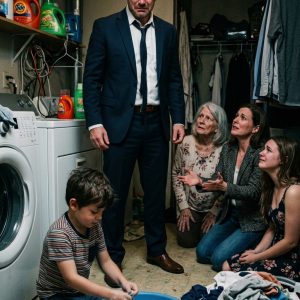
After a car accident left me in a hospital bed with three fractured ribs and a concussion, my parents forced my nine-year-old daughter to be discharged early, refusing her further treatment.
“She’ll be fine,” they said to the doctors, waving away concerns like gnats. Then they dumped her in an empty house with a bag of frozen peas and drove off on a luxury vacation.
I didn’t shout. I didn’t scream. I took action. Three days later, their lives started to unravel.
I opened my eyes and saw my mom. Not a nurse, not a doctor in scrubs, but my mother sitting right there like she belonged. Her hand was already resting on mine, warm and steady, as if she’d been holding it for hours.
For one stupid, vulnerable second, I let myself believe the story that sight was offering me. She stayed. She’s been here. She cares.
It didn’t even match the mom I knew—the one who prioritized brunch reservations over my softball games—which should have been my first clue. But when you wake up after losing days of your life to blacktop and screeching tires, your brain grabs whatever comfort is closest and calls it truth.
“What happened?” I managed to croak. My throat felt like it was lined with sandpaper.
“You’re in the hospital,” she said softly. Her voice was calm, prepared. “There was a car accident. You’ve been sleeping for a few days.”
The words didn’t settle before one thought cut through the fog like a lighthouse beam.
“Ava,” I rasped, trying to sit up. “Where’s Ava?”
My mom didn’t blink. “She’s fine,” she said quickly, perhaps a beat too fast. “She was in the hospital at first, but she got discharged. She’s at home now.”
Relief hit me so hard my eyes burned. “Oh my god,” I whispered, sinking back into the pillow. “She’s okay?”
“She’s okay,” my mom repeated, smoothing the air with her hand like she was ironing out a wrinkle. “Everything’s fine. You’re safe. You’re recovering.”
I believed her because I had to. Because the alternative was unthinkable.
And then her tone shifted. Not dramatically—just enough to feel the temperature drop in the room.
“So,” she said, briskly, like we’d finished the emotional part and were moving on to errands. “We’ve been taking care of Ava while you’ve been out, and we need access to your money so we can pay for your daughter if she needs anything.”
I blinked at her, my brain still sluggish. “My money?”
“Just temporarily,” she said, already confident I’d agree. “Prescriptions, food, whatever comes up. You can’t manage that from here.”
There was no “How do you feel?” No “Are you in pain?” No “I was scared I’d lose you.” Just access.
I tried to sit up again, and my body punished me for it. Nausea rolled in like a tide; my ribs sparked with white-hot pain.
My mom leaned closer immediately, her voice turning syrupy. “Honey, don’t stress yourself. You’ve been through a lot. Just focus on healing. We’ll handle Ava.”
“Can I talk to her?” I asked, my voice trembling. “Just for a minute. Can we call home?”
“She’s resting,” my mom said instantly. “I won’t upset her. She needs her sleep.”
“I just need to hear her voice.”
My mom squeezed my hand tighter, a grip that felt less like comfort and more like containment. “She’s fine. I promise. You need to rest.”
I hesitated. Everything in me wanted proof. A voice, a hello, a sleepy mumble. But I was weak, foggy, and terrified of pushing too hard and somehow making things worse. So when she asked again—patiently, gently, with that look that said I know best—I gave her what she wanted.
I gave her my PIN. I gave her access.
In the moment, it felt like protecting Ava. Later, I would understand it as the moment my mom stopped pretending this was about my daughter at all.
My mom’s shoulders loosened the second she got the numbers. She kissed my forehead—quick, practiced—then stood and smoothed her cashmere sweater.
“I have to run,” she said, checking her watch. “I need to take care of a few things.”
My mouth went dry. “Are you coming back?”
“Of course,” she said, too fast. “I’ll be back later. Try to rest.”
And then she left. Just left.
At first, I waited like an idiot. I stared at the door. I watched the clock on the wall tick away the minutes. I told myself “a few things” meant she was talking to a doctor, picking up Ava, buying food—doing something that made sense.
Hours passed. The sun shifted across the linoleum floor. No text. No call. No update.
That night, I told myself she’d come in the morning. People don’t just disappear after a promise like that. Surely.
But morning came, and my phone stayed silent. No visits. No calls. No messages asking how I was.
So, I did what I always did when I needed anything from my parents: I chased them.
My mom picked up on the third ring. She sounded cheerful, breathless, like she’d just stepped out of Target and found a parking spot right at the front.
“Hey, sweetie!” she said brightly. “How are you feeling?”
It took me a second to speak. Her tone didn’t match my reality at all. I was in a hospital bed, broken. She sounded like she was at a party.
“Where’s Ava?” I asked. No hello. No small talk. “Can I talk to her?”
“She’s fine,” my mom said immediately. The script hadn’t changed. “She’s resting.”
“Put her on.”
A pause. Tiny, but enough to make my skin go cold.
“She’s asleep,” my mom said.
“It’s the middle of the day,” I said, trying to keep my voice steady, fighting the rising panic. “She’s nine, Mom. She doesn’t nap.”
“Megan,” my mom sighed, a sound that framed my fear as a minor inconvenience. “You’re not thinking clearly. You need to rest. Don’t upset yourself.”
“I’m not upset,” I lied. My hand was shaking around the phone. “I just want to hear her voice.”
“She’s at home,” my mom repeated, smooth and bright. “She’s safe. Everything’s fine.”
Safe. Fine.
“Who’s with her?” I asked.
“Your dad,” she said. “And Logan’s been stopping by. We’re handling it.”
Handling it. Like my child was a broken appliance or a leaky faucet.
“Let me talk to her,” I said again, desperation creeping in.
“She’ll talk to you later,” my mom said quickly. “I have to go. Try to rest.”
Click.
I stared at the dead screen. I tried to tell myself I was overreacting. But the longer “later” stretched into nothing, the darker my thoughts got.
At first, it was just suspicion. What if she’s not fine? Then it sharpened. What if “discharged” was just something Mom said because it sounded official?
And then my brain did the worst thing it could do. What if something happened and they’re keeping me calm until I’m stronger?
By the next day, I was done waiting. When the doctor came in, I didn’t dance around it.
“I want to be discharged,” I said.
He looked up from his chart, surprised. “Today?”
“I can’t reach my daughter,” I said, my voice hard. “My parents won’t let me talk to her. They keep telling me she’s fine, but I haven’t heard her voice once.”
He studied me—my bandaged arm, the bruising blooming across my face, the way I was holding my ribs like they might fall apart.
“I’d prefer you stayed longer,” he said carefully. “You’ve had a significant trauma. You need rest and monitoring.”
“I know,” I said. “But I need to see my child.”
He didn’t like it, but he nodded. “If you insist, we can discharge you against medical advice. But if anything worsens, you come back immediately.”
“I will.”
A few hours later, I was in a taxi clutching discharge paperwork, trying not to throw up every time we hit a bump. The whole ride home, I kept telling myself I was being dramatic. Ava was fine. My mom was just controlling in her usual way.
But when I unlocked the front door, the house hit me with silence.
Not “quiet because people are asleep.” Empty.
“Ava?” I called out.
Nothing.
I moved down the hallway slow, bracing myself against the wall because my body didn’t feel like mine. I pushed open the guest room door.
And there she was.
She was in bed, fully dressed, the blanket pulled up to her chin like she’d been trying to disappear underneath it. Her eyes snapped to mine—wide, startled, terrified.
For a second, she didn’t move, like she wasn’t sure I was real. Then she made a sound that didn’t belong in a child’s throat and threw herself at me.
“Mom!”
She clung to me so hard it hurt my ribs, but I didn’t care.
“I’m here,” I whispered into her hair, smelling the stale scent of fear and unwashed clothes. “I’m here.”
She was shaking.
“Baby,” I said, forcing my voice steady. “Where is everyone? Why are you alone?”
Ava’s face crumpled. “Grandma said you were sleeping,” she whispered. “She said I had to be brave.”
My stomach turned cold. “Tell me what happened,” I said. “All of it.”
Ava wiped her nose on her sleeve, eyes downcast. “They took me out,” she said softly. “The doctor didn’t want me to go home.”
My heart dropped into my stomach.
“She said I had to stay,” Ava whispered. “But Grandma said it cost too much. She said there wasn’t money.”
I stared at her, my hands going numb. “Who’s been here with you?” I asked.
Ava hesitated. “Uncle Logan came sometimes.”
“Sometimes?”
“He came at night,” she said. “But not all the time. He said he had class.”
Logan. My eighteen-year-old brother. A student who lived nearby. Not a monster, but definitely not someone you leave in charge of an injured nine-year-old and call it parenting.
“And today?” I asked. “Was he here today?”
Ava shook her head. “No,” she whispered. “I was just here.”
My vision blurred with rage. “Does anything hurt?” I asked, keeping my voice gentle with effort.
Ava nodded. “My side. And my head. Grandma said it was fine. She said I just needed to sleep.”
“Okay.”
I was still weak, still dizzy, still barely holding my own body together. But I could do one thing.
I called Tessa, my best friend. She answered immediately.
“Megan? Are you okay?”
“My parents took Ava out of the hospital,” I said, my voice devoid of emotion. “They left her here. She’s been alone. I need help.”
There was a beat of silence. Then Tessa’s voice sharpened. “I’m coming. Stay with her.”
Tessa arrived fast, and together we took Ava back to the ER to be checked. The doctor didn’t yell, but his face tightened in that way that tells you exactly how close you came to disaster.
“She should not have been discharged,” he said bluntly. “She has a mild concussion and bruising that needs monitoring. And she absolutely should not have been left without competent adult supervision.”
“Is she okay?” I asked, my knuckles white on the bedrail.
“She’s lucky,” he said. “She’s okay now. But this could have gone another way.”
I sat there watching Ava swing her feet above the floor, and something inside me went very still.
At the time, I thought I knew the whole truth about what my parents had done. I was wrong.
After the hospital, after the realization that my parents had lied right to my recovering face, I did what I hadn’t done in a long time. I stopped feeling and started looking.
I opened my banking app.
And there it was.
A neat little parade of luxury. Hotel charges. Resort fees. The kind of transactions that come with words like “Spa Package” and “Premium Suite” baked into the price.
It wasn’t one dinner. It wasn’t one emergency purchase for Ava. It was thousands of dollars carved right out of my account like a celebration.
And the names attached to the charges didn’t say Pharmacy or Urgent Care. They said Cabo San Lucas.
My hands went cold. I scrolled. More charges. I did the math twice because my brain refused to accept it.
It came to $5,600.
They told me they needed access to my money for my daughter. But they used it on a luxury vacation for themselves.
At the time, I thought that $5,600 was the damage. I didn’t know it was just the first number I’d find.
By the time the number sank in, I wasn’t in shock anymore. I was in motion.
Tessa drove. I sat in the passenger seat with Ava in the back. My head still throbbed. My ribs still hurt when I breathed too deeply. But anger is an incredible fuel source.
Back at the hospital, I asked for records. Not politely. Not timidly. I asked for documentation. I wanted proof my parents had done what Ava said they’d done. Proof she’d been discharged against medical advice. Proof someone else had signed.
A nurse brought me what they could: a discharge summary, notes, a signature line that wasn’t mine.
Signed: Helen Davies (Grandmother).
Then I opened my bank app again. I took screenshots of every charge, every merchant, every timestamp. And right there in the waiting room, I froze the card. One tap. Card locked.
The feeling was almost surreal, like pulling a plug out of a wall and watching the lights go out on the other side.
Then I did the part people always say you shouldn’t do to family. I went to the police.
I walked in with my daughter and a folder of paperwork and enough anger to power a small city. I told them what happened: the discharge against medical advice, the child left without competent supervision, the money used for a vacation.
“I want to file a report,” I said.
The officer took notes. He looked at the documents. When it was done, he gave me a case number. Proof that I hadn’t imagined this. Proof that this wasn’t just “family drama.”
My mom’s name lit up the screen that evening.
I stared at it. This was the first time she’d called me since she’d walked out of my hospital room. Since she’d taken what she came for and vanished to a beach.
I answered because I already knew why she was calling.
“Hi,” she said, her voice bright and annoyed. “Is there something wrong with your card? It’s not working.”
In the background, I heard laughter. Wind. Clinking glasses. The dull roar of people having a wonderful time.
My jaw tightened. “No,” I said. “I canceled it.”
Silence.
“You what?”
“I canceled it,” I repeated, my voice steady. “You don’t get to use my money anymore.”
“Megan,” my mom said sharply, like I’d broken an unspoken rule. “Your nephew just wanted to do the dolphin swim, and now we can’t pay. What are we supposed to do?”
I could practically hear her gesturing wildly. Madison’s kids were probably in the background, whining for snacks.
“You told me you needed access to pay for Ava,” I said. “For my daughter.”
“We do!” My mom snapped.
“No,” I said. “You don’t.”
Her voice went cold. “Don’t be dramatic.”
I almost laughed. It came out like a choke. “You had my daughter discharged against the doctor’s orders,” I said. “I was at the doctor today. They said it was dangerous.”
“She looked fine,” my mom said immediately. “We saved you money. You should be grateful.”
“Grateful for what? For my child not dying by luck? You abandoned her. You left her alone.”
“We did not abandon her! Logan was there sometimes.”
“Sometimes,” I echoed. “He’s eighteen. He’s not a nurse. He’s not an adult caretaker.”
My mom made a sound of disgust. “This is unbelievable. After everything we’ve done for you. We didn’t want you to be late on your rent payment.”
There it was. Not concern. Not remorse. Rent.
The thing I paid them. The thing they counted on. The thing they were terrified of losing.
“You don’t get another penny,” I said.
“Megan—”
I hung up. I didn’t shout. I didn’t scream. I just cut the line.
After that call, everything went quiet.
For a few days, life did that strange thing it does after a crisis—it tried to pretend nothing happened. Ava slept more. She clung less. My body healed slowly.
Then, the smear campaign started.
It appeared in a family Facebook group like a bad smell you can’t ignore. My mom wrote a long post about how worried they were about me. How I’d been in a car accident and “wasn’t behaving like myself.” How I’d “abandoned the family,” taken Ava away, and made “wild accusations.”
She implied I was unsafe. That I was having a mental breakdown.
Relatives started calling. Concerned voices wrapped in fake sympathy. Are you okay? Your parents are really worried.
I ignored them. Until I didn’t.
I went into that family group. I hit “Create Post.” And for a full minute, I just stared at the blank box. I knew the second I pressed publish, there was no going back.
Then I wrote it. Plain. Specific. With receipts.
My parents removed my 9-year-old from the hospital against medical advice while I was unconscious. They left her without safe supervision. This is documented. A police report has been filed.
I attached the hospital paperwork.
Then I posted the numbers.
For the last 3 years, I’ve paid them $2,750 a month in ‘rent’ for a house we all share. That is $99,000. While I was in the hospital, my card was used for a $5,600 vacation charge in Cabo. I froze the card.
I didn’t write paragraphs about my feelings. The numbers did the talking.
The comment section went quiet so fast it was impressive. My mom’s original post disappeared within an hour.
Then my phone started ringing again. Relatives. Apologizing. Backpedaling.
But the real twist came on a Tuesday afternoon.
My phone buzzed. Logan.
My little brother never called. He texted memes.
“Hey,” he said when I answered. He sounded nervous. “Uh, I saw your post.”
“Yeah.”
“Megan… I’m confused.”
“About what?”
“You were paying them rent?” he asked. “A lot of rent?”
“Yes.”
“Why?” he said, genuinely baffled. “Why would they charge you rent for… for your own house?”
I froze. “What are you talking about?”
“The house,” he said. “It belongs to us. You, me, and Madison. It was inherited from Grandma. Dad said it once. I thought you knew.”
My mouth went dry. “That’s not true.”
“It is,” Logan insisted. “They were trustees when we were underage. But we’re the beneficiaries. It’s in the trust.”
A sick feeling rolled through me. Not shock. Recognition.
It fit. It fit too well. The high rent. The way they acted like I owed them for existing.
“Okay,” I said, forcing air into my lungs. “I’m going to verify it.”
I’m not going to drag you through the months that followed—lawyers, forms, deadlines. Just know that while I was helping Ava feel safe again, I was pulling on one loose thread that turned out to be the whole sweater.
Logan was right.
The house was never Mom and Dad’s. It belonged to the three of us. Our parents were trustees. They just never mentioned that detail to the one child they were charging rent to live there.
And five years earlier, they’d taken out an equity loan using that house, putting my name on the paperwork. Except I hadn’t signed a thing.
Once the forgery was proven, the bank couldn’t take the house. So, the bank went after the people who committed the fraud: my parents.
They found it all. Retirement accounts I didn’t know existed. Investments. Everything they claimed they didn’t have. Gone.
The police reports didn’t disappear either. Child endangerment and fraud don’t get fixed with a Facebook apology. There were charges. Fines. Community service. And a reputation collapse you can’t come back from.
We sold the house for $540,000.
After fees, my third was $168,000. My parents got nothing from that sale because it was never theirs.
On top of that, I receive $900 a month in court-ordered repayments for the “rent” they stole. It’s automatic now. Karma on autopay.
A year later, Ava and I live in our own place. She’s safe. I’m stable.
I still talk to Logan. I don’t talk to my parents. I don’t talk to Madison.
So, what do you think? Did I go too far? Or not far enough?