The Cost of Silence: Anatomy of a Family Fracture
Chapter 1: The Sterile Room
It was supposed to be a routine drop-off. That is the lie we tell ourselves to survive the mundane horror of difficult families: It’s just a few hours. It’s just a visit. It will be fine.
I am a doctor, an ER specialist. My life is defined by triage—sorting the dying from the sick, the critical from the stable. I am accustomed to blood, to the metallic tang of adrenaline, and to the specific, guttural sound a human makes when they are in agony. I can intubate a patient while discussing dinner plans. I can stitch a laceration without my hands trembling.
But nothing in my medical training prepared me for the sensation of walking into my parents’ living room that Tuesday evening and feeling the air inside the house curdle.
I pulled into the driveway, the engine of my sedan ticking as it cooled. My shift had been a fourteen-hour marathon of flu cases and broken bones, and my caffeine crash was hitting me with the force of a physical blow. All I wanted was to collect my seven-year-old daughter, Grace, drive home, and dissolve into the mindless comfort of a quiet house.
I opened the front door expecting the usual chaotic soundtrack of Grandma’s house: the blaring TV, the shrieks of my sister Lauren’s three children, the clatter of dishes.
Instead, I walked into a vacuum.
The house was silent. Not peaceful—staged.
My mother was at the kitchen island, furiously drying a plate that was already dry. My father was entombed in his recliner, hidden behind a newspaper that he wasn’t reading. Lauren sat on the plush beige sofa, her phone in hand, scrolling with a casualness that felt rehearsed, like an actress waiting for a cue.
And Grace.
My daughter was sitting on the center of the Persian rug, her legs folded beneath her. She was tiny, still, and utterly silent. She didn’t look up when the door opened.
That was the first laceration to my heart. Grace is a joyful child. She is a reader, a dreamer, a girl who usually runs to me with a breathless story about a bug she found or a chapter she just finished. Today, she looked like a piece of origami that someone had folded too tight.
I stepped closer, my doctor’s eyes scanning for trauma. No blood. No casts. But then I saw her hands. They were resting in her lap, red and raw around the knuckles, the skin irritated in the specific way that comes from scrubbing abrasive chemicals against soft flesh.
And then I realized what was missing.
“Hey, baby,” I said, keeping my voice level, though my pulse had just spiked to 110. “Where are your glasses?”
Grace suffers from severe hyperopia and astigmatism. Her glasses aren’t a fashion statement; they are a prosthetic. Without them, the world is a blurred, headache-inducing mess. She never takes them off.
Grace flinched. It wasn’t a big movement—just a micro-spasm of her shoulders, as if she expected a blow.
“She dropped them,” Lauren said.
She didn’t look up from her phone. Her voice was smooth, polished, and reeking of falsehood.
I turned my gaze to my sister. “Dropped them where?”
Lauren shrugged, a gesture of practiced indifference. “Somewhere. Earlier. Kids are clumsy, Aaron. You know that.”
My mother finally looked up from the sink. Her smile was tight, brittle. “It’s not a big deal, Aaron. We’ll look for them later.”
Not a big deal.
That phrase. The anthem of my childhood. The rug under which every hurt, every insult, and every injustice was swept.
I knelt in front of Grace. “Sweetheart,” I whispered, touching her chin. “Look at me.”
She lifted her head. Her eyes were unfocused, swimming with unshed tears. She squinted, trying to find my face in the fog of her vision.
“I dropped them,” she recited. Her voice sounded robotic, devoid of her usual cadence. It sounded like a confession signed under duress.
From the corner of the room, Lauren’s son, Lucas, snickered. He whispered something to his sisters, Chloe and Madison. They giggled—a cruel, sharp sound that pierced the silence.
I stood up slowly. The exhaustion in my bones evaporated, replaced by a cold, clinical clarity.
“Show me,” I said to Lauren.
“Show you what?”
“The glasses.”
Lauren sighed, the sound of a martyr being inconvenienced. She reached onto the side table and picked up a pile of twisted metal and plastic. She dropped it into my open palm.
They hadn’t been dropped. The frame was mangled, twisted by significant force. One lens was shattered, a spiderweb of cracks running through the polycarbonate. The bridge was snapped cleanly in two. This was the result of a crush injury.
“We’re leaving,” I said.
“Don’t be dramatic,” Lauren snapped, finally looking at me. “She was acting out. She was being disrespectful.”
“Disrespectful?” I repeated, looking at the raw skin on my daughter’s hands.
“She needed to learn a lesson,” my father muttered from behind the paper.
I didn’t scream. I didn’t flip the table. In the ER, when a patient crashes, you don’t panic. You act.
I took Grace’s hand. It was ice cold.
“Come on, Grace.”
We walked out of that house, leaving the silence behind us, but as I buckled her into the car, I knew with absolute certainty that the war had just begun.
Cliffhanger: I thought I was just dealing with a bullying sister and enabling parents, but as I drove away, I had no idea that the shattered glasses were just the tip of an iceberg that was hiding a $240,000 felony.
Chapter 2: The Interrogation of Silence
The drive home was suffocating. Grace stared out the window at the blurring streetlights, her small hands clutching her seatbelt as if it were a lifeline.
I focused on the road, my mind racing. I am a single father. I have backups for everything. Backups for childcare, backups for shifts, and yes, backup glasses. We have a spare pair in her nightstand. Physically, she would be fine in twenty minutes. Emotionally? I wasn’t sure she would ever be fine again.
When we got inside, I retrieved the spare glasses. As soon as Grace slid them onto her nose, her posture changed. Her shoulders dropped two inches. The frown of concentration smoothed out. She could see. She was safe.
I made mac and cheese—the bright orange kind from the box, because nutrition was not the priority tonight; comfort was. We ate in silence.
After her bath, after the pajamas, I sat on the edge of her bed. The room was lit only by her nightlight, casting long shadows against the walls.
“Grace,” I said softly. “I need you to tell me the truth. You are not in trouble. I promise. I am not mad at you. But I need to know what happened today.”
She picked at the hem of her duvet. “I did something bad, Dad.”
“No,” I corrected firmly. “You did something that made them mad. That is not the same thing as being bad. Tell me.”
She took a shaky breath. “I… I looked at Aunt Lauren’s phone.”
I waited. “Okay. And?”
“I thought she was watching TikTok,” Grace whispered, tears leaking from the corners of her eyes. “But it wasn’t a video. It was just boring words. An email.”
“And she caught you?”
Grace nodded vigorously. “She got so mad. She screamed that I was a spy. She said I was… entitled. She took my glasses off my face.”
My jaw clenched so hard my teeth ached. “And then?”
“She threw them on the floor,” Grace’s voice trembled. “And she stomped on them. I heard them crunch. I told her I couldn’t see. She said… she said I should have thought about that before I invaded her privacy.”
I closed my eyes, inhaling deeply through my nose. Restraint. Restraint.
“And the hands, Grace? Why are your hands red?”
“She said I had to earn respect back,” Grace whispered. “She made me clean the kitchen. The counters. The floor. With the scrubbing sponge. She said I missed spots. She made me do it over and over again.”
“And Grandma and Grandpa?”
“Grandma watched,” she said simply. “Grandpa turned the TV up.”
I felt a darkness unfurl in my chest, a cold, predatory anger that I rarely allowed to surface. They had blinded my child and forced her to labor for them while her cousins laughed and her grandparents enabled the abuse.
“You said you saw an email,” I said, trying to keep my voice steady. “Do you remember any of the words? Was it about you?”
Grace scrunched her face, thinking hard. “It was boring words. Like… Trust? And… numbers. And Uncle Ray’s name.”
Uncle Ray.
My great-uncle. Raymond Whitman. The only man in our extended family who possessed a spine and a heart. He had passed away six months ago.
“Uncle Ray’s name?” I asked.
“Yeah. Raymond Whitman Trust. And my name was there too. Grace Harper.”
The pieces clicked together in my mind with the violent precision of a bear trap snapping shut.
Lauren didn’t crush those glasses because Grace was snooping. She crushed them because Grace had seen the evidence of a crime.
I kissed Grace on the forehead. “Sleep, baby. You are safe. They will never hurt you again.”
I walked into the kitchen and sat in the dark. I didn’t turn on the lights. I didn’t need them. I picked up my phone, but I didn’t call my sister. I didn’t scream.
I opened my banking app.
Cliffhanger: For years, I had been the family’s financial safety net, the dutiful son who paid the bills. Tonight, I was going to cut the cord and watch them suffocate.
Chapter 3: The Severing
To understand why I did what I did, you have to understand the ecosystem of my family.
I was the “good one.” The doctor. The reliable one. Lauren was the “spirited one.” In other families, she would be called a bully or a narcissist, but in the Harper household, she was protected. Her failures were externalized; her tantrums were accommodated.
When I became a doctor, I became the family bank. It started small—a utility bill here, a car repair there. Then it became a monthly stipend to help my parents with their “fixed income.” Then it became covering Lauren’s rent gaps, her kids’ soccer fees, the “unexpected” emergencies that happened with clockwork regularity.
I paid it. Not because I was a saint, but because it was the tax I paid for peace. It was the rent I paid to keep them acting like grandparents to Grace.
I looked at the transaction history on my screen.
Transfer to Mom: $800.
Transfer to Lauren: $450.
Auto-pay: Parents’ Cell Plan.
Auto-pay: Lauren’s Car Insurance.
I sat in the dark, the blue light of the phone illuminating my face, and I began the butchery.
Cancel.
Cancel.
Stop Payment.
Remove Beneficiary.
I cut them off. All of them. In ten minutes, I dismantled the financial scaffolding that had held their comfortable lives together for five years.
Then, I sent a single text to the family group chat.
Aaron: Lauren destroyed Grace’s glasses. Cost of replacement: $800. I expect reimbursement immediately. Furthermore, none of you are to contact Grace or come to my home. If you do, I will call the police.
I placed the phone on the counter.
It took thirty seconds.
The phone rang. Lauren.
I ignored it.
It rang again. Mom.
I put it on speaker and stared at it.
“Aaron!” My mother’s voice was frantic, breathless. “What is this text? What are you doing?”
“I’m done, Mom,” I said flatly.
“You can’t just… cancel the payments! The car insurance is due tomorrow! Lauren will be driving illegally!”
“Then she shouldn’t drive,” I said. “Or maybe she can pay for it with the money she saved by not buying Grace a birthday present for seven years.”
“You are being cruel!” Lauren screeched from the background. “Over a pair of glasses? She dropped them! She’s a liar!”
“I have the glasses, Lauren,” I said, my voice dropping to that terrifyingly calm register I used when telling a family their loved one hadn’t made it. “I analyzed the break pattern. You crushed them. And then you made a visually impaired seven-year-old scrub your floor to ‘teach her respect.’ While you watched.”
“She needs discipline!” Lauren shouted. “She was snooping!”
“And what did she see, Lauren?” I asked.
The silence that followed was heavy. It was the silence of a held breath.
“What?” Lauren stammered. “Nothing. She saw… nothing.”
“She saw an email,” I said. “About Uncle Ray.”
I heard a sharp intake of breath on the other end.
“I don’t know what you’re talking about,” my mother said, but her voice lacked conviction. It was trembling.
“We’ll see,” I said. “Do not come near my daughter.”
I hung up.
I knew I had struck a nerve. But I didn’t know the depth of the infection.
The next morning, I called Michael Harris. He wasn’t a family friend. He was the fiercest estate attorney in the city, a man who charged $600 an hour to destroy people’s enemies legally.
“Aaron,” Michael said, his voice gravelly over the phone. “To what do I owe the pleasure?”
“I need you to dig,” I said. “Raymond Whitman’s estate. I want to know if there was a trust. And I want to know who the trustees are.”
“Suspicions?”
“My daughter saw an email,” I said. “And my sister tried to blind her for it.”
Cliffhanger: Michael called me back three days later. He didn’t use his usual jovial tone. He sounded like he was looking at an autopsy photo.
Chapter 4: The Anatomy of Theft
I sat in Michael’s office, surrounded by mahogany shelves and the scent of old leather. Michael slid a file across the desk. He didn’t smile.
“You were right,” he said.
I opened the file. It was a copy of Raymond Whitman’s will and the trust instrument established shortly before his death.
“Raymond didn’t trust your parents,” Michael explained, leaning back in his chair. “And he certainly didn’t trust Lauren. He knew you were successful, Aaron. He knew you didn’t need his money. But he worried about Grace. He worried she would be overlooked.”
My eyes scanned the legal jargon until I hit the numbers.
Beneficiary: Grace Harper.
Amount: $240,000.
Trigger: Upon reaching age 25, with provisions for educational and medical expenses prior.
“Two hundred and forty thousand dollars,” I whispered. That was college. That was a down payment on a house. That was Ray’s love, codified in ink.
“Who are the trustees?” I asked, though I already knew the answer.
Michael pointed to the next page. “Your parents. Robert and Linda Harper.”
“And the money?”
“Gone,” Michael said flatly. “Or, more accurately, ‘reallocated.’ I pulled the bank records associated with the trust account. It was drained over the last six months.”
He flipped the page to show the transaction history. It was a roadmap of greed.
Withdrawal: $15,000 – Venetian Remodeling (Kitchen Renovation).
Withdrawal: $4,500 – Disney Vacation (Lauren & Kids).
Transfer: $20,000 – Joint Checking (Robert & Linda).
Withdrawal: $8,000 – Tuition (St. Mary’s Academy – Lucas).
They had eaten my daughter’s future. They had remodeled their kitchen, sent Lauren’s bully of a son to private school, and gone on vacation—all on Grace’s dime. And all while accepting my monthly “help” checks.
“This is theft,” I said. The room felt cold.
“It’s breach of fiduciary duty, certainly,” Michael said. “Civilly, we can sue them into oblivion. We can put a lien on their house. We can garnish their Social Security.”
“No,” I said. I stood up, the chair scraping loudly against the floor. “That’s not enough.”
Michael looked at me over his spectacles. “What are you suggesting?”
“They stole a quarter of a million dollars from a child,” I said. “My child. And when she almost found out, they physically abused her to keep her quiet. This isn’t a civil dispute, Michael.”
I looked him in the eye.
“It’s a crime scene.”
Cliffhanger: I left the lawyer’s office and drove straight to the precinct. My parents thought they could buy my silence with cookies, but they were about to find out that the price of betrayal is a set of handcuffs.
Chapter 5: The Cookie Defense
Filing a police report against your own parents is a surreal experience. It feels like violating a biological imperative. But then I remembered Grace’s bruised knuckles, and the hesitation vanished.
The detective, a weary man named Officer Miller, looked at the trust documents, then at the photos of the broken glasses, then at me.
“You’re saying they liquidated the trust for personal use?”
“I’m saying they stole it,” I corrected. “And assaulted a witness.”
Miller nodded slowly. “That’s… substantial. We’ll need to freeze the accounts immediately and bring them in for questioning.”
The gears of justice grind slowly, but when they catch, they crush.
Two days later, the freeze hit.
I was at home, helping Grace with a puzzle, when the doorbell rang. I checked the camera.
It was the unholy trinity: Mom, Dad, and Lauren.
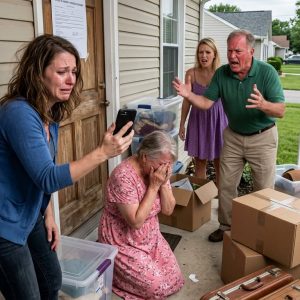
Mom was holding a plate covered in tin foil. Dad looked like he was walking to the gallows. Lauren looked furious, her arms crossed tight across her chest.
I opened the door but blocked the threshold.
“Cookies?” I asked, eyeing the plate.
“Aaron, honey,” Mom said, her voice trembling with that weaponized sweetness she used so well. “We just want to talk. We brought your favorites.”
“I don’t eat sugar anymore, Mom,” I said. “It causes inflammation.”
“This is ridiculous!” Lauren burst out, stepping forward. “The bank accounts are frozen! I can’t buy groceries! You have to call your lawyer and stop this tantrum.”
“It’s not a tantrum, Lauren,” I said calmly. “It’s a criminal investigation.”
Dad finally spoke. “Aaron. We’re family. You don’t involve the police in family business.”
“You do when the family business is embezzlement,” I countered.
“We didn’t steal it!” Mom cried, tears springing to her eyes instantly. “We were… borrowing it. We were going to pay it back!”
“With what?” I asked. “You live on a pension and my checks. How were you going to pay back $240,000?”
“It’s not fair!” Lauren screamed. The facade cracked. “Why should Grace get everything? She’s an only child! You’re a doctor! You have plenty of money! My kids have nothing! Uncle Ray was selfish giving it all to her!”
There it was. The truth. It wasn’t about need. It was about envy. They hated that Grace, the quiet, partially blind girl, was chosen. They hated that I was successful. They felt entitled to level the playing field by looting my daughter’s inheritance.
“So you stole it,” I said softly. “Because you were jealous of a seven-year-old.”
“We used it for the family!” Mom sobbed. “We fixed the house! We helped Lauren!”
“You mean you helped yourselves,” I said. “And when Grace saw the email? When she got close to the truth? You crushed her glasses to blind her. You humiliated her to scare her into silence.”
I stepped back and started to close the door.
“Aaron, please!” Dad begged, stepping forward. “They’re talking about prison time. Your mother is old. You can’t let them take us.”
I looked at them. Really looked at them. I saw the fear, yes. But I also saw the utter lack of remorse. They weren’t sorry they did it; they were sorry they got caught.
“I didn’t do this,” I said. “You did. When you decided my daughter was a bank account instead of a person.”
I slammed the door. I locked the deadbolt.
And then, I listened to them scream.
Cliffhanger: I thought the legal battle would be the end of it, but the true ending came six months later, in a quiet courtroom where the judge asked if I had a victim impact statement.
Chapter 6: The Quiet After the Storm
The legal system is not quick, but it is thorough.
With the evidence Michael Harris compiled and the paper trail they had foolishly left, there was no escape.
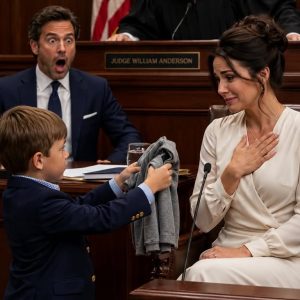
My parents pleaded guilty to misappropriation of trust funds to avoid a trial that would have aired their dirty laundry to the entire community. They were sentenced to five years of probation, massive fines, and restitution. A lien was placed on their house—the house they had renovated with Grace’s money. It would be sold to pay her back.
Lauren faced charges for the theft (as a beneficiary of the stolen funds) and a separate charge for the destruction of property. She avoided jail time because she was a single mother, but she was sentenced to 500 hours of community service and mandatory anger management.
The family shattered. The aunts, uncles, and cousins who heard the truth stopped calling them. The social circle my mother had cultivated for decades evaporated when the word “embezzlement” got out.
But the real victory wasn’t in the courtroom.
It was in my living room.
Six months later, Grace sat on the floor, reading a new book with her new glasses. They were pink frames this time—her choice.
“Dad?” she asked, not looking up.
“Yeah, bug?”
“Are we okay?”
I paused, wiping the counter. I looked at my small, resilient daughter. The bruising on her hands was long gone. The fear in her posture had faded, replaced by the confidence of a child who knows she is protected.
We had recovered the money. It was now in a secure trust managed by a professional firm. Her future was safe. But more importantly, her present was peaceful.
We hadn’t seen my parents or Lauren since that day on the porch. The silence in our house wasn’t the staged, heavy silence of my parents’ living room. It was the comfortable silence of peace.
“Yeah, Grace,” I said. “We’re okay. We’re better than okay.”
I learned something that year. I learned that “family” is not a blood type. It is not a shared last name. Family are the people who protect you when you are vulnerable. Family are the people who hand you your glasses so you can see, not the ones who crush them under their heel.
I cut off a limb to save the body. It hurt. It bled. But now, finally, we are healing.
If you’ve ever had to make the hard choice to cut off toxic family to protect your peace, share this story. You are not alone.