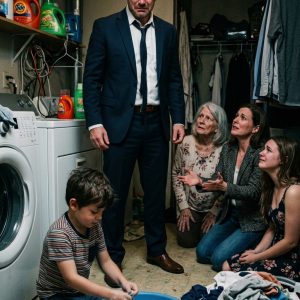
Chapter 1: The House of Ash
“Call the police,” the emergency room doctor commanded, her voice slicing cleanly through the frantic, metallic cacophony of the trauma bay. She didn’t look at me with the measured, clinical detachment I expected from a medical professional. Her eyes locked onto mine with a horrified, visceral disgust—the look of a woman who had just witnessed a grotesque, unspeakable crime.
On the stainless-steel gurney between us, my seven-day-old son, Noah, was burning alive. His tiny body was rigid with a fever so high his skin radiated a terrifying, unnatural heat. He lay inches away from the unconscious, emaciated, and broken form of his mother. My wife. Emily.
This is not a story about a tragic misunderstanding. This is a chronicle of the darkest, most insidious form of betrayal known to the human soul: the violence inflicted by one’s own blood. It is a descent into the terrifying reality of narcissistic abuse, exploring how deep-seated jealousy and toxic entitlement can drive family members to commit acts of passive, lethal torture against the most vulnerable. More importantly, it is the record of my own brutal awakening. It details the agonizing death of a son’s blind loyalty to his mother and sister, and his terrifying transformation into an uncompromising avenger who systematically dismantled the lives of the women who tried to erase his world.
A year ago, my name was simply Ethan. Emily and I had built a sanctuary together. It was a modest, rented three-bedroom house on the edge of the city, anchored by a love so profound it made the peeling paint in the hallway and the drafty windows irrelevant. Emily was a creature of pure, gentle grace. She was a kindergarten teacher with an infinite reservoir of patience, possessing a laugh that could disarm the heaviest of my daily anxieties.
But our sanctuary was constantly strained by the suffocating, grinding weight of working-class financial panic.
When Emily endured an exhausting, traumatic thirty-six-hour labor that ended in an emergency surgical delivery, her body was completely shattered. In that delicate, bloody postpartum period, she was entirely vulnerable. She was unable to walk without excruciating pain, desperately requiring constant hydration, heavy rounds of antibiotics, and physical support just to lift our newborn son to her chest.
That was when the fatal decision was made.
My employer, a draconian logistics firm that viewed its drivers as expendable machinery, issued a terrifying ultimatum: take my two weeks of promised paternity leave and consider myself permanently unemployed, or take a mandated out-of-state freight run to keep my job and, more importantly, our health insurance. I was torn apart by a sickening, paralyzing guilt.
Enter my mother, Linda, and my older sister, Ashley.
They arrived at our house carrying heavy casseroles and wearing flawless masks of deep familial concern. They weaponized my guilt brilliantly. They leaned heavily on their status as “experienced mothers,” insisting that my place was on the road providing for my family, while their place was right here, nurturing Emily and the baby.
“Go, Ethan,” my mother had said, placing a warm, reassuring hand on my cheek. Her eyes shone with a counterfeit sincerity that I, like a fool, entirely believed. “We are her family now. We will treat her like our own daughter. She won’t have to lift a single finger while you’re gone.”
I kissed my exhausted wife’s sweaty forehead, packed my canvas duffel bag, and drove away, effectively trapping the woman I loved in a web spun by venomous spiders.
During my four-day absence on the road, the phone calls were a masterclass in psychological warfare. Whenever I called from truck stops, it was always Linda or Ashley who answered. Emily was always “sleeping,” or “in the shower,” or “too emotional to talk right now.”
“She’s just going through the baby blues, sweetheart,” Linda would sigh heavily into the receiver, sounding exactly like a martyr exhausted by an ungrateful burden. “She’s being very dramatic, refusing our help, snapping at Ashley. But don’t you worry your handsome head. We are handling it. Focus on the road.”
But a dark, sickening intuition began to rot in my gut on the fourth day. I called during a fuel stop. Ashley answered. In the background, I heard Noah wailing hysterically—a thin, ragged, desperate sound. Before I could ask to speak to Emily, I heard Ashley’s voice snap away from the phone, hissing, “Shut that thing up,” before the line went dead.
I didn’t call back. I violated company protocol, abandoned my freight route in the middle of a torrential downpour, and drove fourteen hours straight through the night to get home.
The transition from a home of life to a house of death was a masterpiece of cruel, calculated neglect.
I unlocked the front door at 2:00 AM. The neighborhood outside was serene and sleeping, bathed in the soft orange glow of streetlights. But the interior of my house was a grotesque nightmare. The central air conditioning was blasting in the living room. Linda and Ashley were fast asleep on the plush couches, surrounded by the debris of their comfort: empty pizza boxes, half-drank bottles of Diet Coke, and glossy celebrity magazines scattered across the rug.
But when I sprinted down the darkened hallway and pushed open the heavy wooden door of the master bedroom, the heat hit me like a physical, suffocating wall.
It was at least ninety degrees inside the room. The windows were deadbolted shut, the heavy blackout blinds drawn tight, and the ceiling fan intentionally switched off. The air tasted like copper, stale sweat, and impending death.
Emily lay discarded on the edge of the mattress. Her lips were cracked, bleeding, and covered in white scales of severe dehydration. Her beautiful, vibrant skin was the color of wet ash. She had clawed at the bedsheets, her fingernails torn and bleeding—evidence of a desperate, agonizing, failed attempt to drag her paralyzed body to the door. Beside her, little Noah was practically comatose. His diaper was completely soaked through with dark, concentrated urine that had burned his raw skin to the point of severe blistering.
I scooped my dying son into one arm and grabbed Emily’s limp, burning shoulders with the other. My scream of absolute, apocalyptic terror woke my mother and sister in the living room.
They didn’t run in with panic. They didn’t gasp. They ambled to the doorway with the slow, annoyed reluctance of people whose favorite television show had been rudely interrupted.
“She’s fine, Ethan, stop overreacting,” Linda sighed heavily, casually wiping a smear of pizza grease from her lower lip. “She’s just being dramatic to make us look bad. She’s been pouting in there all day.”
“She has no pulse!” I roared, the sound physically tearing the lining of my throat as I carried my dying family past the empty soda bottles my mother and sister had feasted on while my wife literally starved to death ten feet away.
Now, sitting in the blinding, sterile fluorescent light of the ICU waiting room, my hands were stained with my wife’s blood. The doctors were fighting to stabilize them both. Suddenly, my phone buzzed in my pocket. It was a text message from my sister, Ashley, sent hours ago, before she realized I had come home early and involved law enforcement.
I opened the message. The single, chilling photograph staring back at me instantly shifted the narrative in my mind from a case of severe, tragic neglect to premeditated, sadistic torture.
Chapter 2: The Theater of Lies
The photograph illuminated on my cracked phone screen was taken from the hallway outside my master bedroom. It showed the heavy wooden door shut tight. But it wasn’t the image of the door that made my lungs seize and my vision swim. It was the caption Ashley had typed beneath it, accompanied by a laughing emoji:
The princess is in time-out. Maybe a few hours in the hotbox will teach her some respect.
Before my shattered brain could even fully process the sheer, sociopathic evil of that digital confession, the heavy double doors of the ICU waiting room swung open. Two uniformed police officers stepped inside, their faces grim and strictly professional. They were accompanied by a woman in a sharp blazer holding a clipboard, who quickly introduced herself as an investigator for Child Protective Services (CPS).
Linda and Ashley, who had followed my car to the hospital complaining the entire time about being woken up in the middle of the night, were immediately separated by the officers into different corners of the waiting room.
I stood frozen by the cheap, humming coffee machine. My hands were trembling so violently that I spilled boiling water over my knuckles, but my nervous system was so overloaded with adrenaline and shock that I didn’t even register the burn. I just stood there. And I listened.
“Officer, you have to understand the nightmare we have been living, we tried absolutely everything,” Linda sobbed.
It was a terrifying, mesmerizing performance. She produced wet, heavy crocodile tears with the practiced, flawless ease of a veteran manipulator, pressing a crumpled tissue to her chest as if her own heart were physically breaking. “Emily has been entirely unstable since the birth. She hated the baby. She wouldn’t let us touch him. We just wanted to help!”
The officer, a young man who looked entirely out of his depth dealing with hysterical family dynamics, frowned, his pen hovering over his small leather notepad. “Ma’am, the ER doctors say the mother is severely dehydrated and suffering from advanced sepsis. Why didn’t you call an ambulance earlier today?”
“Because she locked us out!” Linda cried, her voice echoing in the quiet room, dripping with manufactured trauma. “She locked the bedroom door from the inside! She screamed at us through the wood that if we tried to come in, if we tried to take the baby to feed him, she would hurt little Noah. We were terrified! We stayed outside the door, praying, hoping she would calm down. My son works so hard, he’s under so much pressure to provide, I didn’t want to worry him with his wife’s psychiatric break!”
From the other side of the room, Ashley chimed in, playing her supporting role with sickening perfection. “She’s crazy, officer. Postpartum psychosis. We were victims in that house. She held that baby hostage.”
The officer nodded sympathetically, jotting down frantic notes. “Postpartum psychosis is a tragic, dangerous thing, ma’am. Did she have a history of mental illness before the pregnancy?”
Standing by the coffee machine, a cold, dead, absolute sensation washed over my brain, instantly extinguishing the fiery panic that had consumed me since I walked into my house.
I remembered the master bedroom door. I remembered the day Emily and I moved in, painting the trim and fixing the hinges. That specific door didn’t have a lock on the inside. The internal locking mechanism within the doorknob had been broken for decades. Instead, there was a cheap, heavy brass slide-bolt installed on the outside of the door—in the hallway. It had been put there by the previous landlord years ago to keep his large dogs out of the carpeted room when he wasn’t home.
Emily hadn’t locked them out.
They had locked her in.
They had locked a bleeding, paralyzed woman in a suffocating room with a newborn, intentionally turned off the air conditioning to that specific zone of the house, and left them to die in an oven while they watched television and ate pizza.
If I attacked them right then and there in the waiting room—which every screaming fiber of my biological instinct was demanding I do—I would be arrested for assault. I would be dragged out of the hospital in handcuffs. Emily would wake up alone, if she woke up at all. And Linda would immediately use my violent outburst to further solidify her narrative to the CPS investigator that our entire household was dangerously unstable, ensuring they took Noah away and handed him directly to her for “safekeeping.”
I realized in that blinding, fluorescent room that I could not fight this war with my fists. I had to evolve instantly from a passive, grieving husband into a lethal, disciplined investigator. I had to play a terrifying game of shadows.
I walked over to the officer interviewing my mother. I slumped my shoulders, forcing my face to mimic the profound, confused grief of a man whose world was falling apart and who needed his mother’s guidance. I placed a trembling hand on Linda’s shoulder.
“Mom,” I whispered, my voice cracking perfectly, a masterclass in feigned submission. “I can’t believe this. I didn’t know she was this sick in her head. I should have listened to you before I left.”
Linda looked up at me. For a fraction of a second, a flash of absolute, triumphant victory glittered in her dark eyes before she expertly masked it with fresh tears. She wrapped her arms around my waist, burying her face in my chest. “Oh, my poor, sweet boy. We are here for you. We will get through this tragedy together. We’ll take care of Noah.”
The police informed me that because it was currently a domestic “he-said, she-said” involving a severe psychiatric claim by multiple “credible” witnesses against an unconscious woman, they could not make an immediate arrest without physical evidence of intentional neglect.
I looked down at my mother and sister. “Go home,” I said, my voice hollow and defeated. “Get some rest. You’ve both been through too much trauma tonight. I’ll stay here and wait for the doctors to give me an update.”
They left the hospital looking smug, relieved, and entirely victorious.
But the very moment the elevator doors chimed and closed behind them, I didn’t return to the ER. I sprinted to my truck. I broke every speed limit driving back to the crime scene—my own house—knowing I had a maximum of twenty minutes to secure the truth before my mother returned to sanitize the evidence. I kicked open my own front door, fully prepared to tear the drywall down to the studs to find proof. But what I found hidden inside the return air conditioning vent in the hallway was about to hand me the keys to their total destruction.
Chapter 3: The Architecture of Torture
The house was eerily silent, the residual chill of the living room air conditioning a sickening contrast to the lingering, oppressive heat still radiating from the open door of the master bedroom. I did not enter my home as a grieving husband; I entered it as a forensic auditor processing a murder scene.
I knew Linda and Ashley would be pulling into the driveway any minute, returning to throw away the trash and construct their alibi. I had to move with ruthless precision. I began to systematically tear the illusion of their “caregiving” apart.
I went to the kitchen first. Linda had told the police Emily vehemently refused to feed the baby. I opened the heavy plastic lid of the recycling bin. Buried at the absolute bottom, hidden beneath a layer of empty wine bottles and greasy pizza boxes, were four brand-new, expensive cans of specialized baby formula I had purchased the day before my trip.
I pulled them out. They had been intentionally punctured. Their powdered contents had been deliberately dumped down the kitchen sink, the thick white residue still clinging to the stainless-steel drain and the blades of the garbage disposal. They hadn’t just failed to feed my son; they had actively, maliciously destroyed his only food source so Emily couldn’t feed him even if she somehow managed to drag herself out of the room.
Next, I went to the guest bathroom, which Linda and Ashley had claimed as their own private suite. I dug through the plastic trash can, pushing aside makeup wipes and balled-up tissues. Deep at the bottom, wrapped tightly in a plastic grocery bag, I found the empty foil blister packs of Emily’s prescribed postpartum antibiotics and heavy pain medication.
I stared at the crushed foil. They hadn’t just withheld her medicine; they had flushed her salvation down the toilet to ensure her post-surgical infection would rage out of control, violently accelerating her physical collapse.
But physical evidence of destroyed property wasn’t enough to secure a twenty-year prison sentence. A slick defense attorney could argue they were just cleaning up. I needed undeniable intent. I needed recorded malice.
As I stood in the hallway, staring at the heavy brass slide-bolt on the outside of the master bedroom door, my eyes drifted upward to the slatted metal return air conditioning vent set high in the wall, just above the doorframe.
A memory struck me like a physical blow to the chest. Months before Noah was born, I had purchased a cheap, battery-operated baby monitor online. It was an off-brand model that came with a small camera, but the video feed was notoriously glitchy and unusable. However, I remembered linking the base station’s high-sensitivity audio receiver to an old iPad in my home office. I had set it to record continuous audio logs through a background app so Emily and I could track Noah’s sleep and breathing patterns during the night.
I ran to my office. The door was closed. I pushed it open. The iPad was still plugged into the wall charger, resting face-down on my desk. The screen was dark, but the small red recording light at the top of the bezel was pulsing steadily. It was still running. It had captured every single sound that had echoed through that hallway over the last four days.
I locked my office door, sat in the dark glow of the screen, and retrieved the archived files. I clicked on an audio log timestamped from 2:00 PM on my third day away.
Static hissed through the iPad’s small speakers, followed by the weak, rasping, rhythmic cry of my newborn son. Then, Emily’s voice bled into the room. It didn’t sound like my vibrant, laughing wife; it sounded like a ghost clawing its way out of a shallow grave.
“Linda… please… I need water. I’m so thirsty. I can’t produce milk… he’s starving. Please, please unlock the door.”
The sound of heavy, deliberate footsteps approached the hallway side of the door on the recording. Then, my sister Ashley’s voice, crystal clear, entirely devoid of empathy, and dripping with sadistic amusement.
“You wanted him all to yourself, princess. You told Ethan you didn’t need our advice on how to decorate the nursery. You think you’re better than us. So be a mother. Figure it out.”
“I’m burning up… I can’t move my legs… I think I have an infection… please call an ambulance,” Emily begged. Her voice broke into a wet, agonizing, pathetic sob that physically tore my soul into ribbons as I listened in the dark.
“Stop being so utterly dramatic,” my mother, Linda, chimed in. The distinct, casual sound of ice cubes clinking in a glass was clearly audible over the recording. “You’re just lazy, Emily. You’ve always been lazy. Ethan is out there working himself to death to pay for your cushy little life, and you can’t even feed your own brat. If you don’t shut him up right now, we’re turning up the TV.”
A loud, heavy, metallic clack echoed on the recording—the undeniable sound of the exterior brass slide-bolt being violently shoved into the locking plate, sealing them inside the oven. Then, the volume of the living room television was blasted to a deafening, artificial roar, completely drowning out the sound of my dying wife and my starving son.
I stopped the recording.
I didn’t cry. The capacity for tears had been entirely burned out of me, replaced by a cold, terrifyingly calm resolve. The man who had kissed his mother’s cheek four days ago was dead. In his place was a weapon of absolute ruin.
I transferred the audio files to three different USB hard drives. I uploaded them to a secure, encrypted cloud server, and emailed a copy to a newly created, anonymous account. I wiped the iPad clean, put the master SD card in my pocket, and slipped out the back door just as I heard Linda’s key turning in the front lock.
Armed with the digital flash drive, I returned to the hospital. The sun was just beginning to rise, casting long, gray shadows across the parking lot. The lead detective was waiting for me in the lobby, his face a mask of grim, professional sympathy.
“Mr. Miller,” the detective said gently, stepping into my path. “I’m sorry to inform you, but your mother, Linda, has proactively called Child Protective Services from her home ten minutes ago. She has officially filed a report against your wife for child abandonment and severe psychological instability. She is legally demanding they place Noah in her custody immediately upon his discharge.”
He held up a thick manila folder, his expression tight. “She also had a judge sign an emergency, temporary restraining order based on her testimony and your sister’s corroboration. Legally, Emily cannot be within one hundred feet of the baby when she wakes up.”
I looked at the detective. I didn’t yell. I didn’t panic. A chilling, razor-thin smile touched the corners of my mouth as I reached into my jacket pocket and pulled out the small, black flash drive.
I held it up under the buzzing fluorescent lights. “Detective,” I whispered, the sound entirely devoid of any human warmth, “do you have a laptop?”
Chapter 4: The Altar of Ruin
The hospital chapel, located at the end of a quiet corridor on the ground floor, was a space usually reserved for solitary grief and desperate prayers. Today, it had been transformed into a theater of grotesque hypocrisy.
Linda, believing she had successfully outsmarted the legal system, framed her daughter-in-law, and secured permanent custody of her new “do-over” baby, had organized an impromptu “prayer circle.” She had spent the morning on her cell phone, inviting my extended aunts, uncles, and her church pastor to the hospital. She wanted an audience. She needed a congregation to witness her playing the role of the grieving, heroic matriarch who was stepping up to save her family from a deranged, unfit mother.
I stood in the shadows just outside the heavy oak doors of the chapel, watching through the narrow, leaded glass panes. Linda stood at the front wooden podium, weeping beautifully, dabbing her perfectly dry eyes with a lace handkerchief.
“We just want little Noah safe,” she cried to the crowded pews, her voice echoing mournfully off the vaulted ceilings. “Emily’s mind has completely broken, Pastor. She starved that poor, innocent angel. She locked us out of the room when we begged to help her. I wept outside that door. It breaks a grandmother’s heart to see a family destroyed by mental illness.”
My sister, Ashley, sat in the front row, nodding solemnly, clutching a Bible she had likely stolen from the waiting room magazine rack.
I pushed the heavy wooden doors open. My boots echoed sharply against the polished marble floor as I walked slowly down the center aisle. Every eye in the chapel turned to me. The murmurs of sympathy swelled. They expected to see a broken, weeping husband coming to seek comfort from his matriarch.
“Ethan, my brave boy,” Linda gasped, reaching her arms out toward me from the podium, her face a mask of tragic love. “Come, let us pray for your healing.”
“It truly is a magnificent tragedy, Mom,” I said. My voice projected clearly and calmly across the silent room, bouncing off the stained glass. I stepped up to the podium, ignoring her outstretched arms, and turned to face the congregation. “My mother has painted a heartbreaking picture. But she left out the most important part of the story. She forgot to tell you exactly how she helped my wife.”
I pulled my smartphone from my pocket. While waiting in the hallway, I had already synced it to the chapel’s Bluetooth audio system, designed to play soft hymns during memorial services.
“Listen closely,” I commanded the room.
I tapped the screen.
The high-fidelity chapel speakers crackled to life. The pristine acoustics of the holy space amplified the sound of Emily’s desperate, raspy voice pleading for water.
“I’m burning up… I can’t move my legs… please call an ambulance…”
The agonizing plea was followed instantly by Ashley’s cruel, mocking laughter, ringing out from the speakers above the altar like demonic static. Then came Linda’s cold, sober, undeniable command:
“You’re just lazy, Emily… If you don’t shut him up right now, we’re turning up the TV.”
The metallic, heavy clack of the slide-bolt being thrown from the outside echoed through the chapel like a gunshot, followed by the blaring, artificial noise of a daytime game show.
I paused the audio.
The silence that fell over the chapel was not peaceful; it was absolute, suffocating terror. The pastor physically dropped his Bible onto the floor. My aunts stared at Linda, their mouths hanging open in horrified, visceral revulsion. The immaculate masks had been violently ripped away, exposing the rotting monsters beneath.
Linda’s face drained of all blood, turning a sickly, translucent, terrifying white. Her jaw trembled violently. “Ethan… that’s… that’s AI… that’s fabricated… you manipulated that recording because you’re stressed…” she stammered, backing away from the podium. Her eyes darted wildly toward the side exits like a cornered rat realizing the trap had finally snapped shut.
Ashley had frozen in the front pew, her face buried in her hands, paralyzed by the sudden, apocalyptic public exposure of her sadism.
“I didn’t have to fabricate anything, Mom,” I replied softly, stepping away from the podium.
I gestured toward the heavy wooden doors at the back of the chapel. They swung open with a resounding crash. The lead detective walked in, holding a pair of heavy steel handcuffs, followed closely by two uniformed officers and the CPS investigator.
“Linda Miller and Ashley Miller,” the detective announced, his voice booming with absolute legal authority, slicing through the stunned silence of the congregation. “You are both under arrest for attempted manslaughter, felony child endangerment, and unlawful imprisonment. Put your hands behind your backs. Now.”
The officers descended upon them. As they forcefully bent Linda over the polished wooden pews to secure the steel cuffs, she began to shriek, fighting frantically against the metal.
“Ethan! Ethan, do something! I am your mother!” she screamed, invoking her biological title as a desperate, pathetic shield. “I gave you life! You can’t let them do this to me!”
I walked up to her, stopping just inches from her face. I looked directly into her terrified, wild eyes.
“My mother died the moment she locked my wife in an oven,” I said, my voice dead and empty. I looked at the detective. “Take them away.”
As the officers dragged the shrieking, struggling women out of the chapel, violently tearing down their social empire in front of their entire congregation, my phone suddenly vibrated violently in my pocket. It was the ICU front desk.
I answered it, my heart hammering.
“Mr. Miller, you need to come to the intensive care unit immediately,” the nurse said, her voice tight with panic. “Your wife is crashing.”
My stomach dropped entirely through the floor as I sprinted out of the chapel and down the sterile white hallway. I had successfully executed my vengeance, but as the code-blue alarms began to blare from the critical care wing, a terrifying thought seized my chest: Did I win the war against my bloodline, only to lose my family anyway?
Chapter 5: The Ashes of the Past
The medical crisis that greeted me in the ICU was a chaotic, terrifying blur of blue scrubs, screaming monitors, and the harsh smell of ozone.
Emily had coded. The extreme, prolonged strain of the advanced sepsis, combined with acute kidney failure from profound dehydration, had finally overwhelmed her exhausted heart. I was shoved roughly against the glass wall of the corridor by a triage nurse as a crash cart was wheeled furiously into her room. For two excruciating, endless minutes, I watched through the plastic blinds as a doctor rhythmically compressed her chest, physically forcing life back into a body my own family had tried so hard to destroy.
On the third shock from the defibrillator, a weak, jagged rhythm finally returned to the green monitor. She was alive, but she was hovering precariously over the abyss.
The next three weeks were a grueling, agonizing purgatory. I quit my job at the logistics firm the very next morning, calling my manager and telling him exactly where he could shove his ultimatums. I lived in that hospital room. I slept on a terrible vinyl chair. I watched IV bags pump liters of fluids and broad-spectrum antibiotics into her fragile, bruised veins. Slowly, agonizingly, I watched the color return to her ash-grey cheeks.
Little Noah, possessing the terrifying, miraculous resilience of the newborn, recovered much faster. Within a week, his hypernatremia resolved, his burns began to heal, and he was released from the NICU. I placed him gently onto Emily’s chest while she slept, watching the steady rise and fall of her breathing rock him to sleep. It was a fragile, beautiful victory.
While we fought for life in the sterile light of the hospital, the legal system descended upon Linda and Ashley with apocalyptic fury.
They were denied bail. The judge, having listened to the unredacted audio files I provided the detectives, deemed them a severe flight risk and an active, malicious danger to the community.
The trial, held eight months later, was a brutal, one-sided slaughter. Their expensive defense attorney tried to argue mental fatigue and a tragic misunderstanding of postpartum symptoms, but the audio of the slide-bolt locking, followed by the television blasting, completely destroyed any defense of mere negligence. It was premeditated.
Faced with decades in a concrete cell, the toxic, codependent bond between mother and daughter instantly evaporated. Linda took the stand and wept, claiming Ashley was the violent mastermind who hated Emily. Ashley took the stand and screamed that her mother was a controlling, narcissistic monster who forced her to comply. They violently destroyed each other in front of a disgusted, stone-faced jury.
It took the jury less than two hours to return a guilty verdict on all counts.
The sentencing hearing was the final nail in their coffin. The courtroom was dead silent as the judge looked down from the heavy oak bench. Linda and Ashley sat at the defense table in shapeless orange jumpsuits. Their hair was graying sharply at the roots; their faces were hollow, stripped of all the arrogant makeup and expensive jewelry they used to hide their rot. They looked pathetic, small, and entirely broken.
I stood at the wooden podium to deliver the final victim impact statement. Emily was sitting in the front row. She was frail, using a cane to walk due to lingering nerve damage in her legs, but she looked radiant, holding a now-healthy, plump, sleeping Noah tightly against her chest.
“Your Honor,” I began, my voice steady, projecting across the silent courtroom. “The women sitting at that defense table did not make a tragic mistake. They did not suffer a lapse in judgment.”
I turned slowly, staring directly into my mother’s eyes until the sheer weight of my disgust forced her to look down at her shackled hands in shame.
“They executed a calculated, sadistic plan to slowly kill my wife and my infant son through starvation and heat exhaustion, simply because they felt entitled to my sole attention and my financial provision. They used the sacred disguise of family to gain unchecked access to their victims. They weaponized my trust. They do not deserve rehabilitation. They deserve the exact measure of mercy they showed my dying wife when she begged them for a single cup of water.”
The judge entirely agreed. He sentenced them both to twenty-five years in a maximum-security state penitentiary, mandating they serve a minimum of eighty-five percent of the sentence before even being considered for parole.
As the heavy wooden gavel slammed down, Ashley collapsed onto the table, sobbing hysterically. The bailiffs grabbed Linda by the arms, shackling her waist. She twisted around, looking at me with wild, panicked eyes, and screamed my name, begging for forgiveness, crying that she loved me.
I turned my back to her. I walked through the swinging wooden gates of the gallery, wrapped my arms carefully around Emily and Noah, and walked out of the courtroom into the bright, crisp afternoon sun, without ever looking over my shoulder.
Several months later, we had sold the tainted house, packed our lives, and moved to a different state, surrounded by pine trees and mountains. One afternoon, while checking the mail at our new home, I found a thick, brown envelope buried amidst the utility bills.
It bore the official, stark black ink stamp of the Ohio State Penitentiary. It was addressed to me, written in my mother’s sprawling, familiar handwriting. The words “Please, I’m dying” were frantically scribbled on the back flap. I stood in the driveway, staring at the envelope for a long, quiet minute, listening to the wind in the trees. What exactly does a man do when the monster who tried to murder his family begs him for her own life?
Epilogue: The Architect of Sanctuary
Five years have passed since the heavy iron doors of the state penitentiary slammed shut, entombing the people I used to call my mother and sister.
Today, the air in our expansive backyard smells of vanilla frosting, pine needles, and fresh-cut grass. We are in Colorado, celebrating Noah’s fifth birthday. He is running through the sparkling arc of the lawn sprinklers, a beautiful, loud blur of joyous, unstoppable energy, chasing a clumsy golden retriever puppy. Emily sits on the patio laughing, holding a glass of iced tea. Her eyes are bright and completely free of the dark, suffocating shadows that once haunted them. She runs a successful local support group for mothers recovering from traumatic births. She is the strongest, most brilliant person I have ever known.
I stand at the edge of the stone patio, leaning casually against the wooden railing. In my right hand, I hold a silver Zippo lighter. In my left hand, I hold a thick, unopened brown envelope bearing the Ohio State Penitentiary return address.
They arrive every few months like clockwork. Sometimes the handwriting is erratic, claiming severe illness or abuse by the prison guards. Sometimes they beg for a single photograph of Noah so they can see their “grandson.” Sometimes they offer fake, desperate, sprawling apologies spanning ten pages.
I don’t open this one, just as I haven’t opened a single one of the others.
Society conditions us from birth to believe that blood is an unbreakable, sacred bond. We are taught that family is our ultimate safe harbor, our default sanctuary against a cold, unforgiving world.
But I know the terrifying, liberating truth. A monster doesn’t magically stop being a monster just because you share a percentage of their DNA. The greatest threat to your peace, your safety, and your life rarely breaks through the window in the middle of the night wearing a ski mask. Sometimes, the greatest, most lethal threat is the one you invite through your front door. It is the one you leave alone with your most precious treasures, trusting a biological title instead of critically evaluating a person’s actual, observable soul.
I flick the metal wheel of the lighter. The small, orange flame springs to life.
I hold the corner of the prison envelope to the fire. I watch the cheap paper catch, curl, and turn a dark, brittle brown. I drop the burning letter onto the concrete patio, watching the words I will never read disintegrate into ash. I step on the embers with my boot, grinding them into the dust, letting the crisp mountain wind carry the remnants of my former abusers into the dirt where they belong.
They are ghosts in a concrete box, completely forgotten by the outside world, permanently erased from the narrative of my life.
I put the lighter in my pocket and walk into the bright, warm sunlight. I scoop my laughing, soaking-wet five-year-old son into my arms, spinning him around until he squeals with delight, and lean down to kiss my wife’s forehead. I look out over my home, entirely secure, entirely safe, and leave you with one final, undeniable truth:
You are the sole architect of your family’s safety, and sometimes, the only way to truly protect the brilliant light of your home is to possess the courage to burn your own toxic roots to the ground.
If you want more stories like this, or if you’d like to share your thoughts about what you would have done in my situation, I’d love to hear from you. Your perspective helps these stories reach more people, so don’t be shy about commenting or sharing.