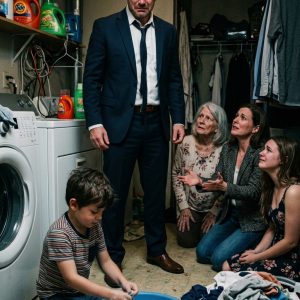
The Weight of Three Words
Chapter 1: The Echo of a Past Life
The digital notification fractured the quiet of my living room at exactly 9:17 p.m. It was a sterile, unremarkable sound, yet it commanded my absolute attention. I glanced at the glowing screen of my phone, expecting a mundane update from the neighborhood association or a weather alert. Instead, I saw a text message from my younger sister. Three words.
I’m still okay.
Anyone else would have simply glanced at the screen, perhaps smiled at the awkward phrasing, and swiped it away. I nearly dropped my ceramic coffee mug. A cold, heavy dread instantly coiled in my gut. Because thirty years earlier, sitting in a grease-stained, neon-lit diner just outside the gates of Fort Bragg, I had looked my little sister in the eye and taught her precisely what those specific words meant.
I was a newly minted Army officer back then, about to deploy into a volatile theater, and she was a terrified college freshman. I had given her a protocol. If she was safe, if the world was spinning normally on its axis, she would write, “I’m doing okay.” But if she ever found herself in a situation where she was being watched, controlled, or physically forced to project an illusion of safety, she was to drop the word ‘doing’ and replace it with ‘still’.
I’m still okay.
One word. That was the microscopic difference between peace and a silent scream. One word meant the perimeter had been breached. One word meant she was in desperate trouble, and she had exactly fifteen minutes to hope I understood the transmission.
Fifteen minutes after that text illuminated my screen, I was already behind the wheel of my truck, tearing through the Virginia darkness toward her suburb. And for the first time in nearly a decade, I was forcefully resurrecting the tactical operational skills I prayed I had permanently buried when I retired my uniform. My brother-in-law had spent the last eight years treating me like a harmless, flower-planting widow. He was about to receive a catastrophic education on just how tragically wrong he was.
My name is Sarah Mitchell. I retired from the United States Army at the age of fifty-six. Two decades immersed in the grueling machinery of the military had branded many lessons into my psyche, but perhaps the most vital was the strategic advantage of invisibility. A staggering majority of the human population spends their fleeting lives desperately trying to impress absolute strangers. I never saw the tactical utility in that.
Following my retirement, I retreated to a modest, weather-beaten house on the wooded outskirts of Richmond, Virginia. It was decidedly unspectacular. The wooden planks of the front porch constantly begged for a fresh coat of sealant. My backyard flower beds waged a perpetual, losing war against invasive climbing weeds. The aluminum mailbox leaned perpetually to the left, stubbornly refusing to stand straight regardless of how many times I reset the post.
I cherished every imperfect inch of it. Most mornings, I rose an hour before the sun broke the horizon, brewed a pot of dark roast coffee, and sat on the porch wrapped in a wool blanket, simply listening to the forest wake up. To the local community, my history was a blank slate. They knew me simply as Sarah: the quiet woman who aggressively pruned her hydrangeas, the widow who faithfully volunteered in the kennel block at the county animal shelter, the reliable neighbor who baked devastatingly good peach cobblers for the Methodist church fundraisers.
I fiercely protected that mundane facade. The military had already extracted its pound of flesh from my youth; I felt no obligation to drag my rank, my deployments, or my ghosts into casual grocery store conversations.
My younger sister, Emily, resided a mere forty-minute drive across the county line. She was four years my junior and had, since the moment she could walk, been the distinctly softer, more luminous half of our duo. During our childhood, I was the one scaling the highest branches of oak trees and returning home with bruised knuckles from neighborhood scuffles. Emily was the one meticulously pressing wildflowers into heavy encyclopedias and offering breathless apologies to the boys I had pushed into the mud. I ultimately enlisted in the armed forces to find order in chaos; Emily earned a master’s degree in library science to bring stories to children.
Despite the vast polarization of our temperaments, we remained fiercely tethered to one another, a bond that only calcified after our parents passed away within a year of each other. For nearly a decade, our Sunday routine was an unbreakable sacrament. Lunch at a local bistro, followed by excessively strong coffee, and three uninterrupted hours dissecting absolutely nothing of geopolitical importance. Those lazy afternoons were the anchor of my civilian life, holding more emotional weight than I ever dared to vocalize.
That all shifted when Emily married Kevin Brooks.
At the onset, I wanted to like him. Most people instinctively did. Kevin was a masterclass in engineered charm. He possessed a firm, practiced handshake that conveyed instant trustworthiness. He possessed an uncanny, almost unnatural ability to remember the names of people’s pets and their obscure birthdays. He held court at backyard barbecues with polished anecdotes and was invariably the first man to offer his pickup truck when a neighbor needed to haul a new sofa. He was the quintessential, universally beloved “good guy.”
But as my years in intelligence and personnel management had brutally taught me, immense charm is often the most effective camouflage for a predator.
The initial red flags were so microscopic, so subtle, that I gaslit myself into ignoring them. About three years into their union, Emily simply… stopped making autonomous decisions. It wasn’t a sudden, dramatic abdication of her willpower; it was a slow, agonizing erosion. If I casually inquired where she wanted to grab dinner, her eyes would instinctively dart to Kevin’s face before her mouth opened. If I suggested she spend a long weekend at my house, she would reflexively murmur that she needed to “check the calendar with Kev.” If I asked her opinion on a newly released film, Kevin would smoothly interject and answer on her behalf.
Initially, I rationalized it as the compromises of a deeply enmeshed marriage. But the pattern metastasized. Year after year, microscopic fragments of my sister’s vibrant personality were quietly stripped away and discarded.
The mask truly slipped one humid Sunday afternoon. Emily was inside, prepping a salad in the kitchen, while Kevin and I sat in the oppressive heat of their pristine backyard patio. He took a slow, deliberate sip of his imported lager, let out a condescending chuckle, and looked at me.
“You know, Sarah,” he mused, his tone dripping with patronizing amusement. “I honestly don’t think you’ve ever had to hold down a real job in the private sector.”
I maintained a perfectly neutral expression, suppressing the urge to laugh in his face. “Is that so?”
“Sure,” he continued, gesturing lazily toward my muddy boots. “You’ve always just seemed so incredibly… relaxed. No corporate pressure. No real bottom-line accountability.”
I stared at him. I had spent years of my life sleeping on cots in suffocating desert heat, managing the psychological breakdowns of heavily armed young soldiers, and executing logistical decisions where a mathematical error meant someone’s child returned home draped in a flag. Yet, I simply took a sip of my iced tea and replied, “I suppose that is certainly one perspective.”
Kevin chuckled, clearly misinterpreting my restraint as submission. “I just mean, Emily has always been the workhorse. She’s the strong one who understands the real world. You’re too nice, Sarah. Too soft for the wolves.”
I cataloged his words, archiving them for future analysis. It wasn’t the insult that triggered my internal alarms; it was the insidious architecture beneath the joke. There was a dismissive, deeply misogynistic current to his worldview—a distinct pleasure he derived from underestimating the women in his orbit, rendering them small so he could feel colossal.
Following that patio conversation, his passive-aggressive commentary became the soundtrack of our interactions. Sarah worries too much. Sarah doesn’t comprehend complex finances. Sarah spends her days playing in the dirt with stray dogs. Emily would routinely flinch, her gaze dropping to the floorboards whenever he launched into these monologues, but she never once contradicted him.
That unbroken silence terrified me far more than Kevin’s arrogance ever could. The fiery, opinionated girl I had shared a bedroom with was absolutely petrified of disagreeing with her husband. I just couldn’t isolate the exact source of the terror.
Over the subsequent twenty-four months, the metamorphosis became impossible to ignore. Emily abruptly stopped answering her cell phone on the first ring. She ceased traveling anywhere outside their immediate zip code unaccompanied. Her vibrant, expansive social circle aggressively contracted until it was virtually nonexistent. Her lifelong friends stopped dropping by unannounced. Our sacred Sunday lunches were repeatedly canceled, always citing sudden, vague “migraines” or “home improvement projects.”
When I finally cornered her and asked if she was safe, she deployed the exact same, hollow smile. A smile that didn’t reach her eyes. The heartbreaking, universally recognizable grimace of a hostage pretending the handcuffs are merely bracelets.
One sweltering afternoon, while helping her reorganize the chaotic shelving in their garage, she reached up to grab a box, and her sleeve slipped down. I caught a glimpse of a harsh, mottled bruise blooming near her left wrist. My chest seized.
“Emily, what the hell is that?” I demanded, stepping toward her.
She violently yanked her sleeve down, her breathing shallow. “Nothing, Sarah. God. I just… I bumped into the corner of the kitchen island. I’m so clumsy lately.”
The explanation was delivered far too rapidly. It was polished, rehearsed, and utterly devoid of natural hesitation. I didn’t push her. Not then. A fundamental law of interrogations dictates that applying sudden pressure to a terrified subject only forces them deeper into their fortified bunker. I possessed the patience of a sniper. I stepped back, offered a tight nod, and waited.
Months bled into a year. And then, on a random, quiet Tuesday evening, nearly three decades after its inception, the Fort Bragg distress code resurrected itself from the ashes.
I’m still okay.
I stared at the glowing pixels on my phone screen. Every single dormant instinct honed over a twenty-year military career flared to life, flooding my bloodstream with icy adrenaline.
Civilians often harbor a profound misunderstanding of military intelligence. They envision cinematic shootouts, satellite hacking, and explosive breaches. In reality, the most lethal, highly valued skill an intelligence officer possesses is the ability to recognize subtle deviations in behavioral patterns. And when a deeply ingrained pattern violently fractures, you do not ignore it.
Emily had not accidentally typed that sequence of words. She had not suffered a typo. She had meticulously, deliberately bypassed every conversational norm to send a flare into the dark.
For a breathless minute, I sat completely immobilized in my armchair. My coffee turned bitter and cold. Beyond my window, the crickets ceased their chirping, leaving the Virginia night suffocatingly silent.
I unlocked my phone. I didn’t dial Emily’s number. If Kevin was monitoring her device—or worse, physically standing over her shoulder—an incoming call from her protective older sister could serve as the catalyst for immediate violence.
Instead, I stood up, walked into my home office, and began systematically gathering intelligence with the ruthless, methodical precision I had utilized in war zones.
The target had painted a bullseye on his own back. He just didn’t realize the missile was already in the air.
Chapter 2: The Reconnaissance
The foundational doctrine of crisis response is elegantly simple: never allow the corrosive acid of fear to dictate your operational decisions. The secondary doctrine is even more critical: relentlessly gather verifiable facts before executing an action.
I silently recited both mantras as I abandoned my cold coffee and engaged the overhead lights in my office. A civilian might assume that stepping into retirement permanently dissolves military conditioning. It doesn’t. The superfluous habits fade, but the vital ones—the ironclad discipline, the ability to compartmentalize panic, the instinct to dissect a volatile situation objectively—become permanently fused to your DNA.
Within sixty seconds, I had a fresh legal pad centered on my desk, a black ink pen in my grip, my encrypted laptop booted up, and a chronological timeline rapidly constructing itself in my mind.
9:17 p.m. Distress protocol received.
The phrase “I’m still okay” was brilliant in its ambiguity. It didn’t provide coordinates or explicitly detail the nature of the threat, but it confirmed the most critical variable: Emily was currently trapped in an environment where free speech was actively prohibited. That realization drastically narrowed the spectrum of possibilities.
I began frantically scribbling down every single interaction I’d had with my sister over the preceding sixty days. Every truncated phone call, every brief text exchange, every canceled brunch. The exercise felt disturbingly familiar. I wasn’t acting out some melodramatic detective fantasy; I was desperately panning for gold in a river of mundane data, searching for the behavioral patterns that emotional bias naturally obscures.
The first glaring anomaly was the sheer volume of silence. Three years prior, Emily and I communicated daily. Now, I realized with a sickening jolt, there were stretches of five or six days where she was a ghost. I had comfortably attributed this to the chaotic grind of middle age—work stress, marital obligations, sheer exhaustion. Now, that justification felt like a criminal oversight.
I pulled up our text history on my monitor. A nauseating realization settled heavily in my stomach. Nearly eighty percent of our recent digital conversations ended abruptly, mid-thought. Our phone calls averaged a meager seven minutes. And every single weekend cancellation over the last quarter had been initiated by Kevin. Kevin texted to say Emily was feeling under the weather. Kevin called to say they had sudden plumbing issues.
I underlined his name so aggressively the pen nib tore through the yellow paper.
I picked up my cell phone. My initial call wasn’t to emergency services. It wasn’t to my sister. It certainly wasn’t to Kevin.
I dialed a woman named Diane.
Diane occupied the colonial-style house two doors down from Emily’s property. She was a retired oncology nurse—sharp-witted, fiercely observant, and possessed the kind of neighborhood omniscience that rivaled a federal surveillance agency.
She picked up on the third ring, her voice raspy with sleep. “Sarah? Good lord, is everything alright?”
“I’m not entirely sure, Diane,” I replied, my tone tightly controlled.
There was a heavy pause on the line. “What happened?”
I bypassed the pleasantries. “When was the exact last time you laid eyes on Emily?”
Another pause, significantly longer this time. “Well, that’s an oddly specific question for ten o’clock at night. When was it…” I heard her exhale a long, shaky breath. “Maybe Tuesday? She was pulling the recycling bins back.”
“How did she look, Diane?”
Silence. The kind of dense, vibrating silence that only occurs when a decent human being is agonizing over whether to breach the social contract and tell an ugly truth.
“Not good, Sarah,” Diane finally whispered, the reluctance heavy in her throat.
My grip on the phone tightened until my knuckles ached. “Define ‘not good’.”
“I… I don’t want to insert myself into marital business, but…”
“Diane,” I cut her off, injecting a sliver of command into my voice. “Tell me.”
I heard her shift the phone to her other ear. “I’ve been hearing them fighting. A lot.”
I stared blankly at the map of the world pinned above my desk, the room suddenly feeling thirty degrees colder. “How often is ‘a lot’?”
“Nearly every night for the past three weeks. It’s escalating.”
“Physical?” I demanded.
“I don’t know,” she answered, and the terrifying honesty in her voice confirmed she wasn’t exaggerating for dramatic effect. She genuinely didn’t know if he was hitting her. “I hear Kevin yelling. Just… roaring. And I hear Emily crying. It’s that awful, muffled kind of crying.”
I closed my eyes, pinching the bridge of my nose. Years ago, during pre-deployment threat assessment briefings, we were drilled on indicators. A solitary indicator is merely an anomaly. A cluster of indicators is a verified pattern. I was currently staring at a massive, glaring pattern.
“Is there anything else, Diane? Don’t filter it. Give me everything.”
“Actually, yes,” she said, her voice dropping an octave. “I haven’t seen Emily’s Subaru leave the driveway in almost two months. She doesn’t go anywhere alone anymore.”
That specific detail hit me like a physical blow to the sternum. Emily absolutely adored driving. She viewed her car as a sanctuary. Two months without leaving the property was the equivalent of clipping a bird’s wings.
“One more thing,” Diane added nervously. “Kevin fired Maria, their housekeeper, about three weeks ago. Made a huge scene on the front lawn about her stealing, which was total nonsense. Maria has been with them for five years.”
The puzzle pieces violently snapped together. Emily suffered from degenerative arthritis in both knees; Maria wasn’t a luxury, she was a physical necessity for maintaining that massive house. Why would Kevin abruptly terminate her employment, severing a crucial lifeline, unless total, unmitigated isolation was the ultimate objective?
My military career had exposed me to the darkest corners of human psychology, and it taught me an uncomfortable truth about domestic subjugation. Predators who crave absolute control rarely initiate their campaigns with a closed fist. That’s too messy. They start microscopically. They systematically sever external support networks. They confiscate financial independence. They dictate the flow of communication. They build an invisible, suffocating cage, bar by bar, until the victim’s entire universe shrinks to the square footage of their living room. By the time the outside world detects a problem, the psychological damage is already profound.
I thanked Diane, swore her to absolute silence, and terminated the call.
I checked my watch. 9:31 p.m. Exactly fourteen minutes had elapsed since the distress text breached my phone.
I opened a secure digital vault on my laptop—a meticulously organized folder containing family birth certificates, insurance policies, and emergency medical contacts. Years ago, Emily had granted me proxy access to her digital healthcare portal. Most civilians view emergency preparation as morbid paranoia. Military families view it as basic hygiene.
I logged into her portal. Everything appeared mundane—standard checkups, dental cleanings. But as I cross-referenced the dates, a glaring omission materialized. Emily required a specific, non-narcotic prescription for her arthritis management, requiring a mandatory quarterly blood panel. The panel was six weeks overdue. Emily was pathologically organized regarding her health. The absence of that lab work was a screaming siren.
At exactly 9:34 p.m., I made the tactical decision. I was going in. Not tomorrow morning over a casual brunch. Not after a polite phone call. Now.
Before grabbing my keys, I composed one highly calculated text message and sent it directly to Kevin’s phone. It was a probe, designed to establish a behavioral baseline and gauge his immediate reaction time.
Thinking about swinging by tomorrow afternoon to drop off some garden bulbs. Hope you both are doing well. – Sarah
The reply materialized on my screen in less than forty seconds.
It was unnervingly fast. It meant he was either currently holding his phone, or he was holding Emily’s phone, actively monitoring incoming traffic.
We’re fine.
I stared at the two words, my blood running cold.
No polite greeting. No mention of my proposed visit. And most tellingly, no mention of his wife as an individual entity. Not ‘Emily is doing great.’ Not ‘She says hello.’ Just a collective, possessive ‘We’. In the realm of intelligence analysis, language is never accidental. The eradication of Emily’s individual identity in his text was all the confirmation I required.
I strapped on my leather boots, grabbed my heavy flashlight, and paused by the front door. The grandfather clock in the hallway ticked with a heavy, metronomic rhythm. For a fleeting second, the immense weight of my age pressed down on my shoulders. I had spent two grueling decades shielding young soldiers from the horrors of the world, navigating them through the aftermath of IED blasts and catastrophic ambushes. I had genuinely believed my days of stepping into the line of fire had ended with my honorable discharge.
Apparently, the universe had one final deployment waiting for me.
The drive, which strictly adhering to speed limits should have taken forty minutes, took exactly thirty-two. I didn’t drive recklessly, but my mind had fully engaged into operational mode. The civilian world blurred outside my windows as my brain ran through breach protocols, de-escalation tactics, and threat assessments. Observe. Assess. Dominate. The old, familiar rhythm hummed through my veins.
As I rolled into their upscale, manicured subdivision, the neighborhood was completely dead. Porch lights cast weak, amber halos on the pristine lawns. Automated sprinklers hissed rhythmically in the dark. It was a picture-perfect portrait of suburban tranquility.
It was a lie.
I killed my headlights a block away and parked my truck in the shadow of a massive oak tree. Old habits die screaming. I refused to announce my arrival until I had visually secured the perimeter.
I moved silently along the concrete sidewalk, the soles of my boots making zero sound. I approached the side of their property, slipping behind a dense row of perfectly sculpted evergreen hedges. Through a two-inch gap in the heavy velvet curtains of their living room, a sliver of light spilled onto the grass.
I leaned in, holding my breath.
The scene inside froze the blood in my veins.
Emily was collapsed on the center cushion of their expensive leather sofa. Her knees were pulled tightly to her chest, and her shoulders were convulsing in violent, silent sobs. She looked terrifyingly fragile, like a porcelain doll someone had violently thrown against a wall.
Standing a mere three feet away, his arms crossed over his chest, was Kevin.
He wasn’t reaching out to comfort his weeping wife. He wasn’t speaking to her. He was simply standing there, staring down at her with an expression of cold, clinical detachment. It was the look of a scientist observing an insect struggling in a jar.
Then, he slowly turned his back on her, walked over to the heavy oak front door, threw the deadbolt with a loud, metallic clack, and engaged the secondary chain lock.
My heart rate, which had been elevated during the drive, suddenly plummeted. It slowed to that icy, hyper-focused rhythm I had only ever experienced in active combat zones. Because uncertainty had officially evaporated.
Emily hadn’t overreacted. My instincts hadn’t misfired. A predator was actively hunting inside that house.
I stepped out from the shadows of the hedges, my fists clenched at my sides. It was time to introduce Kevin Brooks to the monster lurking inside the flower-planting widow.
Chapter 3: Breaching the Perimeter
For nearly sixty seconds, I remained rooted in the darkness beside the manicured hedge, my eyes locked on the illuminated slice of the living room window.
Emily remained completely motionless on the leather sofa, her face buried in her knees. Kevin had begun pacing the length of the room. Back and forth. Heel to toe. It was a restless, predatory energy I had witnessed countless times in my previous life—in interrogation rooms, in disciplinary tribunals, in holding cells where desperate individuals realized their control was slipping and were aggressively trying to claw it back.
The profound difference was that military personnel eventually bowed to accountability. Narcissistic domestic abusers almost never do.
I watched Kevin halt his pacing and loom over Emily. His jaw moved as he delivered a sentence I couldn’t hear through the double-paned glass. But I saw the immediate, devastating physical impact. Emily’s spine instantly rigidified. She slowly lifted her head and offered a microscopic, utterly defeated nod.
Watching my fiercely intelligent, once-vibrant sister reduced to a trembling subordinate caused something ancient and violent to twist deep inside my chest. It wasn’t raw anger—not yet. It was a profound, suffocating grief. The woman sitting on that couch bore zero resemblance to the sister who had once driven six hours through a blinding blizzard to help me assemble IKEA furniture in my first off-base apartment. She wasn’t the woman whose sharp wit could command an entire dinner party. She looked hollowed out, as if she had spent years apologizing to the air for simply occupying space.
I stepped away from the window, my boots crushing the damp grass. The reconnaissance phase was officially concluded. It was time for direct engagement.
I marched up the brick pathway, stepped onto the porch, and drove my thumb into the illuminated doorbell.
Inside the house, the pacing stopped instantly. The silence that followed was thick and heavy with paranoia. Ten seconds bled into twenty.
Finally, the metallic sliding of the chain lock echoed, followed by the heavy thud of the deadbolt. The door swung inward, revealing Kevin. He was dressed casually in dark denim and a gray polo shirt, looking every bit the relaxed suburban husband.
For a fraction of a second, genuine shock widened his eyes. Then, the muscle memory of his facade kicked in, and the polished, charismatic smile snapped onto his face like a plastic mask.
“Sarah!” he exclaimed, his voice dripping with artificial warmth.
I offered a perfectly neutral, unsmiling nod. “Evening, Kevin.”
“What on earth are you doing here at…” He glanced at an imaginary watch on his wrist. “Ten-thirty at night?”
“I was in the area,” I replied smoothly, not breaking eye contact.
It was a blatant, geographical lie. My house was forty miles in the opposite direction. We both knew it, and I wanted him to know that I knew it.
His smile tightened, the edges turning brittle. “At ten-thirty? Is there an emergency?”
“No emergency,” I said, my voice eerily calm. “I just had a sudden urge to check on my sister.”
“She’s fine.”
There it was again. The immediate, defensive wall. Not ‘Let me go grab her.’ Not ‘Come on inside, she’ll be thrilled to see you.’ Just a flat, declarative barricade. She’s fine.
I shifted my weight slightly, letting my gaze drift past his shoulder into the dimly lit hallway. “I’d still like to see her with my own eyes, Kevin.”
Kevin subtly widened his stance, an unconscious primate display designed to physically block the threshold. “She’s already taken her medication, Sarah. She’s exhausted. I’m not going to drag her out of bed for a social call.”
The smile had entirely vanished from his face now. The mask was slipping, revealing the arrogant irritation beneath.
“I’m quite certain Emily is capable of deciding if she’s too tired to speak to her own sister,” I stated, my tone dropping to a dangerous, commanding register.
Before he could formulate another deflection, a shadow detached itself from the hallway. Emily stepped into the ambient light.
When her eyes locked onto mine, a complex wave of emotions crashed across her face. It wasn’t joyous surprise. It was sheer, unadulterated relief. The kind of relief a drowning sailor feels when their hand finally brushes the hull of a lifeboat. That single look validated every instinct I possessed.
“Sarah?” her voice was raspy, strained.
I immediately initiated a rapid visual assessment. Her eyes were bloodshot and severely swollen. A faint, yellowish bruise lingered near her collarbone, poorly concealed by her cardigan. But the most alarming detail was her physical orientation: her body was angled slightly away from Kevin, and she absolutely refused to make eye contact with him. Human beings do not instinctively avoid eye contact with their protectors; they avoid the gaze of their wardens.
“Hey, Em,” I said softly. “I was worried about you.”
Emily opened her mouth to reply, her eyes darting nervously toward Kevin for permission, then back to me. “I’m… I’m okay.”
The delivery was painfully mechanical. It sounded exactly like a hostage reading a prepared statement on a grainy video.
Kevin seized the moment, stepping slightly forward, effectively inserting his body mass between us. “You see, Sarah? Like I told you. Everything is perfectly fine here. We appreciate you stopping by, but—”
I didn’t raise my voice. I didn’t need to. I simply locked my eyes onto his and delivered a sentence with the exact same cadence I used to dress down insubordinate sergeants.
“I wasn’t talking to you, Kevin.”
The silence that descended upon the porch was absolute. The cicadas seemed to stop buzzing. Kevin physically recoiled, blinking rapidly. Emily gasped softly, her hand flying to her mouth. It was abundantly clear that absolutely no one had spoken to him with that level of unfiltered disrespect in a very long time.
I turned my attention entirely back to my sister, ignoring his presence completely. “Can I come inside, Emily?”
Another terrified glance at her husband. Another agonizing hesitation. Then, she gave a tiny, almost imperceptible nod. “Sure.”
Kevin’s jaw clenched so tightly I thought his teeth might shatter. He desperately wanted to deny me entry, but executing a physical block in front of witnesses would shatter the illusion of the perfect marriage he so desperately maintained. Seething with suppressed rage, he stepped back, allowing me to cross the threshold.
The moment the front door closed behind me, the atmospheric pressure of the house hit me. It felt sterile. Oppressive. I spent the next twenty minutes sitting on the edge of the sofa, making agonizingly banal conversation about the weather, church bake sales, and neighborhood gossip.
But I wasn’t there for the conversation. I was conducting an interior reconnaissance.
My eyes swept the architecture, cataloging the micro-aggressions of control. A black dome security camera was mounted high in the corner of the living room, its red light blinking steadily. Through the archway, I spotted another camera pointing directly at the kitchen island. Too much surveillance for a low-crime suburb.
More disturbingly, Emily’s personality had been systematically erased from the environment. Her beloved, overstuffed reading chair, usually piled high with novels, was gone. The family photo gallery wall that used to dominate the hallway had been entirely dismantled, replaced by sterile, framed motivational quotes. Control. Control. Control.
But the most damning evidence was Kevin’s behavior. During our twenty-minute chat, every single question I directed at Emily was intercepted. If I asked Emily about her garden, Kevin answered. If Emily managed to start a sentence, Kevin smoothly talked over her, correcting her timeline or altering the narrative to feature himself.
Finally, I decided to deploy a tactical stress test.
“Emily,” I said, leaning forward. “Are you still volunteering at the downtown library on Thursday afternoons?”
Before Emily could even draw a breath, Kevin waved his hand dismissively. “Oh, no. We decided that was too much stress for her. She’s retired from that.”
I didn’t look at him. I kept my gaze firmly pinned on my sister. “I asked Emily.”
The room temperature plummeted. Emily stared intensely at her cuticles, her face flushing crimson. Kevin slowly leaned back in his leather recliner, his eyes narrowing into cold slits.
In that precise moment, the dynamic crystalized. Kevin wasn’t remotely intimidated by me. He was profoundly annoyed by my existence. In his arrogant hierarchy, I wasn’t a threat; I was merely a buzzing mosquito. A nosy, eccentric spinster sister who spent her days planting petunias. The sheer, blinding hubris of the man was almost intoxicating because it gave me a massive tactical advantage.
After another ten minutes of suffocating tension, I stood up, smoothing my jacket. “Well, it’s late. I should hit the road.”
Emily’s face visibly fell. The raw disappointment in her eyes cut me to the bone, confirming her absolute terror at being left alone with him. Kevin, conversely, practically leaped out of his chair, eager to physically herd me toward the exit.
As we reached the front porch, I turned back to Emily, playing my final card. “Em, my arthritis is acting up. Could you walk out to the truck and help me carry something inside?”
Kevin practically lunged forward. “What is it? I’ll carry it.”
I flashed him a saccharine smile. “It’s a heavy box of old cookbooks. Women’s work, Kevin. I wouldn’t want you straining your back.”
He hesitated, his eyes darting between us. There was no box of books, but admitting he knew that would require admitting his paranoia. Trapped by his own desperate need to appear normal, he gritted his teeth. “Make it quick. It’s chilly out.”
The moment the heavy front door clicked shut, isolating us on the dark driveway, the facade shattered.
I grabbed Emily by the shoulders, pulling her out of the porch light’s glare. “How bad is it?” I whispered fiercely.
Emily’s face completely collapsed. The dam broke, and tears flooded down her cheeks, washing away years of forced smiles. “Oh, God, Sarah,” she choked out, her entire body shaking.
Two words. But they carried the agonizing weight of a thousand silent screams.
I gripped her arms tighter, grounding her. “Does he hit you?”
She shook her head violently, then hesitated, her eyes darting wildly. “Not… not often. Not with closed fists. But the shoving. The gripping. The screaming in my face for hours… Sarah, it never stops.”
The confession landed in my chest like a mortar shell. “How long, Emily?”
Her voice cracked, a sound of absolute despair. “Two years.”
Two years. My little sister had been suffocating in a psychological torture chamber for twenty-four months, and I had been blindly pruning my roses, entirely oblivious. A wave of guilt so profound it threatened to drop me to my knees washed over me. The cardinal rule of the older sibling is protection, and I had failed the mission.
“He controls every metric of my life,” she sobbed quietly, terrified Kevin might hear through the door. “He tracks my phone’s GPS. He confiscated my debit cards. He times my trips to the grocery store. I don’t know who I am anymore.”
My jaw locked. The guilt evaporated, instantly replaced by a cold, calculating fury. “What do you need from me, Em? Tell me right now.”
She looked up at me, the tears shining in the moonlight. And for the first time in an eternity, I saw a flicker of the old, defiant Emily. “I need a way out. But I have absolutely nothing.”
I pulled her into a fierce, crushing embrace. “You have me,” I whispered into her hair. “And you have a brain. Now, listen to me very carefully. Do not change your behavior tonight. Do exactly what he expects.”
She nodded against my shoulder, trembling.
“Tomorrow, the second he leaves for his office, I need you to hunt. I need photographs of every financial document, bank statement, tax return, and medical bill in this house. Use your phone camera. Email them to the dummy account I’m going to text you, then delete the sent messages. Can you execute that?”
Emily pulled back, wiping her eyes, her jaw setting into a fragile line of determination. “Yes. I can do that.”
“Good.” I turned toward my truck, the gears of war already turning in my head.
“Sarah?” she called out softly.
I paused, looking back at her standing in the shadows.
“Why aren’t you terrified of him?” she asked, genuine awe in her voice.
I almost laughed. Not because the situation was humorous, but because the answer was profoundly simple. For two decades, I had sparred with warlords, broken down hostile insurgents, and dismantled men whose capacity for violence made Kevin Brooks look like a petulant toddler throwing a tantrum in a sandbox. Kevin wasn’t a mastermind; he was just an insecure bully who had tragically miscalculated his target’s defense systems.
I offered her a tight, predatory smile. “Because, Em, I’ve spent my entire life dealing with monsters. And Kevin doesn’t even qualify as a ghost.”
I slid into my truck, the engine roaring to life. The rescue mission had officially transitioned from planning to execution.
Chapter 4: The Shadow War
The most catastrophic mistake civilians make when confronting a deeply entrenched, controlling abuser is believing that the explosive confrontation itself constitutes the victory. It absolutely does not. The dramatic confrontation is merely the theatrical finale where the truth is finally dragged into the sunlight. The actual war is waged—and won—in the silent, invisible weeks beforehand. Piece by agonizing piece.
Over the subsequent three weeks, I initiated a covert communications network with Emily that would have made my old counter-intelligence instructors proud.
Knowing Kevin had compromised her personal phone and laptop with tracking software, we completely bypassed traditional digital channels. I bought a cheap burner phone and hid it inside a hollowed-out gardening encyclopedia, which I casually dropped off on her porch while Kevin was at work, disguised as a ‘sisterly gift’. We communicated via draft emails in a shared, anonymous Gmail account—never actually clicking ‘send’, just typing messages and logging out, leaving no digital trail across servers.
I adhered strictly to the principle that had kept me alive in hostile territories: Never advance faster than your intelligence allows. Gather the data first. Act second.
The evidence Emily managed to excavate from the depths of Kevin’s locked filing cabinets accumulated with terrifying speed. Within the first seventy-two hours, a grim, undeniable portrait emerged. Kevin wasn’t merely a controlling husband; he was a desperate, paranoid man constructing a financial fortress to ensure Emily could never afford to escape. And desperate men, wrapped in the blanket of their own hubris, inevitably leave fingerprints.
On a rainy Tuesday, Emily logged into our draft email from the burner phone while hiding in her master bathroom shower stall with the water running.
Found a hidden leather ledger in his golf bag. Taking photos now. I think it’s an offshore account.
I sat at my kitchen table, reviewing the blurry JPEGs as they populated in the draft folder. My pulse quickened. It wasn’t an offshore account, but it was equally devastating. It was a high-yield savings account at a regional bank three towns over, held jointly in both their names, yet the statements were mailed to a P.O. Box Emily had never heard of.
The balance was staggering: $162,400.
This was money accumulated over eight years of marriage. Money Kevin had aggressively hoarded while simultaneously gaslighting Emily into believing they were teetering on the edge of bankruptcy. He had repeatedly denied her requests to visit our sick aunt in Ohio, claiming they couldn’t afford the gas. He had refused to replace the balding tires on her Subaru, citing “tight budget constraints.” All the while, he was secretly stockpiling a small fortune.
This discovery was the psychological turning point of the entire operation. Financial abuse leaves a permanent, undeniable paper trail, and numbers, unlike abusive husbands, do not lie.
When I broke the news of the account balance to Emily via the burner phone, the reaction was instantaneous. I didn’t hear the weeping of a victim; I heard the sharp, ragged intake of breath of a woman who suddenly realized the sheer magnitude of the betrayal. The fear was instantly incinerated by righteous, blinding fury.
Every new bank statement, every hidden credit card bill, every forged signature she uncovered acted as a psychological adrenaline shot. I could physically hear the metamorphosis in her voice. The timid mouse who had whispered apologies into the phone three weeks ago was dead. The woman communicating with me now asked razor-sharp logistical questions regarding forensic accounting, temporary restraining orders, and asset liquidation. The old Emily was clawing her way out of the grave Kevin had dug for her, and he was completely, blissfully oblivious.
One evening, while Kevin was ostensibly “working late at the office,” Emily called me from her car, parked deep within a strip mall garage to avoid his GPS trackers.
“Sarah? Can I ask you a serious question?”
“Anything,” I replied, monitoring my own street through the blinds out of habit.
“When you were deployed… were you ever actually terrified?”
I smiled softly in the darkness of my home office. “Every single day, Em. Any commander who claims they were never scared is either a liar or a sociopath.”
“Then what makes you different? How did you function?”
I considered the question, thinking of the young men and women I had led through the sands of Al Anbar. “Fear is just a biological response. It’s information. Courage isn’t the absence of fear. Courage is simply evaluating the terror, realizing the mission is more important, and moving forward anyway.”
There was a long, heavy silence on the line. The static hummed. Then, I heard her exhale—a long, shuddering breath that sounded like a physical weight crashing to the floor.
“Okay,” she whispered.
“Okay what?”
“I’m ready to pull the trigger. Let’s burn it down.”
That was the exact moment I knew we had won the war. We hadn’t filed a single legal document yet, but Emily was no longer a prisoner in her own mind. The invisible psychological shackles had shattered.
The following morning, I extracted Emily during a narrow ninety-minute window while Kevin was at a dentist appointment. We drove to a sleek, glass-paneled office building in downtown Richmond to meet with Rebecca Turner.
Rebecca was a sixty-year-old family law attorney with eyes like chips of flint and a reputation for financially eviscerating abusive spouses in civil court. She was absolutely fearless.
After meticulously reviewing the two-inch-thick binder of evidence we presented—financial disclosures, the hidden savings account statements, the photographic evidence of the bruising, and a detailed timeline of his coercive control—Rebecca slowly removed her tortoiseshell reading glasses and steepled her fingers.
“Exactly how much of this investigation is your husband aware of, Emily?”
Emily sat up perfectly straight, her spine steel. “Absolutely nothing. He thinks I’m currently at the grocery store buying him his favorite brand of coffee.”
Rebecca’s lips curled into a terrifying, predatory smile. “Excellent.”
For the next three hours, we strategized like generals planning an invasion. Assets were frozen. New, secure accounts were established in Emily’s sole name. A temporary housing lease was signed. But the absolute death blow arrived forty-eight hours later, courtesy of Kevin’s own arrogance.
Emily had accessed his iCloud account using an old password he foolishly assumed she had forgotten. She wasn’t looking for infidelity, but in the realm of narcissism, arrogance and infidelity are frequent bedfellows.
She found hundreds of encrypted messages, digital hotel receipts, and explicit photographs detailing a severe, ongoing eighteen-month affair with a subordinate from his marketing firm.
When she showed me the printed screenshots, I didn’t offer sympathy. I offered congratulations. Men like Kevin fundamentally believe the rules of morality apply only to the peasants below them. The discovery wasn’t a source of emotional devastation for Emily; the marriage was already a corpse. It was simply the nuclear payload we needed for the legal strike.
By the dawn of the fourth week, the trap was fully constructed, armed, and heavily camouflaged. The divorce petitions were drafted, the restraining orders were stamped by a sympathetic judge awaiting signature, and the extraction plan was flawless.
We simply required the perfect stage to execute the ambush.
Predictably, Kevin’s colossal ego provided the venue. He was hosting his own lavish, milestone fortieth birthday gala at the prestigious Oakwood Country Club. He had invited over eighty guests—colleagues, neighbors, extended family, and the very subordinates he was actively sleeping with. It was the ultimate shrine to his carefully curated public image.
Which made it the absolute perfect location to publicly detonate his life.
I spent the afternoon polishing my boots. The general was about to take the field.
Chapter 5: The Country Club Coup
The evening of the gala was unseasonably warm, the air thick with the scent of expensive perfume and blooming jasmine. The grand ballroom of the Oakwood Country Club hummed with the suffocating energy of upper-middle-class pretense. Crystal chandeliers cast a warm, golden glow over the attendees, champagne flutes clinked in rhythmic succession, and a live jazz quartet played softly in the corner.
To the untrained eye, it was a flawless celebration of a highly successful man. To me, standing quietly near the mahogany bar nursing a sparkling water, it was a designated kill zone.
I watched Kevin hold court in the center of the room. He was in his absolute element, dressed in a tailored navy suit that likely cost more than my first car. He floated effortlessly between clusters of guests, flashing his blinding smile, gripping shoulders, and deploying punchlines with practiced precision. He was deeply intoxicated by the audience, thriving on the adoration, thoroughly convinced he was the undisputed king of his meticulously constructed universe.
He was entirely oblivious to the fact that the castle walls were rigged with C-4, and his quiet, submissive wife was holding the detonator.
Emily stood roughly five feet to his left. She wore a stunning emerald green cocktail dress we had purchased specifically for this event. To the other guests, she appeared calm and composed. But I recognized the subtle, rigid tension in her posture—the coiled energy of a sniper waiting for the crosshairs to align.
At exactly 9:00 p.m., Kevin tapped his silver fork against his crystal champagne flute. The sharp, high-pitched ringing sliced through the ambient chatter. The room gradually fell silent, all eyes pivoting toward the birthday boy.
“Thank you all for being here tonight,” Kevin projected, his voice oozing with manufactured humility.
A ripple of polite applause washed over the room.
“They say a man’s true wealth is measured by the quality of the company he keeps, and looking around this room, I am the wealthiest man in Virginia.” More applause. More smiles.
Then, he turned to Emily. He wrapped a heavy, possessive arm around her waist, yanking her flush against his side. It was a gesture that visually read as affectionate to the crowd, but from my vantage point, I could see his fingers digging sharply into her hip bone—a physical reminder of his ownership.
“But I truly couldn’t have achieved any of this without my beautiful, incredibly patient wife, Emily.” He leaned in and kissed her temple. “She’s my rock. And let me tell you folks…” He paused for dramatic effect, flashing a grinning look at his colleagues. “…she’s not going anywhere.”
A few of the men in the crowd chuckled at the archaic, possessive joke. Emily didn’t smile. Neither did I. The arrogance of the statement made my stomach churn, because he meant it literally. He genuinely believed he had broken her spirit so thoroughly that she was permanently chained to his radiator.
Right on cue, the heavy mahogany double doors at the rear of the ballroom swung open.
Rebecca Turner stepped into the light. She wasn’t dressed for a gala; she wore a razor-sharp charcoal business suit and clutched a thick, manila legal folder tightly against her chest. She moved through the crowd with the cold, unstoppable momentum of a glacier.
I saw the exact moment Kevin noticed her. His practiced smile faltered. A flicker of genuine confusion passed over his features, rapidly followed by a shadow of concern. He didn’t recognize her, but the predator inside him instantly recognized a threat entering his territory.
The jazz quartet, sensing the sudden shift in the room’s atmospheric pressure, awkwardly fumbled to a halt. The conversation died. The guests parted like the Red Sea as Rebecca approached the epicenter of the room.
Kevin dropped his arm from Emily’s waist, stepping forward defensively. “Excuse me, ma’am. This is a private event. Are you lost?”
Rebecca didn’t even acknowledge his existence. She stopped directly in front of Emily, holding out the manila folder.
Emily reached out. Her hands didn’t tremble. She took the heavy folder, turned slowly on her heels, and held it out to her husband.
The silence in the ballroom was absolute. You could have heard a pin drop on the carpeting.
Kevin stared blankly at the folder, then up at Emily’s impassive face. “Em… what is this?”
“Happy birthday, Kevin,” Emily said. Her voice wasn’t a whisper. It was crystal clear, resonating off the high ceilings.
Kevin hesitantly took the folder. He flipped the heavy cover open.
I watched the psychological collapse happen in real-time. It was fascinating. The color drained from his face not in a rush, but in slow, agonizing waves. His eyes darted frantically across the legal headers.
Petition for Dissolution of Marriage.
Emergency Ex Parte Restraining Order.
Notice of Asset Freezing – Joint Account ending in 4492.
Exhibit A: Photographic Evidence of Marital Infidelity.
“No,” Kevin breathed. It was barely audible. Just a rush of air.
He flipped the page. He saw the bank statements he thought were buried. He flipped another page. He saw the printed text messages to his mistress.
“No!” he said again, louder this time. The panic was finally breaching the hull.
Emily stood perfectly, beautifully still. For the first time in nearly a decade, she was breathing free air. She looked at the man who had terrorized her for years, and there was no fear in her eyes. Only pity.
Kevin’s gaze wildly snapped up from the documents, scanning the crowd of stunned faces, before locking onto me standing by the bar. His eyes widened with a frantic, unhinged realization.
“You!” he roared, pointing a trembling finger across the room, completely abandoning his sophisticated facade. “This was you! You orchestrated this whole damn thing!”
Dozens of heads swiveled in my direction.
I didn’t flinch. I slowly set my sparkling water down on the polished wood of the bar, squared my shoulders, and walked calmly toward the center of the room. I stopped two feet from him, meeting his hysterical stare with the dead, flat gaze of a combat veteran.
“I’ve been sitting in your living room for eight years, Kevin,” I said, my voice low but carrying the lethal weight of a loaded weapon. “You just never bothered to figure out who the hell I actually was.”
Kevin’s chest heaved. He looked back at Emily, attempting to fall back on his old, reliable tactics of intimidation. He took an aggressive step toward her, raising the papers in a clenched fist. “You listen to me, you pathetic—”
“Mr. Brooks,” Rebecca interrupted, her voice snapping like a whip. “You have officially been served. Pursuant to the judge’s order enclosed in that packet, you are legally barred from approaching within five hundred feet of your wife, accessing your joint financial accounts, or returning to the primary residence. Security is waiting outside to escort you off the premises.”
Kevin looked frantically at the faces of his colleagues, his neighbors, his mistress standing near the buffet table. Everyone was staring at him. The mask had completely shattered. The perfect, successful man was revealed as an abusive fraud, standing naked in front of his entire world.
He looked at Emily one last time, a desperate, pathetic attempt to regain dominance. “You can’t do this to me. You don’t have the guts to pull this off.”
Emily looked him dead in the eye, her posture unbroken. “I already did.”
The absolute silence that followed was the sweetest sound I had ever heard. The king was dead. The queen had taken the board.
Chapter 6: The Epilogue of Freedom
Fear is a highly unpredictable catalyst. Sometimes it compels an individual to retreat into the shadows. Sometimes it provokes a violent, desperate counter-attack. And occasionally, when a narcissist who has spent a decade believing he controls the very oxygen in the room is suddenly stripped of his power, fear causes him to spectacularly unravel in front of a live audience.
That night at the country club was the final time I ever saw Kevin Brooks in a social setting. He stormed out of the ballroom, his curses echoing off the crystal chandeliers, leaving a wake of stunned silence and shattered illusions behind him.
The ensuing legal process dragged on for seven exhausting months—significantly longer than Emily had prayed for, but precisely as long as Rebecca had strategically anticipated. The delay was primarily due to Kevin’s pathological refusal to accept defeat. He cycled through a parade of aggressive defense attorneys, continually attempting to rewrite reality, insisting he was the tragic victim of a malicious conspiracy spearheaded by a vindictive sister-in-law.
Unfortunately for Kevin, the family court system is entirely indifferent to rewritten reality. The court is only interested in empirical data.
The facts were immovable objects. The hidden $162,000 account existed. The brutalizing text messages existed. The documented affair existed. No amount of charismatic outrage could erase the digital and financial fingerprints of his abuse.
By the time the judge’s gavel finally fell, Kevin’s empire was reduced to ash. He was forced to surrender a massive percentage of his hoarded assets, his professional reputation was permanently stained resulting in his termination from the marketing firm, and he lost the respect of every mutual acquaintance who finally saw the monster hiding behind the smile. Most devastatingly for a man of his psychological profile, he lost control.
Emily, conversely, gained the only currency that truly mattered: absolute, unadulterated freedom.
The afternoon we moved her into her new, sun-drenched apartment overlooking the James River, she broke down sobbing before we even unpacked the kitchen boxes. Not from the overwhelming stress of the transition, but from the profound realization that she could finally lock her front door and know, with absolute certainty, that nobody was going to demand an explanation for her existence. She could buy expensive coffee without begging for financial permission. She could sit on her sofa and read a novel for four uninterrupted hours without being interrogated. The mundane, invisible luxuries of autonomy that most people take for granted had been miraculously restored.
One crisp Sunday afternoon, nearly a year after the divorce decree was finalized, we were sitting together on her new balcony. The autumn breeze was cool, carrying the scent of dried leaves. For the first time in a decade, Emily looked genuinely, deeply at peace. The frantic, hunted look had completely vanished from her eyes, replaced by a grounded, quiet strength that settled deep into her shoulders.
She stirred her tea slowly, looking out over the water, and then turned to me.
“Can I ask you something, Sarah? Honestly?”
“Always,” I replied.
“When did you actually know?” she asked, her voice quiet. “When did you know something was terribly wrong?”
I didn’t need to ask for clarification. I thought about the bruised wrist in the garage, the canceled lunches, the constant, suffocating monitoring.
“The truth?” I asked gently.
She nodded.
“I suspected it years ago, Em. Long before the text message.”
Her expression instantly fell, a shadow passing over her features. “I’m so sorry. I wasted so much time. I was so incredibly weak.”
I reached across the wrought-iron table and gripped her hand fiercely. “Stop right there. You were surviving. Never apologize for the methods you used to stay alive in a hostage situation.”
Tears immediately welled in her eyes. It is a cruel irony that survivors almost universally blame themselves for enduring the abuse, entirely forgetting the sheer, monumental resilience required to simply wake up every morning in a war zone and continue breathing.
“I wasn’t brave, Sarah,” she whispered, a tear escaping down her cheek. “You’re the brave one. You’re the soldier.”
I smiled, a sad, knowing smile. “That’s the biggest misconception in the world, Em. People think courage is exclusively charging a machine-gun nest or running into a burning building. Sometimes it is. But more often, real courage is looking at the person who holds all the power over you, and finally deciding to tell the truth after years of forced silence. Courage is admitting you can’t fight the war alone and asking for backup. Courage is believing, deep in your bones, that you deserve better than what you’re being given.”
I wiped the tear from her cheek. “You fired the flare, Emily. That was the bravest thing I’ve ever seen.”
She let out a watery laugh, squeezing my hand back.
Today, life is unrecognizable from the nightmare of two years ago. Emily was recently promoted to a regional director position at a state-wide literacy non-profit. She travels constantly. Her laugh is loud, genuine, and frequent. Sometimes, when she’s passionately debating a topic at dinner, I catch brilliant flashes of the fiery, opinionated girl I grew up with. Other times, I see an entirely new entity—a woman forged in absolute hellfire, who walked through the flames and emerged as something unbreakable.
As for me, my life remains wonderfully, intentionally quiet. The petunias still fight the weeds, and the mailbox still leans to the left. But the silence of my home no longer feels like a retreat from the world; it feels like a hard-won victory.
Just last week, Emily and I were sitting on my aging front porch, watching the sun dip below the Virginia pine trees, casting streaks of violent orange across the sky. It was the exact same porch where I had received her distress code.
For a long time, the only sound was the wind through the branches. Then, she asked the question I had known was coming for a long time.
“Sarah… what if I had been too terrified? What if I had never sent that text message?”
I looked away from the sunset and met her eyes. The answer required no hesitation, because it was the most fundamental truth of my existence.
“I would have eventually kicked the door off its hinges and found you anyway.”
She laughed, leaning her head onto my shoulder as the twilight settled around us. Two sisters. Older. Scarred. But unequivocally free.
I spent twenty years commanding troops, analyzing geopolitical threats, and learning the brutal mechanics of warfare. Those lessons kept me alive. But as the stars began to pinprick the night sky, I realized the most profound lesson I ever learned had absolutely nothing to do with combat.
Never ignore the subtle deviations in the people you love. Never dismiss a quiet cry for help. Because sometimes, three ordinary, seemingly innocuous words can be the difference between life and death. And sometimes, the most critical, harrowing rescue mission you will ever execute doesn’t take place in a foreign desert.
Sometimes, it’s just bringing your family back home.
Like and share this post if you find it interesting.