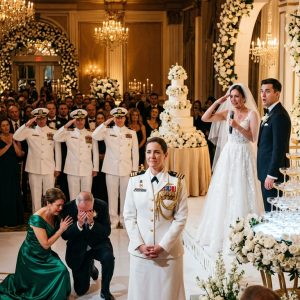
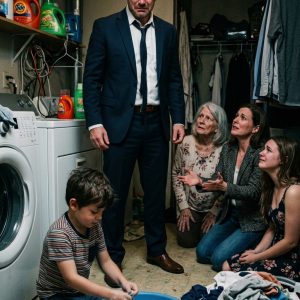
The Architecture of a Ruined Cake
Chapter 1: The Taste of Pink Frosting
My name is Mia Reynolds, and I am thirty-four years old. Until a brisk Saturday afternoon last October, I operated under the tragic delusion that I knew precisely how much humiliation a person could swallow in the name of keeping a family together.
I was wrong. The limit does not exist until someone you love crosses it with a bulldozer.
The revelation didn’t occur during a screaming match or a dramatic boardroom showdown. It happened in the cramped, garlic-scented back room of a local Italian bistro. I was balancing a precarious stack of flimsy paper plates against my hip, a cheap plastic lighter clutched in my other hand, ready to ignite the eight candles on my daughter’s birthday cake.
Then I walked through the swinging kitchen doors and saw it.
The cake was sitting upside down inside a black, industrial trash bag.
It wasn’t accidentally dropped. It had been violently shoved. Vivid streaks of strawberry-pink frosting were smeared across the greasy plastic. The delicate, spun-sugar butterflies that my daughter had agonizingly deliberated over for three weeks were crushed, their iridescent wings snapped in half. Her name, Ava, painstakingly piped in white icing, had been dragged through wet coffee grounds and discarded napkins as if her very existence was garbage.
Behind me, the ambient chatter of the private dining room evaporated. It was that highly specific, suffocating brand of silence that descends when a group of people witnesses an act of profound cruelty, yet every single spectator is holding their breath, waiting to see who will be foolish enough to acknowledge the monster in the room.
I slowly raised my eyes. My older brother, Mike, was leaning casually against the mahogany bar counter. He was swirling a glass of sparkling water, his lips curled into a lazy, unrepentant smirk that didn’t even attempt to mimic remorse.
When my voice finally broke through the quiet, it was trembling, entirely stripped of its usual diplomatic polish. “Mike… what did you do?”
He let out a sharp, dismissive chuckle, adjusting the cuffs of his tailored shirt. “Honestly, Mia? It was taking up too much room on the dessert table. She wasn’t worth wasting a whole cake on anyway. We have wedding logistics to discuss.”
I felt the blood drain from my face, rushing straight down to the floorboards. I looked down. Ava stood pressed against my leg in her pristine blue tulle birthday dress. She was still wearing the glittery paper crown we had folded together that morning. She wasn’t crying. Instead, she was staring into the trash can with wide, hollow eyes, her young brain furiously trying to calculate how a beautiful cake could be executed before anyone even had the chance to sing her name.
I didn’t scream. I didn’t hurl the stack of plates at his arrogant head. My body switched into a cold, primitive survival mode. I dropped the lighter, scooped my eighty-pound daughter into my arms, felt her tiny, trembling hands lock around the back of my neck, and I walked out of that restaurant. I marched straight past my mother, who simply stared at her shoes, and out the front door, while thirty family members watched us go in absolute silence.
The next morning, before the sun had even fully breached the horizon, my phone buzzed violently on the nightstand. It was my mother, Helen.
I answered, expecting a groveling apology on behalf of her golden boy. Instead, I was met with hysterical sobbing.
“Mia, you have to call the venue immediately,” she begged, her breath hitching wildly. “They are about to permanently cancel your brother’s wedding.”
I sat up, the cold autumn air biting at my shoulders. I looked over at the living room couch, where Ava was still asleep, her glittery paper crown carefully folded on the coffee table beside a box of tissues.
“Sounds like his problem, Mom,” I whispered.
And then, for the first time in my life, I hung up on her.
But as the screen faded to black, a sickening dread began to pool in the pit of my stomach. My mother’s panic hadn’t been just about a canceled party. It was the specific, terrified tone she used when Mike had done something catastrophic, and my name was somehow attached to the detonator.
Chapter 2: The Golden Boy’s Gravity
For the vast majority of the human population, a birthday cake is merely a temporary construction of flour, sugar, butter, and food coloring. But for Ava, that cake was irrefutable evidence that she held value in this world.
She had spent three solid weeks agonizing over the design. Every evening, as I tucked her under her quilted blankets, she would interrogate me with the nervous energy of a CEO awaiting a product launch. Do you think the butterflies will be purple enough, Mom? Will the baker make the letters neat? Do you think Grandma will clap when I blow out the candles?
She was turning eight. Because the previous year had been a brutal financial tightrope act for us, I had secretly squirrelled away twenty dollars a week just to make this single afternoon feel extravagant. I wasn’t attempting to flex on social media. I wasn’t trying to outshine any of my cousins. I simply wanted my little girl, who had endured the messy fallout of my divorce with quiet resilience, to experience one afternoon where she felt entirely, unequivocally chosen.
That is precisely why the image of that pulverized pink frosting rotting among the coffee grounds fundamentally rewired my DNA.
It wasn’t merely the destruction of baked goods. It was the absolute paralysis of my family. It was the fact that nobody—not a single aunt, uncle, or grandparent—instinctively dropped to their knees to salvage the box or cup Ava’s face and swear to her it wasn’t her fault. It was the horrifying reality that Mike could gaze at my child’s shattered joy and deduce that her pain was an amusing inconvenience.
My mother had stood near the ruined dessert table with her manicured hand clamped over her mouth. She hadn’t reprimanded him. She hadn’t rushed forward to shield Ava. Instead, her eyes had darted to me, silently, desperately pleading: Mia, please. Do not make a scene. Absorb this.
Absorbing the impact had been my unpaid, full-time career in the Reynolds family. I was the designated shock absorber.
Mike was thirty-six, the firstborn, the golden son, the heir apparent. When we were children, if he shattered a living room window, I was lectured on patience because “boys have big energy.” When he flunked out of his freshman year of college, it was because the professors “lacked the nuance to understand his pressure.” When he repeatedly forgot Mother’s Day, he was simply “building his empire.”
Conversely, if I executed anything short of flawless perfection, I was branded dramatic, hyper-sensitive, or needlessly difficult.
Following my divorce three years ago, I downsized into a modest two-bedroom apartment and poured my exhaustion into launching my own business, Reynolds Event Design. I coordinated corporate galas and boutique weddings. My mother’s primary advice during this grueling transition was, “Just make sure your little struggles don’t drag the family morale down.”
But the moment Mike proposed to his fiancée, Olivia, and discovered that securing luxury vendors required actual capital and logistical competence, my mother suddenly remembered I existed. Suddenly, I was expected to be his free, on-call concierge.
I recommended top-tier caterers. I red-lined his predatory vendor contracts. I explicitly warned him that his chosen venue, The Grand Magnolia, held a notoriously ruthless policy requiring final payment clearance two full weeks prior to the event. I even leveraged a personal professional favor to secure him a fifteen percent discount on the Grand Ballroom. I did it because, despite the lifetime of slights, I still harbored the foolish belief that blood required loyalty.
That was before he tossed my daughter’s worth in the garbage.
When we fled the bistro, Ava didn’t shed a single tear. That stoicism terrified me more than a tantrum. She sat rigidly in the backseat of my sedan, her small hands tightly gripping her paper crown, staring blankly out the window as the city blurred past. She was trying so desperately to be older than her eight years.
Halfway home, the silence broke. “Mom?” she whispered, her voice barely carrying over the hum of the tires. “Did Uncle Mike throw it away because I’m bad?”
I slammed on the brakes, pulling the car onto the gravel shoulder of the highway. I unbuckled my seatbelt, climbed into the back, and took her face in both my hands.
“No, baby,” I said, my voice fiercely steady, locking my eyes onto hers. “You did absolutely nothing wrong. Listen to me. Sometimes, grown-ups behave like monsters because they have ugly, broken things inside of them. And because they are too weak to carry that ugliness, they try to hand it to other people.”
Her bottom lip finally quivered. The dam broke. She buried her face into my chest, her small frame racking with heavy, devastating sobs. I held her there while the traffic roared past us, stroking her hair, silently vowing that I would buy her a cake so magnificent nobody would ever dare look at it wrong.
But beneath my maternal comfort, a new, jagged architecture was forming in my mind. For thirty years, I had constructed safety nets for Mike. I had insulated him from the consequences of his own arrogance. And his gratitude was to treat my child like trash.
That night, after I finally coaxed Ava to sleep, my phone screen illuminated the dark bedroom. A text from Mike.
Look, I’m sorry if you got overly emotional about the cake thing today. This wedding stress is literally killing my vibe. Olivia’s parents were watching. Let’s just move on.
I stared at the glowing pixels until my vision blurred. He wasn’t apologizing for devastating a child. He was annoyed that my reaction had threatened his aesthetic. He wasn’t requesting forgiveness; he was issuing a command to reboot the family machinery so he could resume his position as the sun we all orbited.
A minute later, a second bubble popped up.
Also, Mom said the Magnolia might call you tomorrow to confirm some logistics. Do not make this weird, Mia.
I almost let out a manic laugh. Weird. A thirty-six-year-old man throwing a child’s birthday cake in the trash wasn’t weird. But me refusing to sweep it under the rug? That was the anomaly.
At 7:45 AM the next morning, my mother’s hysterical phone call happened. After I hung up on her, I walked into the kitchen, my hands shaking.
My laptop chimed from the kitchen island. An incoming email.
The sender was Elise Vance, the senior director of The Grand Magnolia.
The subject line read: FINAL NOTICE: Reynolds-Hart Wedding Reservation – Breach of Contract.
And directly beneath it, typed in bold, aggressive red font, were three words that caused all the oxygen to instantly vanish from the room:
Guarantor Signature Required for Release.
I clicked the email open. The venue wasn’t reaching out to ask for a friendly logistical favor. According to their attached legal PDFs, my corporate entity, Reynolds Event Design, had been utilized to secure Mike and Olivia’s forty-thousand-dollar wedding block. My professional tax ID was listed. My business insurance was cited.
And at the very bottom of the page was a scanned authorization form.
Hovering on the dotted line was a signature that looked remarkably, horrifyingly like mine.
Chapter 3: The Ink of Betrayal
I opened the PDF attachment twice, simply because my brain aggressively refused to process the visual data my eyes were transmitting.
I zoomed in on the signature line until the pixels blurred into gray squares. It wasn’t my genuine signature, but it was a masterful, predatory imitation. The loop in the ‘R’ was a fraction too stiff. The tail of the ‘s’ at the end of Reynolds rushed downward, indicative of someone executing a forgery in a state of agitated panic.
The realization hit me like a physical blow to the sternum. Mike hadn’t just been careless. He had taken the sample vendor contracts I had emailed him months ago—the ones I had heavily annotated to teach him how to negotiate—and he had weaponized them. He decided that my professional advice was legally interchangeable with my financial liability. Or, far more likely, he knew exactly what felony he was committing, but relied on the absolute certainty that I would silently absorb the collateral damage before I ever let him face public ruin.
I grabbed my phone and dialed The Grand Magnolia’s corporate office.
“Elise Vance,” the crisp voice answered.
“Elise, it’s Mia Reynolds.”
I heard a heavy, audible exhale of relief on the other end. “Mia, thank God. I’ve been trying to get your brother to clarify this all week, but he’s been dodging my calls. We desperately need to confirm if your agency is still guaranteeing the final balance for the Hart event this Saturday. His personal check bounced yesterday.”
My mouth tasted like copper. Bounced.
“Elise,” I said, forcing my vocal cords to remain perfectly level, “my company never guaranteed a single dime of that event. I referred him to your sales team as a private family favor. That is the absolute extent of my involvement.”
There was a long, terrible pause. I could hear the shuffling of heavy cardstock over the line.
“Mia… the primary guarantor form in my physical file says otherwise.”
“Then the form in your file is a fraudulent document,” I stated.
The words hung in the air, heavy and lethal.
Elise’s professional armor softened immediately. We had operated in the same brutal industry trenches for years. She knew my reputation. She knew I was notoriously, almost clinically obsessive regarding liability contracts.
“Okay,” Elise said, her voice dropping to a serious, hushed tone. “Send me a formal, written declaration of unauthorized use immediately. If your signature was forged, I can legally sever your company from the master account.”
“Thank you.”
“But Mia, you need to understand,” Elise warned, the corporate steel returning to her voice. “The moment I wipe your corporate backing from this file, the couple reverts to standard civilian terms. They must wire the full outstanding balance of twenty-two thousand dollars by 5:00 PM today. If the wire does not hit our escrow, the Grand Ballroom is released to the waitlist, and the wedding is dead.”
I glanced at the digital clock on my microwave. It was 9:12 AM.
Mike had roughly eight hours to manifest twenty-two thousand dollars to fix a catastrophe of his own design. And for the first time in his pampered existence, my spine wasn’t going to serve as his ladder out of the pit.
Before I could even open a blank email draft to Elise, my phone erupted into a chaotic symphony of notifications.
My mother called three consecutive times. I let them all bleed into voicemail.
An aunt I hadn’t spoken to since Thanksgiving texted: Your mother says you’re purposely destroying Mike’s wedding over a piece of cake? Have you lost your mind?
Then, a text from Mike slid onto the screen.
DO NOT TALK TO THE VENUE UNTIL YOU TALK TO ME.
I stared at the all-caps demand. Not ‘I’m so sorry.’ Not ‘I made a mistake, let me explain.’ It was a direct, authoritarian order from a man who still fully believed he owned me.
The old version of Mia—the people-pleasing, traumatized peacekeeper—would have succumbed to the panic. The old Mia would have called him, absorbed his frantic excuses, and perhaps even tried to negotiate a predatory payment plan with Elise just so the wedding could proceed, allowing the family to maintain the fiction that Mike was just “unlucky with finances.”
But as I stood there, paralyzed by the weight of the decision, I heard the soft padding of bare feet.
Ava shuffled into the kitchen, rubbing the sleep from her eyes. She looked at my pale face, the death grip I had on my phone, and her small shoulders slumped.
“Mom?” she asked, her voice cracking. “Is Uncle Mike super mad at you… because of me?”
That single, devastating question acted like a machete, instantly severing every toxic, conditioned reflex I harbored.
I slowly placed the phone face down on the granite counter. I dropped to my knees so I was perfectly eye-level with her, and I gently enveloped her small, warm hands in mine.
“No, my sweet girl,” I said, pouring every ounce of conviction I possessed into the words. “He is very mad right now because I am finally refusing to let him hurt us, and then use us to pay his bills.”
She nodded slowly, but I could still see the heavy, unearned guilt swimming in her brown eyes. She was attempting to shoulder a burden that belonged to a thirty-six-year-old man.
That was the exact moment the hesitation died. I stood up, walked to my laptop, and began to type.
I drafted a clinical, mercilessly formal email to Elise Vance. I unequivocally stated that I had not signed, authorized, brokered, financed, or accepted any liability for Michael Reynolds’s event. I attached three separate PDFs of my legally notarized signature from recent corporate contracts to highlight the stark discrepancies of his forgery. I concluded with a hard, legal demand that Reynolds Event Design be immediately expunged from all Magnolia records regarding the event.
My index finger hovered over the trackpad for five agonizing seconds.
Pressing this button felt apocalyptic. It felt final. It felt like I was dropping a match into a powder keg that would level my entire family tree.
But then I saw the ghost of the ruined sugar butterflies in the trash.
I pressed send.
Three minutes later, an automated reply chimed. Received. We are initiating the liability removal protocol. The client will be notified.
There was no thunder. No dramatic cinematic score. Just a cold, professional boundary established in black and white ink.
My phone immediately began vibrating so violently it nearly vibrated off the counter. It was Mike.
This time, I swiped green.
He didn’t even say hello. He sounded like a cornered animal. “What the hell did you just do?”
I leaned my hip against the cool granite counter. “I told the truth.”
He let out a sharp, breathless laugh that bordered on manic. “You mean you threw a psychotic tantrum because of a cheap sheet cake, and now you’re actively trying to ruin my life?”
“No,” I replied, my voice disturbingly calm. “You committed corporate fraud by forging my business name without my consent, and I protected my livelihood.”
He went entirely silent for two beats. It was just long enough for me to hear the raw, unadulterated terror lurking beneath his rage.
Then, the venom returned. “You were supposed to handle it! That was the entire point of asking you to review the damn contract!”
“Reviewing a contract does not equate to becoming your financial guarantor, Mike.”
“Oh, come off it,” he snarled. “You always fix things. It’s what you do. Don’t act brand new now just to be a spiteful bitch.”
That sentence told me vastly more than any confession ever could. He hadn’t accidentally slipped my name onto a line item. He had built the entire architecture of his luxury wedding around the absolute certainty of my subservience.
Then, he deployed his nuclear option.
“Listen to me very carefully,” Mike hissed, his voice dropping to a lethal whisper. “If you don’t call Elise back in five minutes and reinstate your name on that account, I swear to God, I will tell the entire extended family and Olivia’s parents that you sabotaged my wedding because you’re a bitter, jealous divorcee who can’t stand seeing someone else get the happy ending your husband didn’t want to give you.”
The air in my lungs turned to ice.
My divorce had been the most harrowing, soul-crushing era of my existence. He knew that. He knew the agonizing nights I spent pacing the floor, terrified I couldn’t provide Ava with stability. He knew precisely where to insert the blade and twist.
But instead of crumbling into a puddle of tears, a profound, eerie stillness settled over my mind.
“Mike,” I said, my voice barely above a whisper, yet harder than diamond. “Yesterday, you threw my daughter’s birthday cake in the trash. Today, you are trying to blackmail me to cover your felony. Please, keep talking. Every syllable you utter is making my decision easier.”
He cursed violently under his breath. “You are choosing a brat’s hurt feelings over your own brother’s future!”
I looked over at Ava. She was sitting quietly at the kitchen table, using a purple crayon to draw new butterflies on a blank paper plate.
“Yes,” I said. “I will choose her every single time.”
I hung up the phone, knowing the real war was about to begin.
Chapter 4: The Siege at the Door
By noon, the Reynolds family group chat had devolved into a digital kangaroo court, and I was the sole defendant entirely excluded from the proceedings.
My phone periodically lit up with screenshots forwarded by a sympathetic younger cousin who was watching the carnage unfold.
Mike posted: Just so everyone is aware, Mia is refusing to help with a minor venue logistics issue because she wants to make the week about her.
My mother chimed in: Please, let us all pray she softens her hardened heart. Family is forever.
An aunt replied: What exactly happened?
Mike answered: She’s having a meltdown over a dessert. That is literally it.
A dessert. That was the sterile, dismissive noun he assigned to my daughter’s public humiliation.
I didn’t engage in the chat. I didn’t defend myself. I methodically took screenshots of everything. I saved his threatening voicemails to an external drive. I printed the venue’s email regarding the forged signature.
I wasn’t compiling a dossier because I harbored a sadistic desire to destroy him. I was doing it because thirty years as the family scapegoat had taught me a brutal lesson: when entitled narcissists lose control of a narrative, they rewrite history with terrifying speed. I was not going to allow Mike to hold the pen on this chapter.
At exactly 3:47 PM, the heavy, aggressive pounding started at my front door.
I walked quietly to the peephole. Mike was pacing the narrow apartment hallway like a caged panther. He was still wearing yesterday’s dress shirt, deeply wrinkled, his face flushed a mottled crimson, a phone pressed desperately to his ear. Standing two paces behind him was my mother, clutching a crumpled tissue to her chest as if she were preparing to deliver a eulogy.
I didn’t touch the deadbolt until I had ushered Ava into my bedroom, handed her my iPad with her favorite movie, and placed noise-canceling headphones over her ears.
When I finally turned the latch and cracked the door open, Mike immediately lunged forward, using his body weight to try and push his way inside.
I stepped directly into the center of the doorframe, bracing my boots against the threshold, forming an impenetrable physical barrier. That simple act of physical defiance seemed to offend him more than the canceled payment.
“We need to talk, right now,” he barked.
“No,” I replied, keeping my voice eerily flat. “You need to perform. I simply need to decide whether watching you is worth my time.”
My mother flinched as if I had struck her. Mike’s jaw muscle feathered. “Are you seriously doing this right now?”
“Immensely serious.”
He craned his neck, trying to peer past my shoulder into the living room. He was searching for Ava, perhaps looking for visual evidence that I was weaker inside my sanctuary. I shifted my stance, blocking his line of sight completely.
“Say whatever you came here to say, Mike. The clock is ticking.”
He immediately launched into the rehearsed, sanitized version of events. “Mia, look… I am sorry about the cake thing, okay? I shouldn’t have said what I said. But you have to have some empathy here. I am under insane, crushing pressure. The wedding is in three days. Olivia’s parents are starting to ask invasive questions. The Magnolia is threatening to release the room to a corporate retreat. This is not the time to teach me a lesson.”
My mother nodded frantically, desperate to translate his pathetic speech into a binding peace treaty. “See, honey? He apologized. He said he’s sorry.”
I stared at her, my heart breaking a little more. “Mom. He didn’t apologize because he regrets hurting Ava. He apologized because the venue gave him a 5:00 PM deadline and he’s broke.”
Mike threw his hands in the air, exasperated. “What do you want from me, Mia? Do you want me to literally get on my knees? It was just a cake!”
There it was again. The truth bleeding through the theatrical makeup.
I felt a profound, chilling calmness wash over my nervous system. It was the kind of tranquility that terrified me, because it meant I had finally crossed the threshold where I no longer needed him to understand me.
“Tell me the truth, Mike,” I demanded. “Tell me exactly why you threw it away.”
His eyes darted nervously toward our mother. “It was… it was taking up too much real estate on the display table.”
“Of what?” I pressed.
“The dessert table at my daughter’s birthday party,” I reminded him.
He scoffed, rolling his eyes. “It was supposed to be a joint family lunch, Mia. Olivia’s parents were sitting right there. We were supposed to be finalizing the seating charts and discussing the rehearsal dinner, and you made the entire afternoon about Ava.”
I stared at him. The puzzle pieces violently snapped together.
He hadn’t trashed the cake because it was damaged. He hadn’t trashed it by accident. He had deliberately thrown it away because a child’s joy was interrupting the spotlight he believed he owned.
“It was her actual birthday,” I said, my voice dangerously low. “For two hours. Yes, the afternoon was about her.”
Mike sneered. “She’s eight! She would have completely forgotten about the cake by next Tuesday if you didn’t decide to turn it into a massive childhood trauma.”
I felt the sheer malice of his words strike my chest, but they didn’t knock me off balance. They merely illuminated him.
“You looked at a little girl’s absolute joy,” I summarized, “and you saw competition.”
His face hardened into a mask of pure spite. “Don’t twist my words.”
“I don’t have to twist anything. You’re explaining your pathology perfectly.”
My mother reached out, her trembling fingers grazing my forearm. I immediately stepped back out of her reach. “Mia, please. I know what he did was wrong. But do not let one mistake ruin the most important day of his life.”
I almost laughed. A bitter, jagged sound. “One mistake? The forged signature, the twenty-thousand-dollar fraud, the blackmail on the phone, the public lies in the group chat, the cake in the garbage, the blatant insult to my child… Somehow, Mom, whenever Mike massacres people, it’s written off as ‘one mistake.’ But the second I draw a boundary to protect myself, it’s a lifetime betrayal.”
“Mom,” I continued, my voice finally cracking. “When he threw her cake away, you stood there. When he insulted her, you stood there. When he committed fraud using my name, you called me and begged me to fix it. Do you have any concept of what you are asking me to teach my daughter?”
Tears spilled over her mascara. “I’m just asking you to keep this family from falling apart.”
“No,” I corrected. “You are asking me to set myself on fire to keep Mike warm.”
Mike stepped aggressively forward, invading my personal space. “Enough of the amateur therapy session. Call Elise. Tell her the signature issue was a clerical misunderstanding. Put your LLC back on the account until Monday morning. I’ll figure out a way to pay you back after the honeymoon.”
I blinked, genuinely astounded by his delusion. “You are asking me to risk my business license, my corporate credit, and my professional reputation in this city so you can dance in a ballroom you didn’t pay for?”
“You’re making it sound like a federal crime!”
“It is a crime, Mike! It’s fraud!”
He lowered his voice, his eyes narrowing into dark slits. “You owe me.”
That stunned me into silence. “For what?”
“For being your brother,” he spat. “For all the agonizing years Mom had to stay awake worrying about you after your pathetic husband walked out on you. For all the times this family had to sit around and listen to your depressing financial problems. You act like Ava is the only kid on the planet who matters. She needs to learn right now that she is not special.”
The hallway went completely, violently silent.
Even my mother gasped, slapping a hand over her mouth. Mike seemed to realize, a fraction of a second too late, that he had said the quiet, unforgivable part out loud.
I reached out and grasped the brass handle of the door. I didn’t open it wider to invite him in. I adjusted my grip to slam it.
“Leave,” I commanded.
He laughed, a hollow, desperate sound. “So that’s it? You’re choosing her over us?”
I looked him dead in the eye, the last shred of my sisterly affection turning to ash. “There is no ‘us’ that requires me to sacrifice my child.”
He pointed a shaking finger at my face. “Then don’t even think about showing your face at the wedding.”
“I wasn’t planning on attending a celebration built on stolen money and cruelty.”
His face twisted into something demonic. “You are going to regret this for the rest of your miserable life.”
“No, Mike,” I said quietly. “For the first time in thirty-four years, I don’t think I will.”
He spun on his heel and stormed down the hallway, physically dragging my weeping mother by the elbow toward the elevator. But just before the metal doors slid shut, he turned back and shouted, his voice echoing off the cheap wallpaper:
“When Olivia’s family finds out this wedding is canceled, I am making sure every single person in this city knows it was your fault!”
I slammed the door, engaged the deadbolt, and slid down the painted wood until I hit the floor, burying my face in my hands as my breathing hitched into a ragged sprint.
Chapter 5: The Glass House Shatters
A few minutes later, I felt a gentle tap on my knee.
I looked up. Ava was standing in the hallway. Her noise-canceling headphones were pulled down around her neck. I had no earthly idea how much of the muffled screaming she had deciphered through the door.
She walked over and slipped her small hand into mine.
“Mom?” she asked, her voice impossibly fragile. “Am I special?”
I dropped to my knees so fast they bruised against the hardwood. I pulled her tightly against my chest, burying my face in her hair.
“Yes,” I wept, kissing her forehead over and over. “You are incredibly special. Not because you are better than anyone else, but because every single child on this earth deserves to be fiercely loved, protected, and celebrated. And I will never let anyone tell you otherwise.”
She hugged me back with surprising strength.
In that embrace, the chaotic, frantic energy of my anger distilled into something remarkably clean and lethal. I no longer desired revenge in the messy, theatrical sense. I didn’t want to scream or break dishes.
I wanted truth. I wanted the cold, uncompromising light of day. I wanted my daughter to witness firsthand that when someone attempts to compress you into a smaller box, you do not shrink to make them comfortable. You stand up to your full height, even if your knees are knocking together.
The next twenty-four hours were ugly in the precise way family pressure becomes grotesque when it masquerades as ‘concern.’
My aunt left a rambling voicemail stating that weddings were “naturally stressful” and it was my “Christian duty” to forgive. A cousin texted that Mike had always been “a bit immature,” as if being a sociopath at thirty-six was a mild medical condition requiring patience.
My mother sent one final text: Please, Mia. Do not force me to choose between my children.
I typed my reply with surgical precision: You already did. Years ago. I am just finally opening my eyes to notice it.
Then, I switched my phone to Do Not Disturb and spent the morning making chocolate chip pancakes with Ava. She requested the chips be arranged in smiley faces. For thirty blissful minutes, the universe was reduced to nothing but batter, maple syrup, and the sound of her laughter.
At 1:15 PM, a call forced its way through my VIP filter.
It was Olivia.
I stared at her name flashing on the screen, my stomach clenching. Olivia was polite, beautifully poised, but perpetually distant—the kind of woman who smiled serenely at chaotic family dinners and observed far more than she spoke.
I swiped to answer, bracing for the impact. “Hello, Olivia.”
Her voice was hushed, carrying a tremor of tightly controlled panic. “Mia, I am so sorry to bother you. But I need to ask you something directly, and I need you to promise you won’t lie to me.”
“I promise.”
I heard her take a long, shuddering breath. “Did Mike use your business credentials without your authorization to secure The Grand Magnolia?”
“Yes,” I answered plainly.
Another sharp intake of breath. “And… did he throw away little Ava’s birthday cake yesterday?”
“Yes.”
A heavy silence stretched over the cellular waves. “What exactly did he say to you when you asked him about it?”
I closed my eyes, hating that I had to drag her into the mud, but knowing she was already drowning in it. I lowered my voice and repeated his exact words—about Ava not being worth the space, about her joy being an inconvenience to his wedding planning.
Olivia didn’t gasp. She just sounded profoundly tired. “He told me the cake was accidentally dropped by a waiter, and that you blamed him because you’ve been harboring deep resentment about our wedding.”
Of course he did.
“Olivia,” I said gently. “I have the emails from Elise at the venue regarding the forged signature. I have screenshots of the family chat where he called the cake incident ‘dessert drama.’ I have texts where he threatened to use my divorce against me. I am not trying to drag you into a blood feud. But you are about to marry this man. You deserve to know exactly what he has built this weekend on.”
Her voice finally cracked. “Please… send them to me.”
Hitting the ‘share’ button on that dossier felt like crossing a point of no return. But then I asked myself who had drawn that line, and who truly benefited from it remaining uncrossed? Mike had already lied to his bride about their finances, his actions, and my character. My silence would not be an act of kindness toward Olivia; it would be an act of complicity with Mike.
So, I sent her the entire arsenal. The PDF of the forged signature. The venue’s ultimatum. Mike’s unhinged texts. Everything. I added zero commentary. The raw data was damning enough.
An hour later, the digital landscape of the family group chat underwent a seismic shift.
Olivia’s older sister, who had previously been silent, suddenly posted: Why is Mia’s event company listed on the Magnolia contract if she explicitly denied involvement?
No one in my family answered. The cowards were paralyzed.
Then, Olivia’s father—a wealthy, formidable man who had paid for the caterer—typed: We were explicitly assured by Michael that Mia was handling the venue security deposit as a professional family courtesy.
My mother, panicking, replied: Arthur, please. This is a private family matter that we are sorting out internally.
Olivia herself delivered the fatal strike: It ceased being a private family matter the moment Michael lied to my face about where our venue money went.
I stared at that blue bubble for a long, quiet minute. For thirty years, I had been pushing against a solid brick wall entirely alone. Suddenly, I felt someone pushing from the other side.
Mike called my phone fifteen times in rapid succession. I watched it ring, feeling absolutely nothing.
He texted: You had no goddamn right sending Olivia private family texts.
I replied: You had no right forging my legal signature.
He wrote: You are destroying my relationship!
I answered: No. I am simply refusing to be the rug you sweep your lies under.
Then, I blocked his number for the remainder of the day.
That evening, I hosted Ava’s replacement birthday party in our living room. It was microscopic compared to the original plan. My best friend Catherine brought a homemade banner. Two of Ava’s classmates arrived with glittery gift bags. Our elderly downstairs neighbor brought snickerdoodles and graciously pretended not to notice when a tear slipped down my cheek during the birthday song.
The new cake was smaller, but immaculate. Vanilla sponge, fresh strawberry compote, vibrant purple fondant butterflies, and Ava written boldly across the top.
Right before I struck the match to light the candles, Ava reached out and gently touched my wrist. She looked at the cake, then at me.
“Mom?” she whispered. “Can we take a picture of it first? Just in case?”
My heart cracked cleanly in two. Just in case.
That was Mike’s true legacy. He had implanted the insidious fear in an eight-year-old girl that her joy was fragile and could be snatched away without warning.
I knelt beside her, pulling her close. “Yes, baby. We will take a million pictures. But I promise you, nobody is ever throwing this one away.”
After the sugar high faded and the guests departed, Ava was brushing her teeth in her pajamas. She looked at me in the mirror.
“Is Uncle Mike still getting married tomorrow?” she asked around a mouthful of toothpaste.
“I don’t know, honey.”
She rinsed and wiped her mouth. “If he doesn’t… is it my fault?”
I sat on the edge of the bathtub and pulled her in front of me. “Ava, listen carefully. When a person makes bad, selfish choices, the consequences belong exclusively to them. Other people might get very angry or sad, but that does not make it your fault. And it does not make it mine. We do not carry other people’s bad choices.”
She tilted her head, processing the logic. “So… if someone is mean to me, and then they get sad later because they got in trouble… I don’t have to fix it?”
I kissed her forehead. “Exactly.”
Late that night, as I was loading the dishwasher, my phone lit up with a text from Olivia.
The venue extended the deadline to tomorrow morning at 10 AM. My parents are refusing to wire the balance unless Mike can explain the forged guarantor form. He is doubling down, claiming you verbally promised to sign it and then backed out to sabotage him. Can you please come to the Magnolia lobby tomorrow morning? I need everyone in the same room. I need the truth.
Walking into that venue meant walking directly into the eye of a Category 5 hurricane. But remaining in the safety of my apartment meant allowing Mike to perform his theater unopposed.
I typed: I will be there. But you need to know, I am not bringing a checkbook. I am not saving this wedding.
Olivia’s reply arrived ten seconds later.
I’m not asking you to.
Chapter 6: The Altar of Truth
I had coordinated dozens of events in the sprawling, marble-floored lobby of The Grand Magnolia. I knew the frantic, electric rhythm of a wedding morning—the florists rushing through service doors with hydrangeas, the nervous groomsmen adjusting boutonnieres, the mothers-of-the-bride demanding impossible logistical miracles.
But when I pushed through the revolving glass doors at 9:45 AM, the atmosphere was entirely devoid of joy. The air felt thick, clinical, and sharp.
Mike was standing near the concierge desk. He was wearing a bespoke navy suit, clearly deployed to project an aura of reliable authority. My mother was perched on a velvet waiting bench, her eyes swollen and rimmed with red. Olivia stood a few feet away, flanked protectively by her parents. She looked pale, devoid of makeup, dressed in a simple beige trench coat, her arms crossed tightly over her chest.
Behind the mahogany desk stood Elise, the venue manager, holding a thick manila folder. She emanated the cold, impenetrable calm of a professional whose patience had entirely evaporated.
The moment Mike’s eyes locked onto me, he moved with aggressive speed, intercepting me before I could reach the bride.
“Finally,” he hissed, his hand shooting out to grab my elbow. “Tell them right now. Tell them this was a massive misunderstanding over the phone.”
I stopped dead in my tracks, looking pointedly at his hand until he slowly released my arm.
“It is not a misunderstanding, Mike,” I said, my voice carrying clearly across the echoing lobby.
His eyes darted frantically toward Olivia’s father. “Mia, I swear to God, if you embarrass me right now…”
“You embarrassed yourself when you committed forgery,” I replied smoothly.
Olivia’s father, Arthur, stepped forward, his silver eyebrows drawn together in a fierce scowl. “Forgery? Michael, you explicitly assured us she was exaggerating a miscommunication.”
Mike spun around, his hands raised in surrender. “She is exaggerating, Arthur! She verbally agreed to help me secure the room, then we got into a stupid sibling fight over a cake, and now she is weaponizing legal paperwork to punish me!”
I didn’t argue. I didn’t raise my voice. I simply unzipped my leather tote bag, extracted a pristine white folder, and handed identical copies to Elise and Olivia.
“These,” I said calmly, “are the time-stamped emails where I merely introduced Mike to the sales team. I explicitly state in paragraph two that I am acting as a private referral, not a coordinator. These next pages contain notarized samples of my legal corporate signature. And the final page is the guarantor form The Magnolia received.”
Elise opened her folder, cross-referencing the documents with practiced efficiency. She looked up, adjusting her glasses.
“For the official record,” Elise announced, her voice echoing off the marble, “Mia Reynolds has formally denied authorization. Her corporate entity has been completely removed from liability. The remaining balance of twenty-two thousand dollars is due immediately from the couple directly.”
Mike let out a strained, high-pitched laugh that sounded like tearing metal. “This is absolute insanity! Elise, come on. We can write a check after the reception. The cash gifts alone will more than cover the balance!”
Olivia slowly turned to look at the man she was supposed to marry. The devastation in her eyes was profound.
“You plan to pay for our venue… using the envelopes our guests bring tonight?”
Mike froze. Arthur let out a low growl of disgust.
“Not all of it!” Mike stammered, his polished facade violently cracking. “Just a portion. Liv, lots of couples do that! It’s normal cash flow!”
Olivia’s face underwent a terrifying transformation. The panic receded, replaced by a cold, devastating realization. Which was vastly worse than anger.
“You looked me in the eye two weeks ago,” Olivia said, her voice shaking, “and told me the venue was fully paid for.”
“It was going to be!” Mike shouted, pointing an accusatory finger at me. “By her!”
“No,” I interjected, my tone absolute ice. “I offered to help you read a contract because you were incompetent. You maliciously converted that favor into financial access.”
Arthur turned to Elise. “Miss Vance. What is the exact outstanding balance?”
Elise didn’t blink. “Twenty-two thousand, four hundred dollars.”
The lobby fell into a silence so profound you could hear the water trickling in the decorative fountain across the room.
Mike hadn’t just been short a few grand on the floral arrangements. He had constructed an entire luxury wedding on phantom money, unearned trust, and the sociopathic assumption that his sister would be too psychologically beaten down to ever say no.
My mother abruptly stood up from the velvet bench, her hands clasped together in prayer. She rushed toward me. “Mia, please. I am begging you. If you can just temporarily put your name back on the file so the doors open today, we will figure it out tomorrow. I will take out a loan. Family helps family!”
I looked at the woman who raised me. I saw how desperately tired she was, but I also saw the toxic machinery still whirring behind her eyes. She wasn’t demanding Mike take accountability for fraud. She was demanding I absorb the shrapnel so he wouldn’t have to bleed.
“Mom,” I said, my voice thick with sorrow. “If I sign that paper, I become legally responsible for twenty-two thousand dollars I do not have.”
“But family helps family!” she wailed.
“Then ask Mike why he didn’t help Ava when she was crying over the cake he threw away!” I fired back.
Her mouth trembled. “This is bigger than a cake, Mia!”
“I know,” I said, stepping back from her. “That is precisely why I am standing here.”
Olivia turned her attention fully to Mike. “Did you throw away an eight-year-old girl’s birthday cake because you were angry her party was getting attention?”
Mike’s face flushed a deep, ugly purple. “Oh my god. Not this again. Answer me, Mike! It was a stupid, twenty-dollar sheet cake!”
Olivia physically flinched as if he had struck her.
But Mike, intoxicated by his own defensive rage, kept digging. Men like Mike inevitably mistake silence for permission to keep performing. “Everyone is acting like I committed a war crime! She’s a kid. She would have gotten over it in an hour. Mia is the one who made it a psychological trauma to ruin this weekend!”
Olivia’s older sister, standing near the door, spoke up quietly. “That tells me absolutely everything I need to know about how you will treat my sister’s future children.”
Mike pointed a trembling finger at her. “Stay the hell out of this!”
Olivia didn’t scream. She didn’t cry. She simply reached down to her left hand and slowly slid the two-carat diamond engagement ring off her finger. She held it in her palm, staring at it as if it were a strange, dead insect.
“Mike,” Olivia said, her voice eerily calm. “I begged you for honesty for six months. About your savings. About this venue. About why you were suddenly so hostile toward your sister. You lied to my face every single time.”
“Liv, baby, please,” Mike begged, panic finally overriding his ego. “Don’t do this here. Let’s go to the bridal suite and talk.”
“Where should I do it?” she asked softly. “At the altar in front of two hundred people?”
My mother let out a horrific, guttural sob, collapsing back onto the bench.
Mike’s bravado completely shattered. He looked like a terrified little boy. He turned to me, his eyes wide, pleading. “Mia, please. I’ll do anything. I’ll apologize to Ava. I’ll pay for a hundred cakes. Just make the call. Fix this.”
Every eye in the marble lobby pivoted to me.
The old script was practically glowing in the air in front of me: Soften. Rescue. Pay the bill. Apologize for making the guests uncomfortable. Save the golden boy.
I took a deep, cleansing breath of the floral-scented air.
“No.”
Mike stared at me, his mouth open. “Mia… no?”
I stepped closer to him, ensuring he heard every syllable. “I will not call Elise as your coordinator. I will not guarantee your fraudulent balance. I will not lie to Olivia’s family. And I will absolutely not teach my daughter that cruelty gets rewarded with a bailout if the cruel person cries loudly enough.”
My voice shook on the final word, but the boundary had been cemented into the earth.
Elise Vance closed her manila folder with a sharp thwack. “Without payment in full, we cannot proceed with the event as contracted. The Grand Ballroom is officially released.”
Mike looked around the lobby wildly, searching for a savior who wasn’t there. “So that’s it? You’re all just going to stand there and let her ruin my wedding?”
Arthur buttoned his coat, his face a mask of disgust. “No, son. You did that all by yourself.”
Mike turned to my mother, his eyes silently demanding she perform a miracle. She looked at him, opened her mouth, and then, for the first time in thirty-six years, she closed it. She had no magic incantation that could turn his felony into my obligation.
Olivia walked over to me before she headed toward the exit.
“I am so incredibly sorry about Ava’s birthday,” she said, her voice finally breaking on my daughter’s name. “I should have asked more questions months ago.”
I nodded, feeling a strange, tragic kinship with her. “I hope you ask them now.”
She looked down at the diamond ring sitting heavily in her palm. “I am.”
Then, she turned and walked out the revolving glass doors, her parents flanking her like secret service agents.
Mike chased after her halfway across the lobby, shouting her name, begging her to stop, but the glass doors spun without him.
I stood in that sprawling, beautiful lobby, surrounded by expensive marble and dying wedding plans, expecting to feel guilt. But instead, a sensation I had never experienced washed over me.
Relief.
It was the specific, weightless relief that arrives when a heavy, iron door finally slams shut, and you realize you were never actually obligated to hold it open in the first place.
Chapter 7: The Cleanup
By sunset, the wedding of the year was officially postponed—though everyone in our social circle recognized that word was merely a polite euphemism for ‘canceled.’
The luxury florist recalled the centerpieces. The jazz band legally kept the deposit. Olivia’s family requested a “private period of reflection” with ours, which was high-society diplomatic language for: We are taking our daughter home, and you will never speak to us again.
Mike sent me one final, venomous text message from a burner number, since I had permanently blocked his primary line.
It read: I hope you’re happy. You cost me everything.
I read the words once, felt a brief twinge of pity, and deleted the message.
Not because it didn’t hurt, but because I finally understood the tragic reality of his existence: Mike would rather lose his entire world than take ownership of a single mistake. He lost The Grand Magnolia because he refused to pay his bills. He lost Olivia’s love because he was a pathological liar. He lost my fierce protection because he arrogantly mistook unconditional love for weakness.
I didn’t cost him anything. I simply stopped paying the emotional invoice for his destruction.
My mother showed up at my apartment two days later.
I almost didn’t unchain the deadbolt. But Ava was at school, and a small, wounded part of my inner child desperately needed to know whether Helen was arriving to defend the golden boy, or to finally see the daughter standing right in front of her.
She stood in the hallway, looking ten years older. In her trembling hands, she held Ava’s glittery paper crown. One of the servers at the Italian bistro had found it under a table and handed it to her as she left. The cardboard was slightly bent, but the blue glitter remained intact.
My mother held it out to me like a piece of forensic evidence. “I should have picked her up,” she whispered, her voice fractured.
I leaned against the doorframe and said nothing.
She began to cry. But this time, her tears didn’t feel like a manipulative weapon designed to guilt me into compliance. They felt heavy. They felt like recognition arriving three decades too late.
“When he said those awful things about her… I should have stopped him, Mia. I was so frantically focused on keeping the afternoon from exploding, that I entirely forgot who was actually bleeding.”
My oldest instinct flared to life: Smooth it over. Comfort her. Tell her it’s okay. Make the crying stop.
But forgiveness without a fundamental change in behavior is just another exhausting chore handed to the wounded party.
So, I looked at her and said, “Ava needed a grandmother to protect her that afternoon, Mom. And I needed a mother.”
She covered her mouth with her hand, a sob tearing from her throat. She nodded, accepting the blow. “I know.”
We sat at my kitchen island and talked for an hour. It was the most honest conversation we had ever had. She confessed that Mike had secretly borrowed five thousand dollars from her retirement account for wedding expenses, demanding she keep it a secret from Olivia. She admitted, with profound shame, that she had suspected he used my business name to secure the venue, but she actively convinced herself I must have authorized it, because acknowledging the reality meant admitting who her son had truly become.
“You fiercely protected the imaginary version of him you wanted,” I told her quietly. “And you left the real, collateral damage for me and Ava to clean up.”
She didn’t argue. She simply hung her head.
Before she left, she asked if she could apologize to Ava in person. I told her not yet. Not because I wanted to be punitive, but because my eight-year-old daughter was not an emotional dumping ground for adults seeking absolution from their own guilt. My mother accepted the boundary, and miraculously, for the first time in my life, she didn’t call me “difficult” for setting it.
Mike never offered a genuine apology. A week later, he left a rambling voicemail stating, “I’m sorry things got wildly out of hand, but you have to admit you went nuclear and took it way too far.”
I saved the audio file to my drive. Not to use it as blackmail, but because human memory is fragile, and sometimes you need a stark reminder when toxic guilt tries to rewrite history.
Olivia messaged me a month later to confirm she had officially ended the engagement. She thanked me for ripping the band-aid off, admitting she wished she had paid attention to the microscopic red flags much earlier: the unpaid dinner bills he laughed off, the cruel, sarcastic jokes he defended as “honesty,” and the way he treated basic kindness toward a child like a massive inconvenience.
I wished her peace, and I meant it. None of us escaped the blast radius untouched, but at least one more woman managed to step out of the burning building before the door locked behind her.
As for Ava, the healing arrived in quiet, microscopic increments. She eventually stopped asking if she was “bad.” She proudly taped a photograph of her replacement butterfly cake onto the bulletin board above her desk.
One evening, while brushing her teeth, she looked at me through the mirror. “Mom?” she said, foam on her lips. “Next year, for my ninth birthday… can we just get a bunch of cupcakes instead? So everyone gets their own piece?”
I let out the first genuine, unburdened laugh I had experienced in weeks. “Absolutely, baby.”
She spit into the sink and added, casually, “And only nice people are allowed to come to the party.”
That sentence anchored itself in my heart. It sounded childish and simple, but it was arguably the most profound, healthy boundary any member of the Reynolds family had ever established.
People have occasionally asked me if I harbor any lingering guilt for “sabotaging” my brother’s wedding.
The honest answer is complex. I feel a profound sadness that my family’s dysfunction had to reach such a catastrophic crescendo. I grieve the older brother I used to idolize, the mother I used to endlessly excuse, and the younger version of myself who genuinely believed that love required endless martyrdom.
But guilt? No. Guilt is an emotion reserved for people who betray their core values.
That morning in the marble lobby of The Grand Magnolia, I honored mine. I didn’t sabotage a wedding. I didn’t spread malicious rumors. I simply removed my name from a fraudulent document, told the unvarnished truth when directly asked, and flatly refused to reward a monster with my protection.
Mike’s fatal miscalculation wasn’t simply throwing a cake in the trash—although that act was vile enough. His catastrophic error was assuming the woman who had spent thirty years serving as the family glue would continue to hold the pieces together after he weaponized her child.
He assumed I would be too terrified of family backlash, too conditioned by toxic loyalty, too humiliated by my own divorce, and too desperate for scraps of approval to ever fight back.
He severely underestimated the alchemy of motherhood. It fundamentally alters the geometry of your courage. I may have tolerated decades of disrespect when the barrel was aimed at my own chest. But the second he aimed his cruelty at Ava, he introduced himself to a terrifying version of Mia he had never met.
Now, when the memory of that ruined pink frosting flashes in my mind, the anger is still there. But it is entirely overshadowed by gratitude. That discarded cake was the catalyst that revealed everything. It starkly illuminated who laughed, who remained complicitly silent, who lied, who demanded the truth, and who finally found the strength to walk away.
It taught me that authentic family bonds are not severed by the enforcement of boundaries. They are simply exposed by them.
And most importantly, it imparted a lesson to my daughter that I hope she carries in her bones forever: When someone attempts to throw your joy into the garbage, you do not climb into the trash to prove you have value. You walk away, you fiercely protect your peace, and you force them to explain to the world why they thought they had the right to touch it in the first place.
So, I leave you with this: If you were standing in my shoes, what would you have done? Would you have absorbed the fraud to keep the family portrait intact? Or would you have let the unvarnished truth burn the entire house down?
Like and share this post if you find it interesting.