The Architecture of Silence: My Journey from Invisible to Infinite
Chapter 1: The Curse of the Reliable
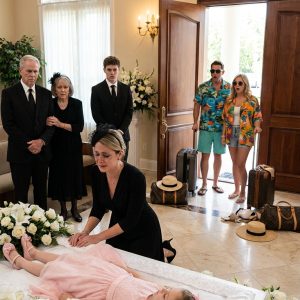
My family did not attend my wedding. They were somewhere in the middle of the Caribbean, breathing in the salt air of a cruise ship, while I stood at the altar staring at a front row of empty velvet chairs. Those four chairs remained haunted by their absence for the duration of the ceremony—a physical manifestation of a truth I had spent twenty-six years trying to outrun.
In the Ross household, I learned what love looked like long before I understood what it was supposed to feel like. For me, love was never soft or patient. It didn’t ask about my day or offer a shoulder when the silence became too heavy. In my world, love was a transaction. It sounded like a phone ringing at 2:00 AM. It looked like a list of expectations, a stack of chores, and a series of fires that only I was allowed to extinguish.
I was the “Reliable” one. My father, Arthur, used that word like a badge of service, though it always felt more like a sentence. He would give me a short, brisk nod when I fixed a billing error or drove three hours to pick up a forgotten document, and he’d say, “You’re reliable, Daphne.” He never said he was proud. He never said he loved me. He simply acknowledged that I was a functional tool in his shed. What he really meant was: “You’ll fix this so I don’t have to.”
Then there was my older sister, Harlow. If I was the architect of the family’s stability, Harlow was the wrecking ball. She didn’t fix things; she created them. Messes, drama, emotional storms that sucked the oxygen out of every room. But in the twisted logic of our home, Harlow was the one who mattered. When she was happy, the sun shone on all of us. When she struggled—which was often—the world stopped spinning. Money moved, plans were cancelled, and my parents’ attention shifted to her with the intensity of a searchlight.
I noticed the disparity young. It wasn’t a sudden, cataclysmic realization; it was a slow erosion. It was the way my mother, Eleanor, would never interrupt my father when he was praising Harlow’s “spirit,” even while I sat across from them with a report card full of A’s that went unnoticed. I could sit in a room full of my own blood relatives and feel entirely unnecessary, like a piece of furniture that had been there so long everyone forgot it had a purpose.
I stayed because I didn’t know how to leave. I believed—with the desperate, naive hope of a child—that if I just kept being helpful, if I remained the girl who never complained and always showed up, eventually, the transaction would flip. Eventually, I would earn the right to be seen.
But “eventually” is a phantom that never arrives. Instead, I just got more calls, more responsibilities, and more quiet sacrifices that were swallowed by the voracious appetite of my family’s needs. I carried it all, never asking for anything in return, because to ask would be to admit the most terrifying truth of all: that there was likely nothing waiting for me on the other side of my effort.
It wasn’t until I met Reed that the foundation of my life began to crack. He was the first person who didn’t call me when something went wrong. He didn’t expect me to solve his life. He just… stayed.
The first time I noticed it, the silence felt like a threat. We were sitting in his car after a long dinner, the engine idling quietly. My mind was racing, as it always did, through a mental checklist of who I needed to help and what I had neglected. Reed didn’t ask questions. He didn’t demand I entertain him. He just sat beside me, present and unmoving.
My chest tightened because I didn’t know the protocol for a man who didn’t want anything from me. Silence in my father’s house meant an impending storm. With Reed, it felt like a sanctuary. It was the first time I realized that being needed and being loved were not the same thing—and that realization was the beginning of the end of the girl I used to be.
I leaned my head against the cool glass of the window, watching a single raindrop trail down the pane, wondering if the house I had built for everyone else was finally about to collapse on top of me.
Chapter 2: The Ghost of the Trust
I didn’t fall for Reed in a single, cinematic moment. It was a slow accumulation of small mercies. It was the way he didn’t keep score. In my world, every favor was a debt; every kindness was a hook. But Reed was different.
The first time I had to cancel plans on him because Arthur demanded I help him with some “urgent” tax filings, I waited for the inevitable guilt trip. I waited for the shift in his voice, the subtle coldness that would signal I had failed. Instead, Reed just said, “Okay, honey. Do you want me to bring you dinner while you work?”
I stared at the phone, my heart hammering against my ribs. “You’re not mad?”
“Why would I be mad that you have a life, Daphne? You sound exhausted. Let me take care of the food.”
That was the moment I started to see the bars of my cage.
But even as I fell for Reed, I held on to one secret. It was an envelope tucked away in the back corner of my second desk drawer, beneath a mountain of old lease agreements and college transcripts. It was my Grandfather’s Trust.
My grandfather, Elias, was the only person who had ever seen me clearly. He was a quiet man who didn’t ask me to fix his remote or balance his checkbook. He would just sit with me and say, “You don’t have to carry the whole world, Daphne. Leave some for the rest of us.”
Before he died, he set up a trust for both Harlow and me. $70,000 each. Specifically for our “Big Days.” To me, that money wasn’t about the cash; it was about the intention. It was a promise from the only person who had ever loved me without a price tag. It was my ticket to a wedding that wouldn’t be a performance for my father’s business associates, but a celebration of a life I had finally chosen for myself.
I left the envelope untouched for years. I worked, I saved, and I kept that $70,000 in my mind like a fortress. It was the one thing my family couldn’t redefine. Or so I believed.
While I was building a life with Reed, Harlow was busy dismantling hers. I heard about it in fragments—her boutique business failed, her credit card debt was spiraling, she had another “emergency” that required my parents’ intervention. My mother would sigh and say, “Harlow is just figuring things out. She needs grace.”
I didn’t mind. I had my own life. I had Reed. And I had the envelope.
The morning I decided to finally go to the bank to start the wedding preparations, the sun felt warmer than usual. I felt like I was finally stepping out of the shadows. I walked into the First National Bank, holding the trust documents like a holy relic. I sat across from a woman named Sarah, a banker with a kind face and a practiced, professional smile.
“I’d like to check the balance and initiate a transfer for my wedding venue deposit,” I said, my voice steady and full of a pride I rarely allowed myself.
Sarah nodded, her fingers dancing across the keyboard. She pulled up the account details. I leaned back, already imagining the flowers, the music, the moment I would walk toward Reed without the weight of my family on my back.
Then, the screen turned.
My eyes scanned the numbers, but they wouldn’t settle. I felt a cold sweat break out at the base of my neck.
“I’m sorry,” I said, my voice sounding like it was coming from a long way off. “There must be a mistake. This says the balance is $3,842.”
Sarah looked at me, her expression shifting from professional to pitying. “I’m looking at the transaction history, Ms. Ross. There have been dozens of withdrawals over the last two years.”
“That’s impossible,” I rasped. “I haven’t touched this account. It requires a co-trustee signature.”
Sarah hesitated, then turned the monitor so I could see. “The withdrawals were authorized by the co-trustees. Your parents, Arthur and Eleanor Ross. And the funds… they were all transferred to an account held by a Harlow Ross.”
The room didn’t just go quiet; it went hollow. I felt the air leave my lungs as I stared at the digital trail of my own father’s signature, realizing that the one thing I thought was mine had been harvested like a crop to feed my sister’s insatiable hunger.
Chapter 3: The Financial Autopsy
I didn’t scream in the bank. I didn’t even cry. I sat there in a state of suspended animation, watching Sarah print out the records. Each page that slid out of the printer was a testament to a betrayal that had been happening in the dark while I was out fixing their lives.
$10,000 for “business expenses.”
$7,000 for “personal relocation.”
$15,000 for “debt consolidation.”
It was all there. $66,000 of my grandfather’s love, funneled into the black hole that was my sister’s life. And my parents had signed every single one of them. They had never asked me. They had never warned me. They had simply decided that my “Big Day” mattered less than Harlow’s latest disaster.
I walked out of the bank with the papers clutched in my hand, the edges crinkling under the pressure of my grip. I sat in my car and stared at the steering wheel. I thought about all the midnight calls I had answered. I thought about the time I had spent my entire weekend organizing my father’s files while he told me how “reliable” I was.
Reliable. I finally understood what that meant. I was reliable because I was a safety net. And they had finally cut the net to patch a hole in the carpet.
When I got to Reed’s house, he was waiting for me. He took one look at my face and didn’t ask a single question. He just took the papers from my hand, led me to the couch, and sat with me as I finally broke.
The tears weren’t for the money. They were for the realization that I had spent twenty-six years playing a game I was never meant to win.
“We can still have the wedding, Daphne,” Reed whispered, his hand firm on mine. “We don’t need seventy thousand dollars to say ‘I do.'”
“It’s not about the money, Reed,” I sobbed. “It’s about the fact that they didn’t even think I’d notice. They didn’t think I mattered enough to consult. I’m just… a resource to them.”
He didn’t try to silver-line it. He didn’t tell me I was overreacting. He just held me until the sun went down.
A few nights later, the final blow came. It was a family dinner—the kind of gathering I usually spent coordinating. Arthur was in a jovial mood, and Harlow was practically vibrating with excitement.
“I have news!” Harlow announced, clinking her glass. “I found the most incredible deal. A ten-day luxury cruise through the Caribbean. It’s exactly what I need to clear my head after the boutique closed.”
My mother beamed. “It’s so important to take care of your mental health, honey.”
“And the best part,” Harlow continued, looking at our parents, “is that I booked it for all three of us. A family getaway.”
I felt a cold stone settle in my stomach. “When is the cruise, Harlow?”
She glanced at me, her expression dismissive. “Next month. The second week.”
The table went silent. Even the air seemed to freeze.
“That’s my wedding week,” I said. My voice was low, vibrating with a rage I had spent my life suppressing.
Harlow blinked, a look of faux-innocence crossing her face. “Oh… is it? I didn’t realize. But Daphne, the deal was non-refundable. It was the only week the suite was available. And besides, your wedding is going to be so small now anyway, right? It’s not like you’re doing the big gala anymore.”
I looked at my father. He wouldn’t meet my eyes. He just stared at his steak.
“Dad?” I asked. “Are you going on a cruise during my wedding?”
He cleared his throat, the sound of a man annoyed by an inconvenience. “Plans change, Daphne. If you had been more flexible with your dates, this wouldn’t be an issue. It would be a waste of money to cancel the cruise now.”
“A waste of money?” I whispered. “You mean the money you took from my trust to pay for her life? That money?”
My mother gasped. My father finally looked up, his eyes cold and hard. “We did what was necessary for this family. You’ve always been the strong one. You don’t need the help she does. You’re reliable, Daphne. You’ll figure it out.”
I stood up. I didn’t yell. I didn’t throw my plate. I simply picked up my purse and looked at the three people I had spent my life trying to please.
“You’re right,” I said, my voice terrifyingly calm. “I am reliable. And I’ve decided that from this moment on, you can rely on yourselves. I’m not moving my wedding. And I’m not answering the phone when you realize you’ve run out of people to rob.”
I walked out of that house and didn’t look back, even as I heard my mother calling my name, her voice already sounding like a memory I was ready to bury.
Chapter 4: The Architecture of Choice
The weeks leading up to the wedding were the quietest of my life. My phone stayed silent. No “urgent” requests from Arthur. No “emotional crises” from Harlow. No guilt-trips from Eleanor.
For the first time in my life, I wasn’t fixing anything. I was just… being.
Reed and I scaled everything back. We found a small, sun-drenched outdoor space. We hired a local florist who specialized in simple, wild arrangements. We invited only the people who had actually shown up for us over the last year.
My family remained a void. No calls to apologize. No check-ins about the dress. Not even a text to see if I was okay. They had chosen the cruise. They had chosen the margaritas and the salt air over the daughter who had kept their roof from leaking for two decades.
It hurt. I’m not going to pretend it didn’t. Every time I saw a “Reserved” sign for the front row, I felt a pang of a grief that felt like a physical weight in my chest. But something else was growing, too. A sense of clarity.
Reed’s family stepped into the gaps. His mother, Martha, helped me with the final fittings of my dress. She didn’t ask for anything in return. She didn’t remind me how lucky I was. She just held the pins in her mouth and told me I looked like a dream. His father, Jim, told me it would be the honor of his life to walk me down the aisle if I’d let him.
I was learning a new language. A language where love wasn’t a debt.
The night before the wedding, I sat on the edge of my bed and looked at my phone. I had one final impulse to call my father. To beg him one last time to choose me. My thumb hovered over his name. I could almost hear his voice: “You’re being dramatic, Daphne. We’ll see you when we get back.”
I locked the phone and put it in the drawer. The hope was dead. And in its place was a cold, hard peace.
The morning of the wedding was beautiful. The light was golden and soft, filtering through the trees of the garden. I stood in the small dressing room, looking at my reflection. I didn’t look like the girl who fixed everyone else’s problems. I looked like a woman who was finally taking care of herself.
Jim met me at the entrance to the aisle. He squeezed my arm, his eyes full of a kindness I still hadn’t quite figured out how to process. “Ready, sweetheart?”
“Ready,” I whispered.
The music started—a simple cello melody that felt like a heartbeat. I stepped out onto the grass.
The first thing I saw were the chairs.
Front row, stage right. Four seats. I had left them there. Part of me—the old, reliable part—had thought maybe they’d surprise me. Maybe they’d realize at the last second that a daughter is worth more than a cruise.
They were empty.
The sun hit the white wood of the chairs, making them glow with a mocking brightness. I felt my breath hitch. I felt the old invisibility trying to swallow me whole. I felt like the girl in the car again, spinning through a list of ways I could have been better, been more, been enough to make them stay.
Then, I looked at the end of the aisle.
I saw Reed. He was standing there, his eyes locked on mine. He wasn’t looking at the empty chairs. He was looking at me. And in his eyes, I didn’t see a tool. I didn’t see a safety net. I saw a destination.
I stopped looking at what was missing. I started looking at what was there.
I saw Martha crying softly in the second row. I saw Reed’s best friend, Leo, grinning at me. I saw fifty people who had taken time out of their lives, not because they had to, but because they wanted to see me happy.
I walked past the empty chairs. I didn’t even glance at them. I reached Reed, and when he took my hand, his palm was warm and solid.
“You’re here,” he whispered.
“I’m here,” I said. “And I’m not going anywhere.”
The ceremony was short and honest. We didn’t make grand, sweeping promises about “forever.” We made promises about the “now.” About staying present. About not keeping score. When the minister pronounced us husband and wife, I didn’t feel like I had completed a transaction. I felt like I had finally begun a life.
As we walked back down the aisle, the applause rose around us like a shield, and for the first time, the empty chairs in the front row didn’t look like a loss. They looked like an exit I had finally used.
Chapter 5: The Toast to the Truth
The reception was held under a canopy of fairy lights. It was loud, messy, and full of the kind of laughter that doesn’t require an invitation. I spent the first hour in a blur of hugs and champagne, feeling a sense of belonging that was so foreign it almost made me dizzy.
I was sitting at the head table, watching Reed laugh with his cousins, when he suddenly stood up. He picked up a glass of champagne and tapped it with a spoon.
The room went quiet. The faces of fifty people turned toward him.
“I’m not a man of many words,” Reed began, his gaze drifting to me. “But I need to say something about the woman I just married.”
I felt my cheeks flush. I expected a standard toast—something about how beautiful I looked or how happy we were. But Reed had never been standard.
“Most of you know Daphne as the person who shows up,” he said. “She’s the one who answers the phone at 3:00 AM. She’s the one who fixes the mess she didn’t make. She’s spent her whole life being the foundation for a house that didn’t always appreciate the weight she was carrying.”
He paused, his voice deepening. “A lot of people noticed the empty seats in the front row today. I know I did.”
A few people shifted uncomfortably. My heart skipped a beat. I didn’t want him to bring up the pain. I wanted to forget it.
“But I realized something while I was watching Daphne walk down that aisle,” Reed continued. “Those seats aren’t empty because someone forgot to show up. They’re empty because they were never big enough for her. They were seats for a version of Daphne that existed only for their convenience. And that version of her doesn’t live here anymore.”
He looked around the room, his eyes bright. “Look at this room. Look at the people in these chairs. None of you are here because you need Daphne to fix your taxes or pick up your laundry. You’re here because you love her. You’re here because she’s the most incredible human being you’ve ever met, and you wanted to witness her finally being the center of her own world.”
He turned back to me, raising his glass. “So, here’s to my wife. The woman who stopped being a ghost and started being a queen. You don’t have to carry the world anymore, Daphne. We’ve got you now.”
The room erupted. It wasn’t just applause; it was a roar. People stood up, cheering, clinking glasses, and for the first time in my life, I felt the weight of being “Reliable” slip off my shoulders and shatter on the floor.
I wasn’t needed. I was wanted. And the difference was everything.
Later that night, as the music slowed and the guests began to trickle out, I found myself standing alone by the garden gate. The air was cool, the scent of jasmine heavy in the breeze. My phone buzzed in my pocket.
I pulled it out. A text from my father.
“Cruise is incredible. Harlow is finally relaxing. Hope your little party went okay. Send us some photos when you can. We’ll be back in two weeks, and I’ve got some paperwork I need you to look at for the estate. See you soon.”
I looked at the screen for a long time. I thought about the “paperwork.” I thought about the estate. I thought about the two weeks.
Then, I did something I had never done in my life.
I blocked him. I blocked my mother. I blocked Harlow.
I put the phone back in my purse and walked back toward the lights. I saw Reed standing by the dance floor, waiting for me. He reached out his hand, and I took it.
“Everything okay?” he asked.
“Everything is perfect,” I said.
And as we danced in the quiet of our own making, I realized that my grandfather was right. I didn’t have to carry the whole world. I just had to find the people who were willing to help me carry myself.
The architecture of my life had changed. I was no longer the load-bearing wall in someone else’s house. I was the architect of my own. And for the first time, the house was full of light.
Like and share this story if you believe that being chosen is more important than being needed. Tell me in the comments: have you ever had to walk away from people who only loved you for what you could do for them?